
Salads
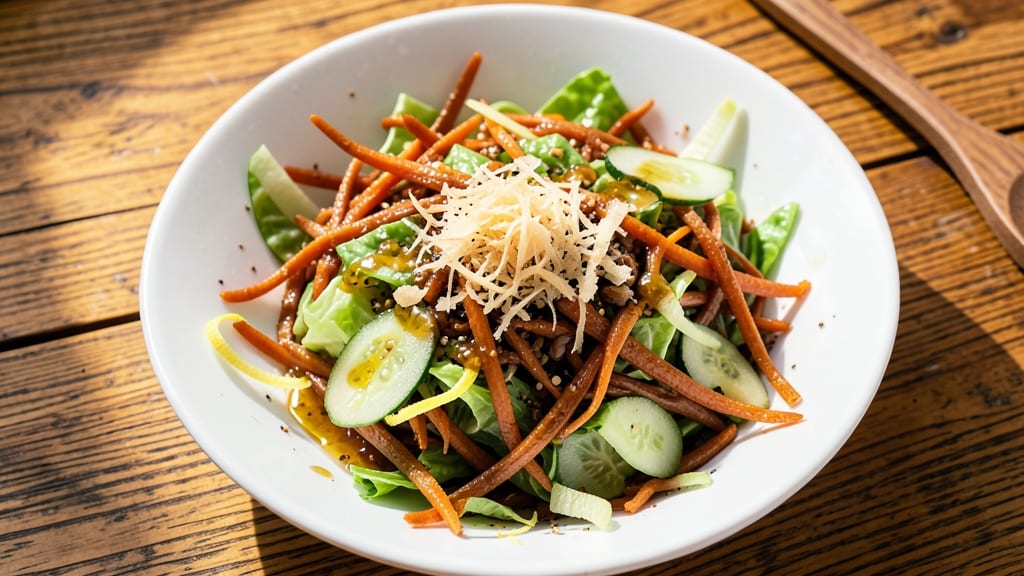
This Asian marinated vegetable salad recipe transforms ordinary vegetables into a vibrant, umami-packed dish that balances crisp textures with bold flavors. The secret lies in a quick-pickling marinade of rice vinegar, sesame oil, and garlic that tenderizes while infusing each bite with depth. I developed this recipe after craving something fresh yet deeply flavorful—no bland greens here.
The magic happens during the cold-soaking process, where vegetables absorb the marinade's complexity while maintaining their crunch.
You'll use simple ingredients like shredded carrots, cabbage, and cucumber, but the dressing—soy sauce, ginger, and a touch of honey—elevates them into a restaurant-worthy salad. Ready in just 20 minutes, it's perfect for meal prep or a light lunch.
What makes this salad special is its versatility. Serve it as a standalone dish or pair it with grilled proteins like shrimp or tofu for a complete meal.
The bright, tangy flavors cut through richer dishes, making it a crowd-pleaser. Each bite delivers a satisfying crunch with layers of umami and sweetness.
For extra texture, toast sesame seeds or add crushed peanuts on top. The salad keeps well in the fridge for up to 3 days, making it ideal for busy weeks. Let's get started—your taste buds will thank you.
Ingredients for asian marinated vegetable salad
Simple vegetables meet bold Asian flavors in this vibrant, restaurant-style salad.
| Ingredient | Amount | Notes |
|---|---|---|
| Shredded Carrots 🥕 | 2 cups | Freshly shredded for best texture |
| Green Cabbage 🥬 | 3 cups | Shredded thinly with a mandoline |
| English Cucumber 🥒 | 1 whole | Seedless, sliced into half-moons |
| Rice Vinegar 🍶 | ½ cup | Unseasoned, mild flavor preferred |
| Sesame Oil 🫒 | 2 tbsp | Toasted sesame oil for aroma |
| Fresh Ginger 🌿 | 1 tbsp | Finely grated, fresh preferred |
| Low-Sodium Soy Sauce 🍶 | 3 tbsp | Kikkoman or San-J preferred |
| Toasted Sesame Seeds 🥜 | 2 tbsp | For garnish, lightly toasted |
| Garlic Cloves 🧄 | 3 cloves | Minced finely for marinade |
| Honey 🍯 | 1 tbsp | Wildflower preferred for depth |
| Crushed Peanuts 🥜 | ¼ cup | Optional topping, lightly toasted |
| Diamond Crystal Kosher Salt 🧂 | ½ tsp | For seasoning balance |
| Black Pepper 🌶️ | ¼ tsp | Freshly ground for finish |
The cabbage and carrots are the stars here—look for crisp heads with no yellowing leaves. Trader Joe's has the best pre-shredded mix, but if you're doing it fresh, a mandoline makes quick work of it. The English cucumber should be seedless (none of that watery mess). For extra crunch, chill the veggies for 30 minutes before tossing with the marinade—trust me on this. The ginger and garlic? Freshly grated and minced make all the difference compared to powdered versions.
No sesame oil? Avocado oil at half the amount works in a pinch, but you'll miss that nutty aroma. Short on honey? Maple syrup or agave swap one-to-one. The soy sauce matters—low-sodium versions let you control saltiness better. Want more heat? Add a dash of Sriracha or gochujang to the marinade. The peanuts are optional but add serious texture—toast them in a dry pan until golden for extra flavor. If you're serving this as a main, double the veggies and add edamame or shredded bell peppers.
This salad keeps beautifully—3 days max in the fridge, sealed in an airtight container. The dressing will separate, so give it a good stir before serving. For meal prep, store the veggies and dressing separately until ready to toss. The flavors actually improve overnight as everything melds. Portion into jars with dressing on the bottom for easy grab-and-go lunches. Leftovers? Toss with grilled chicken or tofu for a protein boost.
Why You'll Love This Recipe
- No Knife Skills Needed: I’ll admit, I’m not the best chopper—but this salad lets me skip the struggle. Shredding carrots and slicing cabbage takes five minutes with a mandoline (or even a fork if you’re in a rush), and the cucumber? Just halve and scoop. That crispy crunch comes from the knife’s work, not mine.
- Umami Bomb in Minutes: Here’s what sold me—the sesame oil and rice vinegar combo. One tablespoon of toasted sesame oil (don’t skimp!) adds this deep, nutty warmth, while the vinegar cuts through the veggies’ sweetness like a bright, tangy hug. The shredded carrots? They soak up the marinade like a sponge, turning from plain to ridiculously good in under 10 minutes.
- Lunchbox Hero: Between us, this salad is my secret weapon for packed lunches. It stays crisp for three days in the fridge (no soggy cabbage here), and the flavors only get better as the veggies marinate longer. Toss it with leftover rice or serve it cold—it’s the star of my workday, my picnic spread, and even my lazy Sunday brunch.
- Pantry Staple Magic: Honestly, if you’ve got a fridge and a spice rack, you’ve got this. Carrots, cabbage, and cucumbers are the cheapest veggies out there, and the dressing? Just vinegar, oil, and salt. I’ve made this for under $3 per serving, and it’s still the first thing I reach for when I’m broke but need something fresh and satisfying. (Yes, even on a Tuesday night.)
Step-by-step instructions for Asian marinated vegetable salad
Here's how to create a vibrant, umami-rich salad that balances crisp texture with bold flavors.
Prepare the Vegetables for Maximum Crunch
Start by combining the 2 cups shredded carrots and 3 cups green cabbage in a large mixing bowl. The cabbage should be thinly sliced—if using a mandoline, set it to ⅛-inch thickness for that perfect crunch. Give everything a gentle toss with your hands to distribute the shreds evenly.
Next, add the 1 whole English cucumber, sliced into half-moons. Pat each slice lightly with a paper towel to remove excess moisture—this prevents a watery salad later. I like to work in batches so I don't overcrowd the bowl, which makes tossing easier. The vegetables should look vibrant and ready to absorb the marinade.
Create the Umami-Packed Marinade
In a small bowl, whisk together the 0.5 cup rice vinegar, 3 tbsp low-sodium soy sauce, 1 tbsp honey, 1 tbsp finely grated fresh ginger, and 3 minced garlic cloves. The mixture should smell bright and aromatic—like a cross between sweet, tangy, and savory. If you're using wildflower honey, you'll notice deeper floral notes that complement the ginger beautifully.
With the motor running on low speed, slowly drizzle in the 2 tbsp sesame oil while continuing to whisk. The oil should emulsify into the mixture, creating a silky dressing. Taste a small amount—if it needs more balance, adjust with a pinch of 0.5 tsp Diamond Crystal kosher salt or a crack of 0.25 tsp black pepper. This is your flavor foundation, so don't skip the tasting step.
Marinate the Vegetables Thoroughly
Pour the marinade over the vegetables in the mixing bowl and toss gently but thoroughly. Work quickly at first to coat everything evenly, then let it sit for 10 minutes while you prepare the toppings. The vegetables will begin to soften slightly and absorb the flavors—you'll notice the cabbage wilting just enough to become tender-crisp.
After marinating, give everything another toss. The vegetables should look glistening and well-coated. If they seem dry, add 1-2 tablespoons of the reserved marinade to keep them moist. The ideal texture is firm but not crunchy—just enough bite to stand up to the creamy peanuts we'll add next.
Assemble and Garnish for Presentation
Lightly toast the 0.25 cup crushed peanuts in a dry skillet over medium heat for 2-3 minutes, stirring constantly, until they're fragrant and just beginning to turn golden. Remove from heat immediately—they'll continue to cook from residual heat. Let them cool slightly before adding to the salad.
Transfer the marinated vegetables to a serving platter or individual bowls. Sprinkle evenly with the toasted peanuts and the 2 tbsp toasted sesame seeds. The contrast of textures—crisp peanuts, tender cabbage, and juicy cucumber—makes this salad irresistible. Serve immediately while everything is at its peak freshness and crunch.
Pro Tips For Making Asian Marinated Vegetable Salad
- SHRED CABBAGE THIN: I learned this the hard way—thick cabbage shreds turn soggy in minutes. Use a sharp knife or mandoline to slice the green cabbage paper-thin (about 1/8-inch), so every bite stays crisp even after marinating. (Yes, it takes 10 extra seconds, but trust me.)
- MARINATE SEPARATELY: Tossing everything together at once means soggy cucumbers and watery carrots. Split the veggies: marinate carrots and cabbage in the rice vinegar mix for 10 minutes first, then add cucumbers just before serving. They’ll stay firm and bright.
- SALT THE CUCUMBERS: English cucumbers hold moisture like sponges. Toss them with ½ teaspoon of salt and let sit for 5 minutes before draining—this removes excess water so they don’t turn to mush in the dressing. Rinse and pat dry if you’re impatient.
- USE TOASTED SESAME OIL LAST: Sesame oil burns easily and smells amazing when fresh. Heat it lightly (just until fragrant, about 30 seconds) and drizzle it over the salad after everything else is mixed. One whiff of that nutty aroma is all it takes—don’t ruin it by cooking it into the dressing.
Regional styles of these flavors
Japanese Sunomono Style
In Japan, this salad is often called sunomono, where thinly sliced vegetables are quick-pickled in a tangy rice vinegar marinade. For an authentic twist, use daikon radish instead of carrots—its mild, crisp flavor absorbs the dressing beautifully.
I like to add thinly sliced scallions and a pinch of mirin (just 1 tsp) to the marinade for that classic Japanese sweet-sour balance. Serve chilled in a wide, shallow bowl to showcase the vibrant colors. 🥬
Thai-Inspired Som Tum
For a Thai-inspired version, swap the soy sauce for fish sauce (2 tbsp) and add a lime wedge to the marinade. Toss in shredded green beans and thinly sliced red chili for heat.
Top with crushed roasted peanuts and fresh mint leaves—this transforms the salad into something closer to Som Tum, Thailand's famous green papaya salad. The lime brightens the flavors and adds a zesty kick. 🌶️
Korean Banchan Twist
In Korea, this salad would be served as a banchan (side dish) alongside rice and meat. Use Napa cabbage instead of green cabbage and add gochugaru (1 tsp) to the marinade for a subtle spicy depth.
Finish with toasted sesame seeds and sesame oil drizzle for that classic Korean touch. For extra umami, stir in 1 tsp doenjang (fermented soybean paste) into the dressing. 🥜
Vietnamese Gỏi Cuốn Salad
For a Vietnamese-inspired version, add rice noodles (cooked and cooled) to the salad for texture. Use fish sauce (2 tbsp) and lime juice (1 tbsp) in the marinade, then toss with shredded carrots, cucumber, and mint.
Top with crushed peanuts and fried shallots for a dish reminiscent of Gỏi Cuốn (fresh spring rolls). The noodles add a satisfying chew that balances the crunch. 🍜
Chinese Stir-Fry Salad
In Chinese cuisine, this salad would be served as a stir-fry side dish with a wok-hei (breath of the wok) finish. Sauté the shredded cabbage and carrots in a hot wok with 1 tsp sesame oil for 2 minutes before adding the marinade.
Finish with toasted sesame seeds and a drizzle of chili oil for heat. This version keeps the crunch while adding a smoky, charred depth. 🔥
Nutrition facts
Frequently asked questions
Can I use this salad as a meal prep lunch?
This salad keeps beautifully for 3 days in an airtight container. Store the marinated vegetables and dressing separately to maintain crispness. When ready to eat, simply toss and add fresh toppings like sesame seeds or peanuts. The flavors actually improve overnight as everything melds together. For extra protein, pack grilled chicken or tofu on the side.
What's the best way to make the salad less watery?
Pat all vegetables dry with paper towels before marinating—especially cucumbers and cabbage. The key is also using thinly sliced cabbage (⅛-inch thick) which wilts just enough to absorb moisture without becoming soggy. If needed, drain excess liquid after marinating for 10 minutes before serving. Chilling the salad for 30 minutes before eating also helps crispness.
Can I make this salad without sesame oil?
Yes! Use avocado oil or neutral oil like canola at half the amount (1 tbsp instead of 2 tbsp). For authentic flavor, add 1 tsp toasted sesame seeds to the dressing instead. The salad will still taste delicious—just with slightly less nutty aroma. If you're avoiding all nuts, simply omit the peanuts and increase sesame seeds to 3 tbsp for texture.
How can I add protein to this vegetarian salad?
Try these easy additions: Pan-sear extra-firm tofu with soy sauce and cornstarch for crispy cubes, or grill shrimp with a pinch of salt and pepper. For a lighter option, fold in edamame or chickpeas after marinating. The protein pairs beautifully with the tangy dressing—just add it last so it stays warm and doesn't overpower the fresh vegetables.
Why does my cabbage turn limp after marinating?
This happens when cabbage is too thickly sliced or over-marinated. Use ⅛-inch thick slices and limit marinating time to 10-15 minutes. The acid in rice vinegar naturally tenderizes cabbage—if it sits too long, it will become mushy. For extra crunch, chill the salad for 30 minutes before serving. Pro tip: Add 1 tsp cornstarch to the marinade to help maintain texture.