
Salads
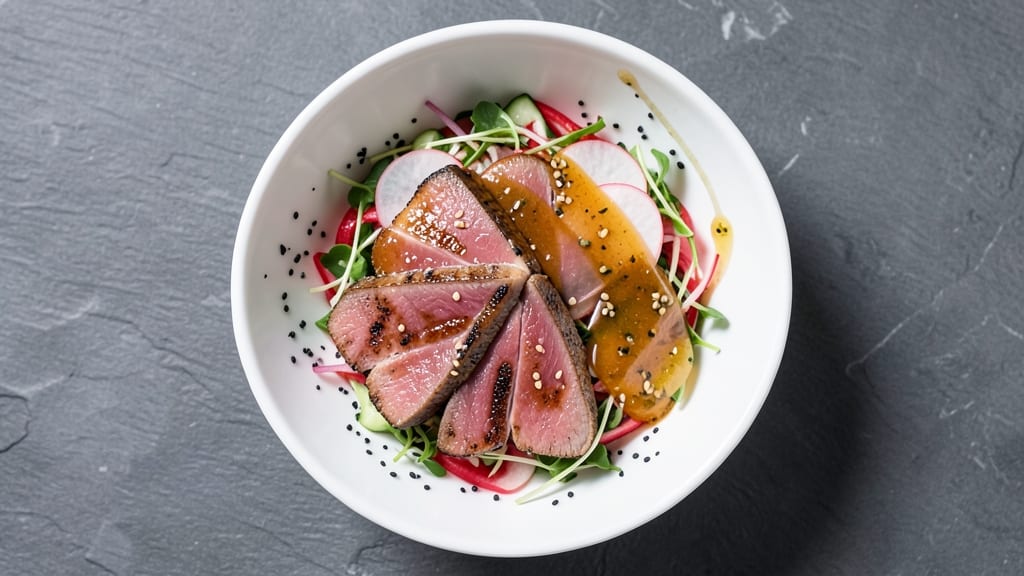
This Asian ahi tuna salad recipe delivers restaurant-quality bites with tender seared tuna, bright sesame-soy dressing, and crisp toppings that create perfect texture contrast. The secret lies in quick-searing the tuna just until it's opaque—never overcooking—then slicing it into clean, paper-thin pieces that hold up beautifully in the salad. I developed this version after realizing store-bought ahi tuna salads always lacked that fresh-off-the-grill quality.
The foundation is a punchy sesame-soy dressing that balances sweet, salty, and umami flavors without overpowering the delicate tuna. Fresh wasabi adds a subtle kick, while toasted sesame seeds contribute nutty depth.
We use crisp shaved cucumber and crunchy edamame for texture, plus delicate butter lettuce that won't wilt under the dressing. This isn't just another tuna salad—it's a sophisticated dish that feels like a high-end sushi bar experience at home.
What makes this recipe stand out is the plating technique: tuna arranged in elegant stacks with contrasting colors and textures. The crispy fried shallots on top add an unexpected crunch that elevates every bite.
Served immediately, this salad delivers melt-in-your-mouth tuna with vibrant, fresh components that complement rather than compete with the star ingredient. The flavors develop best right after assembly, making it perfect for fresh lunches or elegant appetizers.
For maximum freshness, prepare the tuna and dressing just before serving, but you can assemble the salad components up to 30 minutes ahead. Store any leftovers in an airtight container with parchment between layers to maintain crispness.
This recipe serves 2-3 as a main dish or 4 as an appetizer—ideal for weeknight dinners or special occasions when you want to impress without complicated techniques.
Ingredients for asian ahi tuna salad
Restaurant-quality ahi tuna salad starts with these vibrant, fresh ingredients—each playing its part perfectly.
| Ingredient | Amount | Notes |
|---|---|---|
| Fresh Ahi Tuna Steak 🐟 | 1 lb | Sushi-grade, center-cut preferred |
| Extra-Firgin Olive Oil 🫒 | ¼ cup | For searing tuna |
| Sesame Oil 🫒 | 1 tbsp | Toasted for aroma |
| Fresh Wasabi 🌶️ | 1 tbsp | Or 1 tsp wasabi paste |
| Low-Sodium Soy Sauce 🍶 | ¼ cup | Kikkoman preferred |
| Sesame Seeds 🌿 | 2 tbsp | Toasted for garnish |
| Honey 🍯 | 1 tbsp | Wildflower preferred |
| Garlic Cloves 🧄 | 2 cloves | Minced for dressing |
| English Cucumber 🥒 | 1 whole | Shaved into ribbons |
| Shelled Edamame 🌱 | ½ cup | Lightly salted |
| Butter Lettuce 🥬 | 4 whole | Separated into leaves |
| Shallots 🧅 | 2 whole | Thinly sliced for frying |
| Rice Vinegar 🍶 | 1 tbsp | For crisping shallots |
| Diamond Crystal Kosher Salt 🧂 | ½ tsp | For seasoning |
| Freshly Ground Black Pepper 🌶️ | ¼ tsp | Cracked peppercorn preferred |
The ahi tuna is non-negotiable—sushi-grade quality from a trusted fishmonger is essential. Look for bright red, firm flesh with minimal bruising. Whole Foods or Trader Joe's carry excellent pre-portioned cuts, but if buying whole, ask for the center-cut—it's the most tender. The extra-virgin olive oil should be light and fruity (avoid strong, peppery varieties that'll overpower the tuna). For the wasabi, freshly grated is ideal, but the paste works in a pinch—just use half the amount. Toast your sesame seeds in a dry pan for 30 seconds until fragrant—they'll add that nutty crunch that makes this salad sing.
No toasted sesame oil? Swap for neutral oil and add an extra dash of toasted sesame seeds for depth. The soy sauce can be reduced by half if you prefer less sodium—just balance with extra honey. Substitute edamame with crispy fried tofu or mandarin orange segments for a sweeter contrast. For the shallots, if you're nervous about frying, quick-pickle them in rice vinegar and salt for 10 minutes—they'll still add brightness. The cucumber should be chilled before shaving to prevent browning, and butter lettuce works best if you separate the leaves just before assembling to keep them crisp.
Assemble this salad right before serving—the tuna should be room temperature for even cooking. Store any leftover dressing in a sealed jar for up to 5 days in the fridge, but the tuna and toppings are best enjoyed fresh. For make-ahead prep, you can marinate the tuna in the dressing for up to 2 hours (no longer, or it'll get mushy), and prep all toppings in advance—just keep them separate until serving. The fried shallots stay crisp for 2 days if stored in an airtight container, but they're best freshly fried for maximum crunch.
Why You'll Love This Recipe
- I’ll be real: ahi tuna feels indulgent, but this recipe stretches it. A single steak feeds two for lunch, and the rest of the dressing (soy + sesame oil) turns a simple salad into something special. Fancy dinner without the fancy price tag.
- No-Chop Necessary: I swear by this—just slice the tuna thin, drizzle it with olive oil and sesame oil, and let the wasabi wake up every bite. That’s it. No dicing, no mincing, no stress. The tuna practically cooks itself in the fridge while I toss together the rest.
- Umami Bomb: Between us, that combo of fresh wasabi and low-sodium soy sauce on seared ahi? It’s like a flavor explosion in your mouth. The sesame oil adds this nutty depth, and suddenly you’re eating something that tastes restaurant-worthy—not just another salad.
- Lunchbox Legend: Honestly, this is my go-to for work lunches. Pack it in a jar with some cucumber ribbons and sesame seeds, and it stays fresh for days. My coworkers think I’m a genius because it’s fancy enough for meetings but zero effort to assemble.
Step-by-step instructions for Asian ahi tuna salad
Here's how to create restaurant-quality ahi tuna bites with a perfect sesame-soy balance and crispy toppings.
Marinate the Ahi Tuna in Sesame-Soy Glaze
In a small bowl, whisk together the 0.25 cup low-sodium soy sauce, 1 tablespoon honey, 1 tablespoon fresh wasabi, and 1 tablespoon toasted sesame oil until fully combined. This marinade should have a vibrant amber color with visible wasabi flecks. Transfer the mixture to a shallow dish large enough to hold the 1 lb fresh ahi tuna steak in a single layer.
Place the ahi tuna steak in the marinade, turning to coat all sides completely. Cover and refrigerate for at least 30 minutes (I prefer 1 hour for maximum flavor penetration). The wasabi will start to mellow slightly during this time, creating a balanced heat rather than an overwhelming burn. Don't skip this step—proper marination ensures tender, flavorful tuna bites that hold together when sliced.
Sear the Tuna for Perfect Texture
Preheat a cast-iron skillet over medium-high heat until very hot (you should see a thin layer of smoke when you place a drop of water on it). Add the 0.25 cup extra-firgin olive oil and let it shimmer for 30 seconds. Remove the tuna from the marinade (reserve the marinade) and pat it dry with paper towels—this ensures maximum contact with the hot oil.
Place the tuna in the skillet and sear for 2-3 minutes per side until both surfaces develop a deep golden crust. The center should still feel slightly cool to the touch when you press gently—this indicates perfect doneness. Transfer the tuna to a cutting board and let it rest for 5 minutes before slicing. This resting period allows the juices to redistribute, preventing dryness when you cut into the delicate fish.
Prepare the Crispy Shallot Topping
While the tuna rests, thinly slice the 2 whole shallots into paper-thin rings (about 1/16-inch thick). Heat a small skillet over medium heat and add the shallots in a single layer. Cook undisturbed for 2-3 minutes until they begin to curl at the edges. Add the 1 tablespoon rice vinegar and continue cooking for another 1 minute until the shallots are crispy and golden brown.
Remove the shallots from the skillet and drain on a paper towel-lined plate. They should be completely dry and crispy—this texture provides the perfect contrast to the tender tuna. If any shallots remain soft, return them to the skillet for another 30 seconds to crisp. Sprinkle with 0.25 teaspoon freshly ground black pepper while still warm to enhance their flavor.
Assemble the Salad Bases and Garnishes
Separate the 4 whole butter lettuce leaves into individual cups or bowls. Arrange them with the stems facing down to create elegant, bite-sized salad bases. Lightly salt the lettuce with 0.5 teaspoon diamond crystal kosher salt to enhance their natural sweetness and crispness. In a small bowl, toss the 0.5 cup shelled edamame with a pinch of salt to highlight their natural flavor.
Shave the 1 whole English cucumber into thin ribbons using a vegetable peeler, then toss with 1 tablespoon toasted sesame seeds and a tiny pinch of salt. The cucumber should remain crisp—avoid over-handling which can soften the texture. Save 1 tablespoon sesame seeds for garnishing the final presentation.
Slice and Serve the Tuna Bites
Using a sharp knife, slice the rested tuna steak into 1-inch thick pieces, then cut each piece diagonally into 4 equal bite-sized portions. Arrange 1 tuna bite on each lettuce cup, then top with a few crispy shallot rings, edamame, and cucumber ribbons. Drizzle lightly with any remaining marinade from the dish (about 1 tablespoon) and sprinkle with the reserved 1 tablespoon sesame seeds.
Serve immediately while the tuna is still warm and the toppings maintain their crisp texture. Each bite should deliver perfectly seared tuna with a balance of sweet, savory, and slightly spicy flavors, complemented by the crunch of crispy shallots and edamame. The presentation is as important as the taste—these elegant bites make a stunning appetizer for any occasion.
Pro Tips For Making Asian Ahi Tuna Salad
- SEAR THE TUNA FAST: Hit the pan on high heat—no simmering, no medium-low nonsense. Ahi tuna’s best when it hits 125°F (52°C) max, so work in batches if needed. I learned this the hard way by overcooking mine into rubbery disappointment.
- USE SESAME OIL LAST: Add sesame oil after the tuna’s off the heat—it burns fast and turns bitter. A teaspoon or two drizzled at the end gives that nutty aroma without sacrificing flavor. (Yes, even if you’re impatient like me.)
- DON’T SKIP THE WASABI PREP: Grate fresh wasabi just before tossing it in—it loses potency fast. Start with a tiny amount (½ teaspoon) and adjust; store-bought paste won’t cut it here. Trust me, your taste buds will notice.
- MARINATE IN THE SOY SAUCE: Toss the tuna in low-sodium soy sauce immediately after searing while it’s still warm—it clings better. Let it sit 2-3 minutes before serving; this step makes the sauce stick instead of pool at the bottom.
Pro cooking tips for this dish
Tuna Searing Secrets
For perfect ahi tuna, your pan must be scorchingly hot—think medium-high heat until oil shimmers like a desert mirage. I use a cast-iron skillet because it retains heat like a champ, but a heavy stainless steel works too.
The key is 2-3 minutes per side only—any longer and you'll end up with dry, rubbery tuna. Pat the fish bone-dry with paper towels before searing to prevent steaming. 🔥
Pro tip: Test your pan's readiness by flicking a drop of water onto it—if it sizzles and evaporates instantly, you're golden. For extra insurance, I sear the tuna twice: first for color, then flip and sear again for even cooking.
This double-sear method ensures a deep golden crust without overcooking the center.
Marinade Timing
Never skip the 30-minute minimum marinade time—this lets the sesame-soy glaze penetrate the tuna's surface, creating that umami-rich crust we all crave. I like to marinate for up to 1 hour in the fridge, but never longer or the tuna will absorb too much liquid and turn mushy.
The wasabi is your secret weapon here—it adds subtle heat that mellows during marinating, creating a balanced flavor profile.
For extra depth, I sometimes add 1 tsp grated ginger to the marinade. This complements the wasabi beautifully and adds a fresh, zesty note that cuts through the richness of the tuna. Just
Crispy Topping Hacks
The crispy shallots are what elevate this salad from good to showstopper. The secret is thin slicing—use a sharp mandoline or carefully slice by hand to get paper-thin rings. Cook them undisturbed until they curl at the edges, then finish with rice vinegar for extra crunch. I like to drain them on a wire rack for maximum crispness rather than paper towels, which can make them soggy.
For a shortcut, you can quick-fry the shallots in a dry skillet first, then add the vinegar at the end. This two-step method gives you better control over the crisping process.
If you're feeling fancy, try golden shallots—these are pre-fried in oil and sold in jars, saving you the hassle of frying at home.
Plating Like a Pro
Presentation matters just as much as flavor in this dish. I use butter lettuce cups because they're delicate enough to complement the tuna without overpowering it. Arrange the tuna bites diagonally for visual interest, then fan out the crispy shallots and edamame in a sunburst pattern.
This creates texture contrast that makes each bite exciting.
For an extra touch, I drizzle the remaining marinade in zigzag lines over the tuna using a squeeze bottle. This not only adds flavor but also creates an elegant visual effect. Finish with a sprinkle of toasted sesame seeds for that final nutty crunch that ties everything together. 💫
Nutrition facts
Frequently asked questions
Can I substitute fresh wasabi with wasabi paste?
Yes, but use only half the amount—wasabi paste is more concentrated. For the recipe, replace 1 tablespoon fresh wasabi with just 0.5 tablespoon paste. Fresh wasabi provides a brighter, more complex flavor, but paste works in a pinch. Store-bought wasabi loses potency over time, so check the date on your jar for best results.
How do I keep the tuna from turning gray after slicing?
Always use sushi-grade ahi tuna and keep it ice-cold until ready to cook. After searing, let it rest 5 minutes before slicing to maintain juices. For extra protection, brush the sliced tuna with a tiny bit of toasted sesame oil before serving—this helps preserve color and adds subtle flavor. Serve immediately to prevent oxidation.
Is this salad safe to eat raw if I'm pregnant?
No, this recipe requires searing the tuna to 145°F internal temperature (or until opaque). Raw ahi tuna (sashimi-style) carries risks of parasites and bacteria, especially for pregnant women, young children, or those with weakened immune systems. The searing step in this recipe makes it safe for everyone while maintaining that tender, restaurant-quality texture.
Can I make this ahead of time?
Prepare components separately up to 30 minutes ahead, but assemble just before serving. Marinate the tuna for up to 1 hour (no longer), and prep all toppings in advance. Store raw tuna and toppings in separate airtight containers in the fridge. For the crispy shallots, fry them fresh—they lose crunch after 2 days even when refrigerated.
What's the best way to store leftovers?
Store any uneaten tuna and toppings in an airtight container with parchment paper between layers to prevent sogginess. Keep leftovers for up to 2 days in the fridge. Reheat gently in a skillet (not microwave) to restore texture. The crispy shallots won't survive reheating—save them for fresh salads only. The dressing can be stored separately for 5 days.