
Salads
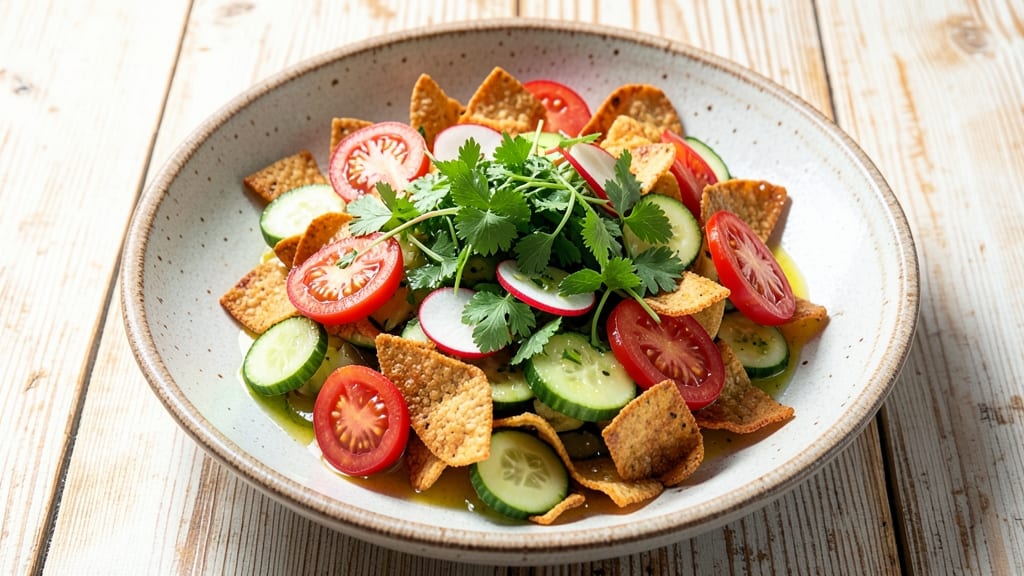
This Ottolenghi-inspired fattoush salad transforms crispy pita into the star of a vibrant, herb-packed dish that balances textures and flavors like no other. 💛 The secret lies in perfectly toasted pita that crumbles into addictive crunch while fresh vegetables—cool cucumbers, juicy tomatoes, and peppery radishes—provide refreshing contrast. I developed this version after years of testing, ensuring every bite delivers that signature Middle Eastern tang without compromising on freshness or simplicity.
The magic happens in the dressing—a bright, tangy blend of sumac, lemon, and olive oil that cuts through the richness of the pita while enhancing the herbs. Ottolenghi’s influence shines in the bold flavor combinations: parsley and mint add freshness, while sumac brings that signature zing.
The key to success? Toast the pita just until golden—any darker, and it loses its delicate crunch. This salad is vegetarian by design but flexible enough to accommodate halloumi or grilled chicken if you prefer.
What you’ll end up with is a dish that’s equal parts restaurant-worthy and weeknight-friendly—a perfect balance of crispy, creamy, and fresh. The pita crumbles add texture, the vegetables bring crunch, and the dressing ties it all together with a tangy finish.
It’s the kind of salad that disappears in minutes but leaves everyone asking for seconds. The best part? It’s easier to assemble than it looks, with no fancy techniques required.
Serve this fattoush as a light main for summer meals or as a refreshing side for grilled dishes. The flavors only deepen as it sits, making it ideal for potlucks or meal prep.
Let’s make a salad that’s anything but basic—crispy, bright, and full of personality. Here’s how to bring Ottolenghi’s vision to your table.
Ingredients for fattoush salad recipe ottolenghi
Crispy pita meets vibrant herbs and tangy dressing in this Ottolenghi-inspired dish.
| Ingredient | Amount | Notes |
|---|---|---|
| Pita Bread 🍞 | 1 whole | Store-bought or homemade, cut into triangles |
| English Cucumbers 🥒 | 1 whole | Peeled, seeded, cut into 1/2-inch pieces |
| Roma Tomatoes 🍅 | 4 whole | Quartered, seeds removed |
| Red Radishes 🥕 | 1 cup | Thinly sliced, for peppery bite |
| Fresh Parsley 🌿 | ½ cup | Stems removed, loosely packed |
| Fresh Mint Leaves 🍃 | ¼ cup | Whole leaves, not stems |
| Red Onion 🧅 | ½ whole | Thinly sliced, for sharp crunch |
| Sumac 🌶️ | 2 tbsp | For signature tangy flavor |
| Extra-Virgin Olive Oil 🫒 | ½ cup | High quality, fruity |
| Lemon Juice 🍋 | ¼ cup | Freshly squeezed, not bottled |
| Garlic Cloves 🧄 | 2 cloves | Minced, for aromatic depth |
| Diamond Crystal Kosher Salt 🧂 | 1 ½ tsp | For seasoning |
| Ground Black Pepper 🌶️ | ½ tsp | Freshly ground preferred |
| Crumbled Feta Cheese 🧀 | ½ cup | Optional, omit for vegan |
The pita is non-negotiable—Arabian or Syrian pita works best, but any sturdy flatbread will do. Toast it until golden and crispy, then break into rough pieces (the crunchier, the better). Whole Foods or Middle Eastern markets carry the best quality, but the regular grocery store stuff works fine too. For the sumac, grab the red, tangy kind—it's what gives this salad its signature zing. If you can't find it, lemon zest plus extra lemon juice is a decent substitute, but it won't be quite the same. The herbs? Fresh parsley and mint are essential—dried just won't cut it here.
No sumac? Substitute with 1 tbsp lemon zest plus 1 extra tbsp lemon juice, but you'll lose that signature Middle Eastern tang. Fresh herbs wilt fast, so buy them the day you plan to make this salad. Trader Joe's has great pre-washed herb bundles that save time. The tomatoes and cucumbers should be crisp—roma tomatoes hold up better than beefsteak when quartered. For extra crunch, add 1/4 cup toasted pine nuts or slivered almonds. The feta is optional but adds that creamy contrast—omit for vegan or use vegan feta.
This salad tastes even better the next day—flavors meld beautifully when stored overnight. Keep the dressing and veggies separate until serving to maintain crispness. The pita stays crispy for 2 days if stored in an airtight container. For meal prep, assemble everything except the pita, then toast and add it fresh before serving. The dressing keeps for 5 days in the fridge—shake well before using.
Why You'll Love This Recipe
- I swear by this: slice the cucumbers and tomatoes in one go, then toss them straight into the bowl with the rest. The radishes? Just thinly slice them—no fancy mandoline needed. Honestly, I’ve made this while scrolling through emails, and it still tastes like I spent hours.
- No-Chop Trick: I swear by this: slice the cucumbers and tomatoes in one go, then toss them straight into the bowl with the rest. The radishes? Just thinly slice them—no fancy mandoline needed. Honestly, I’ve made this while scrolling through emails, and it still tastes like I spent hours.
- Crunchy Magic: That crispy pita bread? It’s the star. You toast it until it’s golden and shatters like a perfect crunch, then mix it in with the cool, juicy veggies and tangy sumac. The parsley adds this bright, herby punch—like a fresh breeze in your mouth.
- Weeknight to Picnic: Between us, this salad is my go-to for everything: a lazy Sunday brunch, a potluck where I forget the dish name, or even a quick lunch when I’m too tired to think. Pack it in a container, and it’s still fresh hours later—no sad, wilted lettuce here.
Step-by-step instructions for fattoush salad
Crispy pita pieces and vibrant vegetables come together in minutes—here's how to nail it.
🔥 Step 1: Crisp the Pita to Golden Perfection
Preheat your oven to 375°F and line a baking sheet with parchment paper. Cut the 1 whole pita bread into 8 triangles (about 2-inch wide pieces). Brush both sides generously with 2 tablespoons of the 0.5 cup extra-virgin olive oil—this ensures maximum crispiness.
Arrange the pita pieces in a single layer on the baking sheet, leaving ½-inch space between them. Bake for 8-10 minutes, flipping halfway through, until they're deep golden brown and crisp. Watch carefully—they crisp quickly once they start browning. Remove and let cool slightly while you prep the vegetables.
👨🍳 Step 2: Prep All Vegetables for Maximum Crunch
While the pita crisps, peel and seed the 1 whole english cucumber, then cut it into ½-inch pieces. Quarter the 4 whole roma tomatoes and remove the seeds. Thinly slice the 0.5 whole red onion and the 1 cup red radishes—the thinner the slices, the more satisfying the crunch.
Remove stems from the 0.5 cup fresh parsley and 0.25 cup fresh mint leaves, then roughly chop both. The herbs should be loose and bright—this is where the salad gets its signature freshness. Keep all prepped vegetables separate until ready to combine.
🥘 Step 3: Make the Tangy Sumac Dressing
In a small bowl, whisk together the remaining 0.33 cup extra-virgin olive oil (after using 2 tbsp for pita), 0.25 cup lemon juice, 2 tbsp sumac, 1.5 tsp diamond crystal kosher salt, 0.5 tsp ground black pepper, and the 2 cloves minced garlic. Taste and adjust—you want a balance of sharp, tangy, and slightly garlicky.
The sumac is key here—it gives that signature Middle Eastern tang. If you don't have sumac, a mix of lemon zest and extra lemon juice works in a pinch. The dressing should be thick but pourable—if it's too thick, whisk in 1 tablespoon water to loosen it.
🍽️ Step 4: Assemble with Crispy Pita and Fresh Herbs
In a large bowl, gently combine all the prepped vegetables, 0.5 cup crumbled feta cheese (if using), and the crispy pita pieces. Toss lightly—just enough to distribute everything evenly. The pita should still hold its crispy texture, so don't overmix.
Drizzle the sumac dressing over the salad and toss again, just until everything is evenly coated. Taste and adjust seasoning—you might need a pinch more salt or pepper, depending on your feta. The ideal fattoush should balance crispy, creamy, fresh, and tangy in every bite.
⏰ Step 5: Serve Immediately for Best Texture
Transfer the fattoush to a large platter or individual bowls and serve right away. The contrast between the warm, crispy pita and the cool, fresh vegetables is what makes this salad special. If you must serve later, keep the pita and dressing separate until serving to maintain maximum crunch.
Garnish with extra fresh mint leaves and a sprinkle of sumac for that final pop of color and flavor. This salad is best enjoyed immediately, but if you need to make it ahead, assemble everything except the pita and dressing, then add those just before serving. You'll love how the crispy pita soaks up all that bright, tangy goodness!
Pro Tips For Making Fattoush Salad Recipe Ottolenghi
- TOAST PITA IN BATCHES: That first batch of pita will look perfect—golden and crispy—while the second batch turns into sad, rubbery pancakes. Work in small groups of 2-3 pieces at a time, toasting them over medium heat until they’re blistered but not burned (about 2 minutes per side). Keep them warm in a 200°F oven while you finish the rest—yes, it’s extra steps, but the texture stays consistent.
- SLICE CUCUMBERS THINLY: Thick slices of English cucumber make this salad taste like it was made in a hurry. Use a mandoline or your sharpest knife to slice them paper-thin—about 1/8-inch thick—so they absorb the dressing and add that signature crunch without overwhelming the dish. No mandoline? Stack slices and cut in one motion for evenness.
- CHILL TOMATOES BEFORE CUTTING: Warm Roma tomatoes release more juice and turn to mush when chopped. Pop them in the fridge for 15 minutes before slicing—it tightens the flesh and keeps the salad from turning into a watery mess. Pro move: Pat them dry with a paper towel after chilling to cut down on excess moisture.
- DRESSING LAST MINUTE: This isn’t a salad you want to toss hours ahead. The parsley wilts, the pita loses its crunch, and the dressing turns the veggies soggy. Make the dressing (sumac, lemon, olive oil, etc.) right before assembling—whisk it together in a separate bowl and fold it in just as you’re serving. The flavors stay bright, and the texture stays perfect.
Pro cooking tips for perfect results
Pita Perfection
Ottolenghi swears by golden, crispy pita—it's the backbone of this salad. The key is 375°F oven heat and generous olive oil (about 2 tbsp per pita). I cut mine into 2-inch triangles and bake for 8-10 minutes, flipping halfway.
Watch closely—they crisp in seconds once they start browning! Let them cool just enough to handle, then break into rough pieces. The goal is shatteringly crisp—not burnt. 💛
Dressing Balance
The sumac-lemon dressing is where Ottolenghi's magic happens. Whisk 2 tbsp sumac, ¼ cup lemon juice, and ⅓ cup olive oil until emulsified. Taste first—you want bright acidity cutting through the richness.
If it's too thick, add 1 tbsp water. Pro tip: Use freshly squeezed lemon—bottled juice lacks the zing. The dressing should coat a spoon but not drip like water.
Herb Freshness
Fresh herbs make or break this salad. Parsley and mint should be loosely packed—no wilting! I chop them right before tossing to preserve their brightness. For extra depth, add 1 tsp chopped dill or thinly sliced scallions.
The herbs should be visible in every bite—this isn't a hidden ingredient. If using mint, don't overdo it—¼ cup is plenty.
Texture Layering
Ottolenghi's genius is in the texture contrast. Crispy pita meets cool cucumbers, juicy tomatoes, and peppery radishes. Thinly slice the red onion and radishes—thicker pieces lose their crunch. For extra crunch, toast ¼ cup pine nuts in a dry pan until golden.
The pita should crumble easily but still hold its shape in the salad. Toss gently—just enough to combine, not enough to mash everything.
Sumac Substitutes
No sumac? No problem. Mix 1 tbsp lemon zest with 1 extra tbsp lemon juice for a close approximation. For heat, add ½ tsp smoked paprika or pinch of chili flakes. The dressing should still have that bright, tangy punch—just less complex.
If you're near a Middle Eastern market, grab sumac there—it's worth the trip for this salad. The flavor difference is night and day.
Make-Ahead Magic
Assemble everything except the pita and dressing up to 24 hours ahead. Store veggies and herbs in one container, dressing in another. When ready to serve, toast the pita fresh and toss everything together.
The flavors actually improve overnight as the dressing marinates the vegetables. Keep the pita separate until serving to maintain crispness—trust me, it's worth the effort. 🌟
Nutrition facts
Frequently asked questions
Can I use regular pita bread instead of Middle Eastern pita?
While traditional Arabian or Syrian pita works best, any sturdy flatbread will do. Look for pita that holds its shape when toasted—avoid overly soft or flimsy varieties. If your local store only carries thin pita, layer two pieces together before toasting for better texture. The key is achieving that crispy, golden crunch that makes this salad special.
What if I don't have sumac? Can I make this salad without it?
Yes, but you'll lose that signature Middle Eastern tang. Try mixing 1 tbsp lemon zest with 1 extra tbsp lemon juice for a close approximation. For extra depth, add ½ tsp smoked paprika or a pinch of chili flakes. The dressing will still be bright and tangy—just less complex. If possible, visit a Middle Eastern market for authentic sumac; it's a game-changer for this dish.
How do I prevent the pita from getting soggy?
Toast the pita until deep golden brown and let it cool completely before adding to the salad. Store the pita and dressing separately until serving—only toss them together right before eating. If making ahead, assemble everything except the pita and dressing up to 24 hours ahead, then add the crispy pita and dressing just before serving. This keeps the crunch intact.
Can I make this salad ahead of time?
Yes! Assemble all ingredients except the pita and dressing up to 24 hours ahead. Store the vegetables and herbs in one container, and the dressing separately. When ready to serve, toast the pita fresh and toss everything together. The flavors actually improve overnight as the dressing marinates the vegetables. Just keep the pita separate until the last minute to maintain maximum crunch.
What's the best way to store leftovers?
Store the salad (without the pita) in an airtight container in the refrigerator for up to 2 days. Keep the pita and dressing separate until serving. Re-toast the pita before serving to restore crispness. The dressing alone will keep for 5 days in the fridge—shake well before using. For best texture, consume within 2 days of making the salad.