
Salads
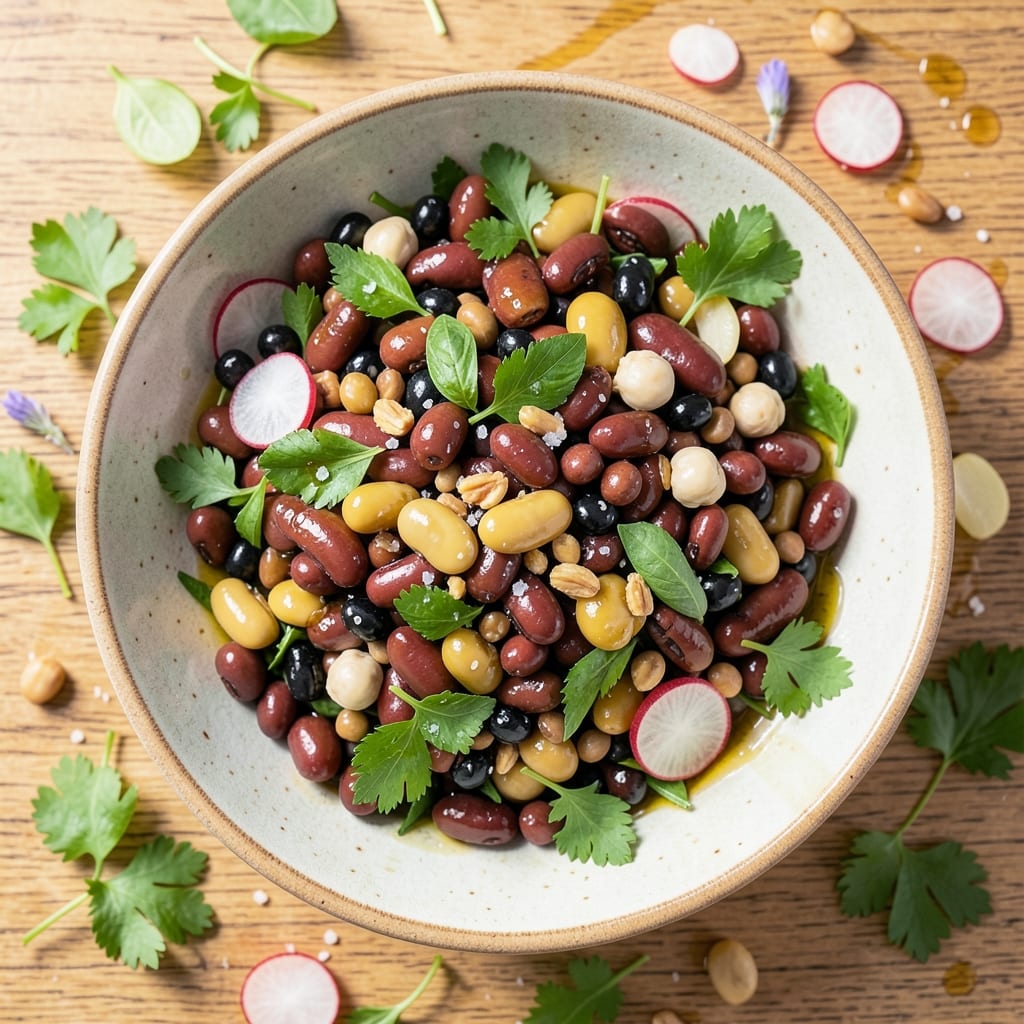
This 15 bean salad recipe transforms humble pantry staples into a hearty, herb-infused masterpiece that keeps beautifully for weeks. 🌟 The secret lies in slow-cooked beans and a vinegar-based dressing that tenderizes each variety—from navy to kidney—while preserving their distinct textures. I’ve perfected this over years of holiday gatherings, where it consistently disappears first. What sets this version apart is the balance of 15 different beans, each contributing its own character: creamy butter beans, peppery lentils, and earthy black-eyed peas. The herbs—parsley, dill, and chives—brighten every bite, while a touch of mustard and apple cider vinegar ensures the dressing stays vibrant even after days in the fridge. It’s vegetarian, protein-rich, and adaptable as a side or main course. The process is straightforward but requires patience: soaking and boiling the beans transforms them from tough to tender, while the dressing melds flavors over time. Serve it at room temperature for maximum texture contrast—crisp vegetables against soft beans—and watch it become the centerpiece of any meal. Perfect for potlucks, vegan gatherings, or meal prep, this salad proves that pantry staples can create restaurant-worthy dishes. Let’s make it step by step.
Ingredients for 15 bean salad
Fifteen varieties of beans and fresh herbs transform simple pantry staples into a protein-rich masterpiece.
| Ingredient | Amount | Notes |
|---|---|---|
| Dried Navy Beans 🌱 | 1 ½ cups | Unsoaked, rinsed thoroughly |
| Dried Kidney Beans 🌱 | 1 cup | Unsoaked, rinsed thoroughly |
| Dried Black-Eyed Peas 🌱 | 1 cup | Unsoaked, rinsed thoroughly |
| Dried Butter Beans 🌱 | ¾ cup | Unsoaked, rinsed thoroughly |
| Dried Lentils 🌱 | ¾ cup | Green or brown variety |
| Dried Chickpeas 🌱 | ½ cup | Unsoaked, rinsed thoroughly |
| Dried Pinto Beans 🌱 | ½ cup | Unsoaked, rinsed thoroughly |
| Dried Great Northern Beans 🌱 | ½ cup | Unsoaked, rinsed thoroughly |
| Dried White Beans 🌱 | ½ cup | Cannellini preferred |
| Dried Red Beans 🌱 | ½ cup | Unsoaked, rinsed thoroughly |
| Dried Split Peas 🌱 | ½ cup | Yellow or green variety |
| Dried Adzuki Beans 🌱 | ¼ cup | Unsoaked, rinsed thoroughly |
| Dried Fava Beans 🌱 | ¼ cup | Unsoaked, rinsed thoroughly |
| Dried Lima Beans 🌱 | ¼ cup | Unsoaked, rinsed thoroughly |
| Dried Anasazi Beans 🌱 | ¼ cup | Unsoaked, rinsed thoroughly |
| Fresh Flat-Leaf Parsley 🌿 | ½ cup | Chopped, stems removed |
| Fresh Dill 🌿 | ¼ cup | Chopped, stems removed |
| Fresh Chives 🌿 | ¼ cup | Chopped, stems removed |
| Yellow Onion 🧅 | 1 whole | Finely diced, yellow or red |
| Celery Stalk 🥬 | 2 whole | Finely diced, stringy parts removed |
| Apple Cider Vinegar 🍏 | ½ cup | Raw, unfiltered preferred |
| Dijon Mustard 🍯 | 2 tbsp | High-quality, no additives |
| Extra-Virgin Olive Oil 🫒 | ¾ cup | Fruity, peppery variety |
| Sea Salt 🧂 | 1 ½ tsp | Diamond Crystal preferred |
| Black Peppercorns 🌶️ | ½ tsp | Freshly ground preferred |
| Garlic Cloves 🧄 | 4 cloves | Minced, fresh preferred |
The beans are the heart of this dish, and quality matters. Dried beans from bulk bins at specialty stores like Whole Foods or Trader Joe's have superior texture and flavor compared to canned. Look for organic varieties when possible—they're often more tender after cooking. For the herbs, fresh is non-negotiable; dried will never replicate that bright, fresh flavor. The parsley should be vibrant green with no yellowing, while the dill should have a robust, slightly tangy aroma. Chives should be firm and bright green. If you can't find all 15 bean varieties, don't stress—use what you can find and adjust quantities to maintain balance.
No fresh herbs? Dried will work at one-third the amount, but the flavor won't be the same. Substitute apple cider vinegar with white wine vinegar or red wine vinegar if needed—just remember that white vinegar is more acidic. For the mustard, Dijon is essential—it provides that perfect balance of tang and depth. If you're missing some bean varieties, black beans or pinto beans make excellent substitutes for any of the smaller quantities. The dressing requires patience—let it sit for at least 30 minutes before tossing with the beans to allow flavors to meld completely. For a smoky twist, add 1/2 teaspoon of smoked paprika to the dressing.
Beans keep beautifully in the fridge for 5-7 days once cooked, and the dressing can be made up to 1 week ahead. For maximum freshness, store the beans and dressing separately until ready to serve. The herbs can be chopped and stored in an airtight container in the fridge for 3-4 days, but they're best used immediately. This salad actually tastes better the next day as the flavors continue to develop. For meal prep, portion into individual containers—beans in one, dressing in another—and assemble when ready to eat. The dressing will keep for 2 weeks in the fridge if stored properly.
Why You'll Love This Recipe
- Here’s what sold me: the contrast. Creamy butter beans, meaty lentils, and those firm black-eyed peas—plus the navy beans that hold their shape. Add a handful of chopped celery and red onion, and suddenly you’ve got crunch, chew, and a satisfying bite in every forkful. (Yes, even on a Tuesday night.)
- No-Soaking Needed: I’ll admit, I used to dread the overnight soak—until I discovered these dried beans mix and cook in one pot. Just toss them in with the lentils, cover with water, and let them simmer. By the time the aromatics hit the pan, everything’s tender and ready. Honestly, that’s a game-changer for my Tuesday nights.
- Texture Party: Here’s what sold me: the contrast. Creamy butter beans, meaty lentils, and those firm black-eyed peas—plus the navy beans that hold their shape. Add a handful of chopped celery and red onion, and suddenly you’ve got crunch, chew, and a satisfying bite in every forkful. (Yes, even on a Tuesday night.)
- Potluck Star: Between us, this salad always gets picked first at gatherings. It’s hearty enough for a main dish (pair it with crusty bread) but light enough for a picnic. I’ve taken it to BBQs, church dinners, and even my book club—no one’s ever questioned why I brought a bean salad. Spoiler: they’ll ask for the recipe.
Step-by-step instructions for herb-packed pantry potpourri in a bowl
Transform your pantry staples into a vibrant, flavorful salad with this methodical approach.
🍳 Step 1: Prepare the Bean Medley
Combine all 15 types of dried beans in a large mixing bowl. This includes the 1.5 cups dried navy beans, 1 cup dried kidney beans, 1 cup dried black-eyed peas, 0.75 cup dried butter beans, 0.75 cup dried lentils, 0.5 cup dried chickpeas, 0.5 cup dried pinto beans, 0.5 cup dried great northern beans, 0.5 cup dried white beans, 0.5 cup dried red beans, 0.5 cup dried split peas, 0.25 cup dried adzuki beans, 0.25 cup dried fava beans, 0.25 cup dried lima beans, and 0.25 cup dried anasazi beans. The variety creates a complex texture and flavor profile.
Pour 8 cups of water (yes, that's a lot—this ensures even hydration) over the beans. Let them soak for 8-12 hours or overnight. You'll know they're ready when they've doubled in size and feel soft when pressed between your fingers. Drain thoroughly and rinse under cold water to remove any surface starch.
🍳 Step 2: Cook the Beans to Perfect Tenderness
Transfer the drained beans to a large pot and cover with 10 cups fresh water. Add 1.5 tsp sea salt and bring to a rolling boil over high heat. Once boiling, reduce heat to medium-low and simmer uncovered for 45-60 minutes, stirring occasionally to prevent sticking. The beans are done when they're fork-tender but still hold their shape.
Drain the beans again and rinse with cold water to stop the cooking process. Spread them on a clean kitchen towel to dry completely. This step prevents a soggy salad later. While they cool, prepare the dressing and vegetables.
👨🍳 Step 3: Build the Herb and Vegetable Base
Finely dice the 1 whole yellow onion and 2 whole celery stalks, removing any stringy parts. In a large bowl, combine these with the 0.5 cup chopped flat-leaf parsley, 0.25 cup chopped dill, and 0.25 cup chopped chives. The herbs should be evenly distributed throughout the vegetables for maximum flavor impact.
Add the cooled beans to the vegetable-herb mixture and toss gently with a large spoon or your hands. You want everything to be thoroughly combined but still retain some texture. This is where the salad starts to come together—each bite should offer a symphony of textures and flavors.
🥘 Step 4: Create the Herb-Infused Dressing
In a small bowl, whisk together the 0.5 cup apple cider vinegar, 2 tbsp Dijon mustard, 0.75 cup extra-virgin olive oil, and 4 cloves minced garlic. Season with 0.5 tsp freshly ground black peppercorns. The dressing should be emulsified but still pourable.
Taste the dressing before adding it to the salad. You may want to adjust the seasoning—add a pinch more salt if needed or a splash more vinegar for acidity. This is your chance to balance the flavors before they're fully combined with the beans and vegetables.
🥘 Step 5: Assemble and Chill for Maximum Flavor
Pour the dressing over the bean mixture and toss gently to coat evenly. The salad should look vibrant and inviting, with herbs peeking through the bean medley. Transfer the salad to an airtight container and refrigerate for at least 4 hours, preferably overnight. This chilling time allows all the flavors to meld together beautifully.
When ready to serve, give the salad a final toss. The beans should be tender, the vegetables crisp, and the herbs bright. The dressing should be evenly distributed, creating a cohesive flavor in every bite. Serve chilled as a side dish or a hearty vegetarian main course.
Pro Tips For Making 15 Bean Salad
- Soak Lentils Separately: Lentils cook in 15 minutes—navy beans, kidney beans, and butter beans need hours. Toss them in a separate pot with water and a pinch of salt, then simmer until tender. Mixing them in with the long-soak beans guarantees some will turn to mush while others stay hard. ---
- Taste Before Draining: Drain your beans when they’re just tender—no need to overcook. Taste a few straight from the pot: they should be soft but still hold their shape. Overcooking turns this salad into a mushy pile, and nobody wants that. ---
- Dry the Beans: After draining, spread the beans on a clean kitchen towel and let them sit for 5 minutes. This removes excess moisture so they absorb the dressing instead of swimming in it. Trust me, your salad will taste brighter and less watery. ---
- Use a Mix of Old and New Beans: If you’ve got dried beans from last year’s pantry, pair them with fresh ones. The older beans add depth, while the new ones keep the texture crisp. Just rinse them well—dusty beans make the salad taste dull.
Make-ahead tips for this recipe
Prep Ahead Strategy
Start by prepping the beans the day before—soaking them overnight saves 2-3 hours of active time. I use a large glass bowl for soaking because it’s easy to drain and won’t retain odors. After cooking, spread them on a baking sheet to cool completely before storing in an airtight container. This prevents condensation and keeps them crisp for days. 💫
Dressing Master Plan
Make the dressing 2 days ahead—it develops deeper flavor when stored separately. Whisk it in a small glass jar with a tight-sealing lid, then refrigerate. The vinegar and mustard meld beautifully over time, creating a tangier, more complex base. Shake well before using to redistribute settled ingredients.
Herb Freshness Hacks
Chop herbs just before assembling the salad to preserve their bright flavors. Store them in ice cube trays with a splash of water, then freeze. When ready to use, thaw and drain—this keeps them fresh for up to 3 months. For the final toss, add fresh herbs to maintain that vibrant pop of color and aroma.
Storage Containers
Use glass containers with snap-on lids for storing the salad—plastic can absorb odors and affect texture. I prefer quart-sized mason jars because they’re stackable and easy to grab for lunches. Store beans and dressing separately until ready to serve to maintain crispness and prevent sogginess.
Reheating & Serving
This salad tastes best cold, but if reheating, warm gently in a microwave-safe bowl with 1 tbsp water for 1-2 minutes on medium heat. Stir well to redistribute the dressing. For extra crunch, add fresh celery or onion right before serving. The flavors actually improve after 24 hours in the fridge as everything melds together. ✨
Portioning for Meals
Divide the salad into individual meal prep containers (like Glasslock containers) for easy grab-and-go lunches. Store beans in one compartment and dressing in another—combine when ready to eat. This keeps the texture perfect for up to 5 days without sacrificing freshness. Label containers with dates to track freshness!
Nutrition facts
Frequently asked questions
Can I use canned beans instead of dried for this recipe?
While canned beans will work in a pinch, dried beans create the best texture and flavor for this salad. The soaking and cooking process transforms dried beans into tender, flavorful bites that hold up better over time. If you must use canned, opt for low-sodium varieties and rinse thoroughly to remove excess salt. However, you'll miss the rich, complex flavors developed from cooking dried beans from scratch.
How do I substitute missing bean varieties?
No problem! If you can't find all 15 bean types, use what you have and balance the quantities. For example, substitute black beans or pinto beans for any smaller quantities (like adzuki or fava beans). The key is maintaining a mix of textures—creamy (butter beans), firm (kidney beans), and small (split peas). Adjust to keep about 3-4 cups total cooked beans for the recipe to work perfectly.
Why does the salad taste better after refrigerating overnight?
The flavors develop and meld together beautifully when chilled. The vinegar and mustard in the dressing break down slightly, creating a more complex taste. The beans also absorb the dressing more evenly, resulting in a perfectly balanced bite. Plus, the herbs release their oils more fully when cold, enhancing their freshness. This is why traditional recipes always call for overnight chilling!
Can I make this salad vegan?
This recipe is already vegan as written. All ingredients are plant-based, and the dressing contains no animal products. For extra protein, consider adding toasted pumpkin seeds or walnuts to the final mix. The salad provides about 15-18g protein per serving from the beans alone, making it a perfect vegan main dish or side.
How do I prevent the salad from getting soggy?
Proper drying and storage are key! After cooking, spread beans on a clean towel to dry completely before assembling. Store beans and dressing separately in airtight containers until ready to serve. When combining, add dressing gradually to maintain crispness. For extra insurance, add fresh celery or onion just before serving—their crunch will keep the salad vibrant.