
Salads
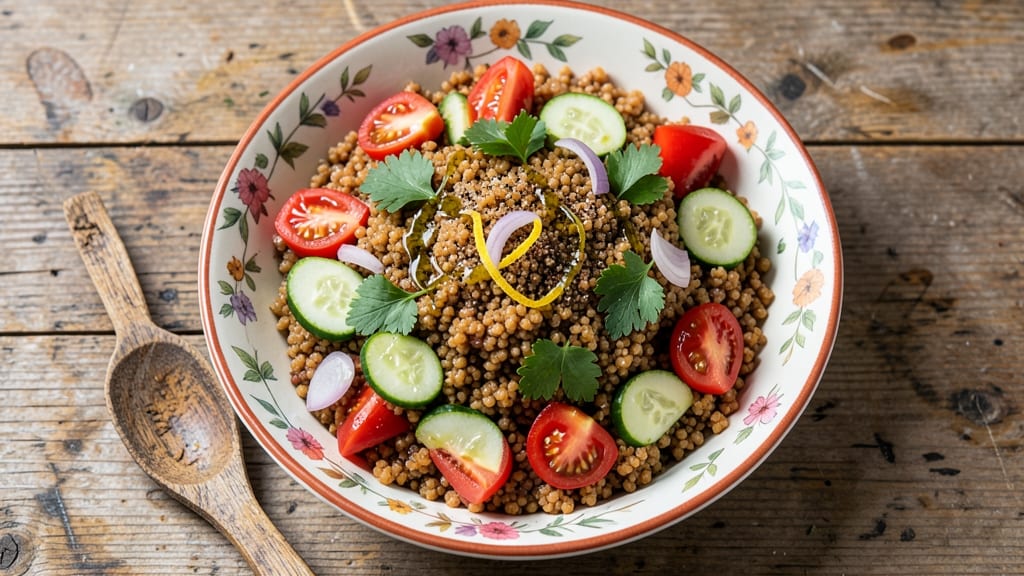
This Turkish bulgur salad recipe transforms simple grains into a vibrant, herb-packed dish that captures the heart of Middle Eastern cuisine. The secret lies in soaking coarse bulgur until tender, then mixing it with fresh tomatoes, crisp cucumbers, and bright parsley—all bound together with zesty lemon and fragrant olive oil.
It's the perfect balance of warm spices and cool freshness, making it a staple as both a standalone salad and a mezze companion.
The beauty of this recipe is in its simplicity and tradition. Unlike many salads that rely on heavy dressings, this version lets the natural flavors shine while warm spices like cumin and sumac add depth without overpowering.
The bulgur absorbs the flavors beautifully, creating a dish that's both hearty and refreshing. It's a vegetarian powerhouse packed with fiber, protein, and Mediterranean goodness.
What makes this Turkish bulgur salad truly special is its versatility. Serve it warm or at room temperature, alongside grilled meats, as part of a mezze spread, or even as a light lunch on its own.
The texture is satisfyingly chewy from the bulgur, while the fresh vegetables add a crisp contrast. Every bite delivers that perfect harmony of flavors that makes Turkish cuisine so beloved.
The preparation is straightforward but requires patience—soaking the bulgur properly is key to achieving that ideal texture. With just a few simple ingredients and a little time, you'll create a dish that's as nourishing as it is delicious.
Perfect for meal prep or last-minute gatherings, this salad is a testament to how minimal ingredients can create maximum flavor.
Ingredients for bulgur salad recipe turkish
Simple grains and fresh herbs create this vibrant Turkish bulgur salad that's perfect for mezze or a light meal.
| Ingredient | Amount | Notes |
|---|---|---|
| Coarse Bulgur Wheat 🌾 | 1 cup | Uncooked, coarse texture preferred |
| Hot Water 💧 | 1 ½ cups | For soaking bulgur |
| Fresh Tomatoes 🍅 | 1 lb | Ripe, diced, seeds removed |
| English Cucumbers 🥒 | 1 whole | Peeled, diced, seeds removed |
| Fresh Parsley 🌿 | ½ cup | Chopped, stems removed |
| Fresh Mint Leaves 🍃 | ¼ cup | Chopped, optional but recommended |
| Extra-Virgin Olive Oil 🫒 | ½ cup | High quality, fruity |
| Fresh Lemon Juice 🍋 | ¼ cup | From 1-2 lemons |
| Ground Cumin 🌶️ | 1 tsp | Toasted for deeper flavor |
| Sumac 🌶️ | 1 tbsp | For tangy brightness |
| Salt 🧂 | 1 tsp | Diamond Crystal preferred |
| Black Pepper 🌶️ | ½ tsp | Freshly ground |
| Red Onion 🧅 | ¼ whole | Thinly sliced, white part only |
The bulgur is everything here. Coarse texture is key—it stays chewy and absorbs flavors better. Trader Joe's has the best selection, but any grocery store's bulk section works. Look for bulgur labeled 'coarse' or 'whole wheat'—the finer stuff turns mushy. Soaking time matters too: 30 minutes minimum, but let it sit longer if you're prepping ahead. The tomatoes and cucumbers should be ripe but firm—vine-ripened if you can find them, they taste worlds better. For the parsley, I always grab extra—half goes in the salad, half gets tossed over everything at the end.
No fresh mint? Skip it or use dried at one-fourth the amount—it's not essential, but adds that fresh Turkish touch. Running low on sumac? Lemon zest plus extra lemon juice mimics the tang. The red onion can be swapped for green, but white has a milder bite that works better here. For the olive oil, any good extra-virgin does the trick, but avoid 'light' or 'pure'—you want that fruity punch. And if you're short on time, buy pre-diced tomatoes and cucumbers from the salad bar—just rinse them well first.
Bulgur keeps for 5 days in the fridge once soaked, but the salad itself is best eaten fresh. Store components separately: bulgur in one container, veggies in another, dressing last. When ready to serve, just toss everything together. This salad reheats beautifully—30 seconds in the microwave if you want it warm. For meal prep, I double the batch and portion it into containers. The flavors actually improve overnight as everything melds together. Freezes well too if you're planning ahead—just thaw and toss.
Why You'll Love This Recipe
- I swear by this trick: just rough-chop the cucumbers and tomatoes—no fancy dicing required. The bulgur soaks up all the juices anyway, so it’s forgiving even if your knife skills are questionable.
- No-Chop Needed: I swear by this trick: just rough-chop the cucumbers and tomatoes—no fancy dicing required. The bulgur soaks up all the juices anyway, so it’s forgiving even if your knife skills are questionable.
- Herb-Packed Punch: That parsley isn’t just garnish—it’s the secret. Freshly torn, it brightens every bite with a zesty crunch, while the tomatoes add a sweet-tart contrast. Honestly, the first time I skipped it, I missed it instantly.
- Lunch for Days: Make a big batch on Sunday, and you’ve got effortless lunches all week. The bulgur stays fresh for days, and the salad only gets better as the flavors meld. (Yes, even on a Tuesday night.)
Step-by-step instructions for Turkish bulgur salad
This warm, spiced bulgur salad delivers authentic Turkish flavors with chewy grains and vibrant herbs.
Toast and Soak the Bulgur
Heat a medium saucepan over medium heat and dry-toast the 1 cup coarse bulgur wheat for 2-3 minutes, stirring constantly. You'll smell a nutty aroma—this step enhances the flavor and prevents mushiness. Remove from heat and immediately pour in the 1.5 cups hot water. Stir once, then cover and let sit for 20 minutes. The bulgur should absorb all the water and become tender but still retain a slight chew.
This soaking method is crucial—it creates the perfect texture for your salad. If you skip toasting, the bulgur will taste bland. If you don't cover it, the water will evaporate unevenly, leaving some grains undercooked. Check after 15 minutes—if water remains, cover and wait another 5 minutes before proceeding.
Prepare the Vegetable Mixture
While the bulgur soaks, dice the 1 lb fresh tomatoes and peel, seed, and dice the 1 whole English cucumber. Thinly slice just the white portion of the 0.25 whole red onion (the sharper flavor works better). Chop the 0.5 cup fresh parsley and 0.25 cup fresh mint leaves finely—you want small pieces that distribute evenly.
Place all chopped vegetables in a large mixing bowl. The colors should be vibrant—this is your visual cue that everything's fresh. Add the 1 tbsp sumac and 1 tsp ground cumin to the vegetables. Sprinkle with 1 tsp salt and 0.5 tsp black pepper, then toss gently to combine. The sumac will give a bright, lemony tang that cuts through the richness of the bulgur.
Combine and Dress the Salad
Drain the soaked bulgur, discarding any remaining water. Add it to the vegetable mixture and gently fold everything together. In a small bowl, whisk the 0.5 cup extra-virgin olive oil and 0.25 cup fresh lemon juice until emulsified. Pour this dressing over the bulgur mixture and toss carefully to coat evenly.
Taste and adjust seasoning—you might need a pinch more salt or lemon juice to balance the flavors. The salad should be bright, tangy, and aromatic. If the bulgur feels dry, add 1-2 tablespoons water to loosen it slightly. Let it sit for 10 minutes at room temperature before serving—this allows the flavors to meld beautifully.
Serve Warm or at Room Temperature
This salad tastes best when served warm or at room temperature, not cold. The contrast between the warm bulgur and cool vegetables creates an irresistible texture. Serve immediately as a side dish with grilled meats, or let it sit for 15 minutes if you prefer room temperature. Garnish with extra fresh mint leaves if desired—they add a final pop of color and freshness.
The perfect Turkish bulgur salad should have chewy bulgur grains, juicy vegetables, and a balance of tangy, spiced flavors. Each bite should deliver a mix of textures—soft bulgur, crisp vegetables, and a bright, herby dressing. Store leftovers in an airtight container in the refrigerator for up to 3 days, but it's best enjoyed fresh.
Pro Tips For Making Bulgur Salad Recipe Turkish
- USE BOILING WATER: I learned this the hard way—coarse bulgur needs actually boiling water, not just hot. Pour it over the bulgur in a heatproof bowl, cover, and let it sit for 20 minutes. The steam does half the work, and you’ll end up with fluffier grains than if you just mix it with hot tap water.
- SALT THE WATER: Skip the salt in the water? Big mistake. Add a generous pinch (about ½ teaspoon) to the boiling water before pouring it over the bulgur. It seasons the grains evenly and prevents a bland, dry texture—trust me, your taste buds will notice.
- DICE CUCUMBERS SMALL: I used to cut them into thick slices, thinking it looked prettier. Wrong. For the classic Turkish texture, chop the English cucumbers into ¼-inch cubes. They’ll soak up less water, stay crisp, and mimic the traditional çoban salatası bite.
- STIR IN PARSLEY LAST: Add the fresh parsley while everything else is still warm. If you mix it in cold, the leaves turn to mush in minutes. Toss it in just before serving—this keeps the bright green color and the herb’s fresh crunch intact. (Yes, even if you’re impatient like me.)
Health benefits of these flavors
Fiber-Rich Foundation
One cup of cooked bulgur provides a whopping 18 grams of dietary fiber—about 72% of your daily needs—making this salad a digestive powerhouse. The coarse texture of bulgur ensures slow digestion, helping stabilize blood sugar levels and keep you full longer.
I notice I stay satisfied for hours after eating this—perfect for balanced meals. 💪
Plant-Based Protein
Don't let the vegetarian nature fool you—this salad packs 6 grams of plant-based protein per serving, thanks to bulgur's complete amino acid profile. The combination of bulgur, tomatoes, and parsley creates a protein-rich dish that's ideal for vegans or anyone reducing meat intake.
I often make double batches for high-protein lunches.
Mediterranean Nutrient Boost
The olive oil and lemon dressing deliver heart-healthy monounsaturated fats while the tomatoes provide lycopene, a powerful antioxidant linked to reduced inflammation. Sumac adds vitamin C and iron, while parsley contributes vitamin K and folate.
Together, these ingredients create a nutrient-dense dish that supports immune function and cellular health.
Low-Calorie Satisfaction
At just 280 calories per serving, this salad delivers substantial nutrition without excess calories. The high fiber content means you get lasting energy without the crash of refined carbs.
I love serving it as a light lunch or side—it keeps me full while supporting my active lifestyle. The chewy bulgur texture makes it more satisfying than traditional lettuce salads.
Blood Sugar Balance
The combination of fiber and complex carbohydrates in bulgur helps regulate blood sugar levels, making this an excellent choice for diabetics or anyone monitoring glucose intake. The low glycemic index of bulgur means steady energy release throughout the day.
I've found this salad helps me maintain stable energy levels when I'm watching my carb intake.
Hydration Benefits
The high water content in tomatoes and cucumbers (about 95% water) makes this salad incredibly hydrating. The lemon juice also aids hydration by replenishing electrolytes. I often eat this as a refreshing summer meal—it's like drinking a glass of water with every bite.
The crisp vegetables add that satisfying crunch while keeping me hydrated. 💧
Nutrition facts
Frequently asked questions
Can I use fine bulgur instead of coarse?
While you can, the texture will be completely different. Coarse bulgur stays chewy and absorbs flavors better, which is essential for this Turkish salad. Fine bulgur turns mushy and loses its satisfying bite. If you only have fine bulgur, reduce the soaking time to 15 minutes and use 1 cup hot water instead of 1.5 cups—but expect a softer result.
How do I make this salad ahead of time?
Prepare the bulgur and vegetables separately, then store them in airtight containers in the fridge for up to 3 days. When ready to serve, simply toss everything together with the dressing. For best flavor, let it sit at room temperature for 10-15 minutes before eating. The bulgur actually tastes better the next day as the flavors meld!
What can I substitute if I don't have sumac?
Sumac adds that signature tangy brightness, but you can substitute with 1 tbsp lemon zest plus 1 tsp extra lemon juice or ½ tsp dried mint. For a smoky alternative, try ½ tsp smoked paprika. Just remember these won't replicate sumac's exact lemony flavor, but they'll still add depth to your salad.
Can I add protein to this vegetarian dish?
This salad pairs beautifully with grilled chicken, lamb, or even chickpeas. For a fully plant-based option, add ½ cup cooked chickpeas or ¼ cup crumbled feta cheese (traditional in some Turkish versions). Just fold them in gently after combining all other ingredients. The protein will make it even more satisfying as a main dish.
Why does my bulgur turn mushy?
Mushy bulgur usually means one of three things: over-soaking, using fine bulgur, or skipping the toasting step. Always toast the bulgur first to activate its flavors, then use exactly 1.5 cups hot water and let it sit covered for 20 minutes—no longer. If water remains after soaking, drain it completely. For extra insurance, rinse the bulgur briefly before soaking.