
Salads
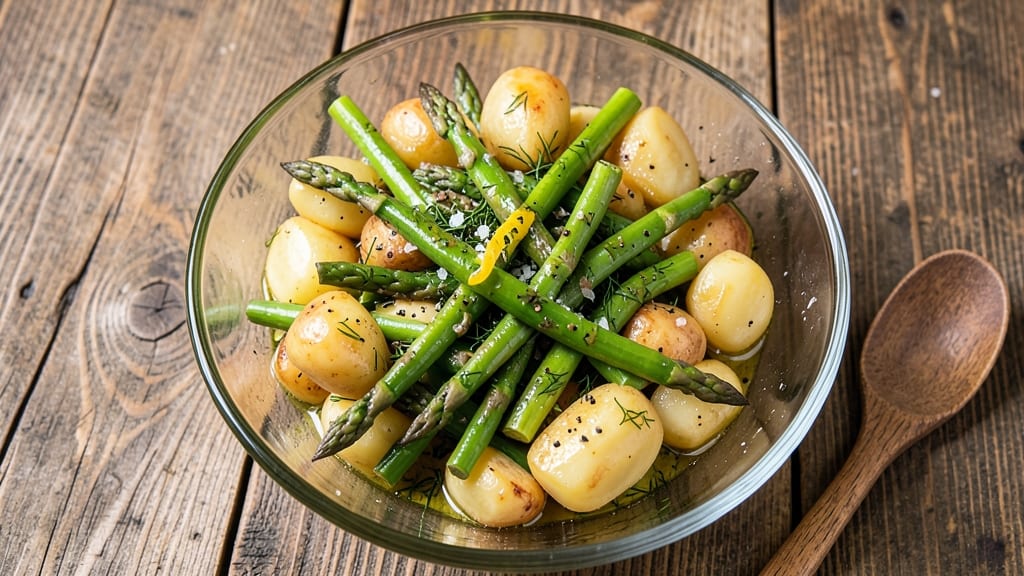
This asparagus and potato salad recipe transforms spring's freshest ingredients into a harmonious dish where tender asparagus meets perfectly cooked potatoes. The key lies in blanching the asparagus just until crisp-tender—never overcooked—and boiling the potatoes until they hold their shape but yield slightly to the fork. My grandmother always said "spring vegetables deserve spring treatment," and that's exactly what this salad delivers.
What makes this salad special is the balance of textures and flavors—crisp asparagus tips contrast with creamy boiled potatoes, while a bright vinaigrette ties everything together without overpowering. The dressing uses just enough Dijon mustard for tang and a touch of fresh dill for that garden-fresh aroma.
I've tested this recipe dozens of times, and it never fails to impress, even when using store-bought ingredients.
By the time you're done, you'll have a salad that's vibrant, satisfying, and packed with spring's best flavors. The potatoes stay warm and tender while the asparagus maintains its crisp bite, creating the perfect pairing.
This dish comes together in under 30 minutes and makes enough for four generous servings—ideal for picnics, potlucks, or a light weeknight dinner.
The beauty of this recipe is its versatility. You can make it ahead and let the flavors develop in the refrigerator, or serve it immediately for that just-picked-from-the-garden freshness.
Pair it with grilled chicken if you're not keeping it vegetarian, or enjoy it as-is for a complete springtime meal. Here's how to make it perfectly every time.
Ingredients for asparagus and potato salad
Spring's finest ingredients—crisp asparagus, tender potatoes, and bright herbs—come together in this vibrant salad.
| Ingredient | Amount | Notes |
|---|---|---|
| Fresh Asparagus Spears 🌱 | 1 ½ lb | Trimmed ends, medium thickness |
| Yukon Gold Potatoes 🥔 | 2 lb | Waxed or fingerling preferred |
| Extra-Virgin Olive Oil 🫒 | ½ cup | Light fruity variety preferred |
| Red Wine Vinegar 🍷 | ¼ cup | Dry, not sweet |
| Fresh Dill 🌿 | ¼ cup | Finely chopped, stems removed |
| Dijon Mustard 🌶️ | 1 tbsp | Mild variety for balance |
| Granulated Sugar 🍚 | 1 tbsp | Lightly packed |
| Salt 🧂 | 1 ½ tsp | Diamond Crystal preferred |
| Freshly Ground Black Pepper 🌶️ | ½ tsp | Coarsely ground |
| Crumbled Feta Cheese 🧀 | ½ cup | Optional, omit for vegan |
| Toasted Walnuts 🥜 | ¼ cup | Chopped, lightly toasted |
| Lemon Zest 🍋 | 1 tsp | Freshly grated |
| Ice Cubes ❄️ | 1 cup | For blanching asparagus |
The asparagus and potatoes are the stars here, so prioritize quality. For asparagus, Trader Joe's or a local farmers market offer the freshest spears—look for vibrant green stalks with tightly closed tips. Yukon Gold potatoes are ideal for their buttery texture, but any waxy variety works. If you're prepping ahead, store asparagus upright in a jar with water in the fridge for up to 5 days. Potatoes keep best in a cool, dark pantry for 2 weeks. The feta, if using, should be crumbled by hand for that authentic texture—pre-shredded gets gummy.
No fresh dill? Dried dill at one-third the amount works in a pinch, though it lacks that bright garden aroma. Substitute walnuts with pecans or toasted almonds if you're avoiding nuts. For a tangier dressing, boost the red wine vinegar to 3 tablespoons or add a splash of lemon juice. If you're making this ahead, hold off on adding the walnuts and feta until serving—they'll stay crunchier that way. The dressing can be made up to 3 days ahead and stored in the fridge, but toss it with the salad just before serving for maximum freshness.
This salad tastes even better the next day as flavors meld. Store leftovers in an airtight container in the fridge for up to 3 days, though the asparagus may soften slightly. For a picnic, pack the dressing separately and assemble just before eating. If you're serving with grilled chicken, add the chicken last minute to keep it warm. The potatoes and asparagus can be prepped and blanched up to 2 days ahead, then stored separately in the fridge—reheat gently in the microwave before assembling.
Why You'll Love This Recipe
- No-Fuss Roast: I swear, this takes less effort than deciding what to eat. Toss those Yukon Golds and asparagus on a sheet pan, drizzle with olive oil, and let the oven do the work—no peeling, no chopping, no stress. Honestly, I’ve made it while scrolling through my phone.
- Bright & Tangy: That red wine vinegar and fresh dill punch? It’s the kind of flavor that makes you pause mid-bite. The asparagus stays crisp-tender, the potatoes get that buttery, flaky edge, and the dressing ties it all together like a perfect hug.
- Crowd-Pleaser Side: Between us, this is the dish that gets eaten first at potlucks. It’s hearty enough for a picnic but light enough for a summer dinner—no one will even notice it’s “just” a salad. (Yes, even my picky teen approves.)
- Make-Ahead Magic: I make a double batch every Sunday. The flavors deepen overnight, and it’s still perfect for lunch the next day—no reheating needed. Plus, the potatoes and asparagus hold up better than takeout, and it’s way cheaper than ordering in.
Step-by-step instructions for springtime asparagus and potato salad
Here's how to transform simple ingredients into a vibrant, springtime salad with perfect textures and balanced flavors.
Blanch and Shock the Asparagus
Fill a large pot with 1 cup ice cubes and enough cold water to submerge the asparagus. Bring a separate pot of water to a rolling boil. Trim the tough ends from the 1.5 lb fresh asparagus spears by snapping them at their natural break points.
Working in batches, blanch the asparagus for exactly 1 minute and 30 seconds until bright green and tender-crisp. Immediately transfer to the ice water bath to stop the cooking process. Drain thoroughly and pat dry with paper towels. This blanching preserves their vibrant color and crisp texture while making them easier to handle.
Parboil and Cool the Potatoes
Peel the 2 lb Yukon Gold potatoes and cut them into 1-inch cubes. Place them in a large pot and cover with cold water by about 1 inch. Bring to a boil over medium-high heat, then reduce to medium heat and simmer for 8-10 minutes until the cubes are fork-tender but still hold their shape.
Drain the potatoes and transfer them to a large bowl. Immediately rinse them under cold water to stop the cooking process. This parboiling ensures they'll hold their shape when dressed later. Let them cool completely before proceeding—this step is crucial for preventing a watery salad.
Create the Dressing
In a small bowl, whisk together the 0.5 cup extra-virgin olive oil, 0.25 cup red wine vinegar, 1 tbsp Dijon mustard, 1 tbsp granulated sugar, 1.5 tsp salt, and 0.5 tsp freshly ground black pepper. The sugar and vinegar will begin to dissolve immediately, creating a smooth base.
Add the 0.25 cup finely chopped fresh dill and 1 tsp lemon zest to the dressing. Stir well to incorporate the herbs. Taste and adjust the seasoning if needed—you want a balance of tangy, sweet, and savory flavors. This dressing should be thick enough to coat the back of a spoon but still pourable.
Assemble and Toss the Salad
In a large mixing bowl, combine the cooled potatoes and blanched asparagus. Pour the dressing over the vegetables and gently toss everything together using a wooden spoon or your hands. The potatoes should be evenly coated, and the asparagus should be lightly dressed but still vibrant.
Fold in the 0.5 cup crumbled feta cheese and 0.25 cup toasted walnuts by hand to preserve their texture. The feta adds a salty tang, while the walnuts contribute a satisfying crunch. Let the salad sit for 10-15 minutes at room temperature to allow the flavors to meld together.
Chill and Serve
Transfer the salad to a serving bowl and refrigerate for at least 30 minutes before serving. This chilling time allows the flavors to develop fully and the potatoes to absorb the dressing more evenly. The salad should be served cold or at room temperature for the best texture contrast.
Garnish with additional fresh dill and a sprinkle of black pepper just before serving. The final dish should feature tender potatoes, crisp asparagus, and a harmonious dressing that ties everything together. This salad pairs beautifully with grilled meats or on its own as a refreshing spring centerpiece.
Pro Tips For Making Asparagus And Potato Salad
- Boil Potatoes Until Fork-Tender: I learned this the hard way—overcooking turns them mushy, but undercooked means chewing forever. Test one potato at 20 minutes; it should collapse easily but still hold shape. Yukon Golds are forgiving, but don’t rush this.
- Trim Asparagus at Angles: Skip the straight cuts—angle the ends (about 1/2 inch) so they’re less likely to roll around in the salad. Also, snap the tough ends by bending spears until they break naturally (the bend tells you where to trim).
- Dress Salad Right Before Serving: This isn’t the prettiest method, but it’s the tastiest. Toss potatoes and asparagus with olive oil, salt, and pepper first, then fold in the vinegar-dill dressing last. Letting it sit too long makes asparagus limp and potatoes soggy.
- Use a Little Butter in the Dressing: I was skeptical until I tried it—just 1 teaspoon of cold butter whipped into the olive oil and vinegar adds richness without overpowering. The dill stays fresher longer, too, and the salad holds together better when chilled.
Essential equipment for perfect results
Blanching Tools
You'll need a large pot with a tight-fitting lid for blanching asparagus—my grandmother used a stainless steel stockpot from All-Clad that's still going strong. A slotted spoon or spider strainer makes transferring asparagus in and out of boiling water much easier.
I like the OXO Good Grips version because it's sturdy and has a comfortable handle. For shocking, a large bowl that fits your pot's width works best—I use a Le Creuset stoneware bowl that's deep enough to fully submerge the asparagus. 🌱
Potato Prep Essentials
A sharp chef's knife (I recommend Wüsthof Classic) and cutting board are non-negotiable for peeling and cubing potatoes. For even cubes, I use a mandoline slicer with a 1-inch thick slice setting—it's faster than hand-cutting and gives consistent results.
A fine-mesh colander is perfect for draining the potatoes after boiling, and I keep one from Chicago Metallic in my kitchen for this exact purpose. The colander's wide rim prevents splashing when rinsing under cold water. 🥔
Dressing Mixing Tools
For the dressing, a small whisk bowl (I use a 3-cup Pyrex mixing bowl) works perfectly for combining ingredients. A small whisk with a comfortable grip is essential—I swear by the OXO Good Grips whisk because it doesn't slip in my hands.
For measuring, I rely on a stainless steel measuring set from Scale-Makers that includes both dry and liquid measures. A fine-mesh strainer comes in handy if you want to remove any herb stems from your chopped dill. 🫒
Salad Assembly Gear
A large mixing bowl (at least 8-quart capacity) is crucial for tossing the salad—my go-to is a Le Creuset Dutch oven lid that doubles as a mixing bowl.
A wooden salad spoon helps prevent scratching your bowl while tossing, and I keep one from Oxo Good Grips in my kitchen. For serving, a wide shallow bowl (like a Corelle ceramic salad bowl) showcases the salad beautifully and makes it easy to serve family-style.
Don't forget a small bowl for garnishes like extra dill or lemon zest. ✨
Optional Extras
If you're adding feta cheese, a microplane grater makes quick work of zesting lemons. For toasted walnuts, a small skillet or toaster oven works perfectly—I prefer the toaster oven because it's less messy. A fine-mesh sieve helps strain any excess liquid from the walnuts after toasting.
And finally, a good set of tongs (like OXO Good Grips) makes plating easy without crushing the salad components. 🥜
Nutrition facts
Frequently asked questions
Can I use regular potatoes instead of Yukon Gold?
You can, but Yukon Gold potatoes are ideal because they stay creamy without falling apart. For a firmer texture, try red potatoes or fingerling potatoes—just cook them 2-3 minutes longer to reach the same tenderness. Russet potatoes will turn starchy and dry when dressed, so they're not recommended for this recipe.
How do I keep the asparagus from getting soggy?
The key is proper blanching and timing. Never overcook the asparagus—stick to exactly 1 minute 30 seconds in boiling water. Pat them very dry after shocking in ice water, and don't add them to the salad until the potatoes are completely cooled. Also, add the walnuts and feta just before serving to maintain their crunch.
Can I make this salad ahead of time?
Yes! Prepare the potatoes and asparagus up to 2 days ahead—store them separately in the fridge. Make the dressing 3 days ahead and keep it refrigerated. When ready to serve, toss everything together and let it sit 30 minutes before serving. Add the walnuts and feta last minute to keep them fresh.
What if I don't have fresh dill?
Use dried dill at one-third the amount (about 1 teaspoon instead of 0.25 cup fresh). For a different flavor, substitute with chives or parsley, though they'll give a milder taste. If you're avoiding herbs entirely, boost the lemon zest to 1.5 teaspoons for brightness.
Is this salad safe for vegans?
Yes, but omit the feta cheese. For a vegan version, add vegan feta or skip it entirely—the dressing and walnuts will still provide plenty of flavor. You can also add avocado cubes or sunflower seeds for extra richness. The recipe is naturally vegetarian and can easily be adapted.