
Salads
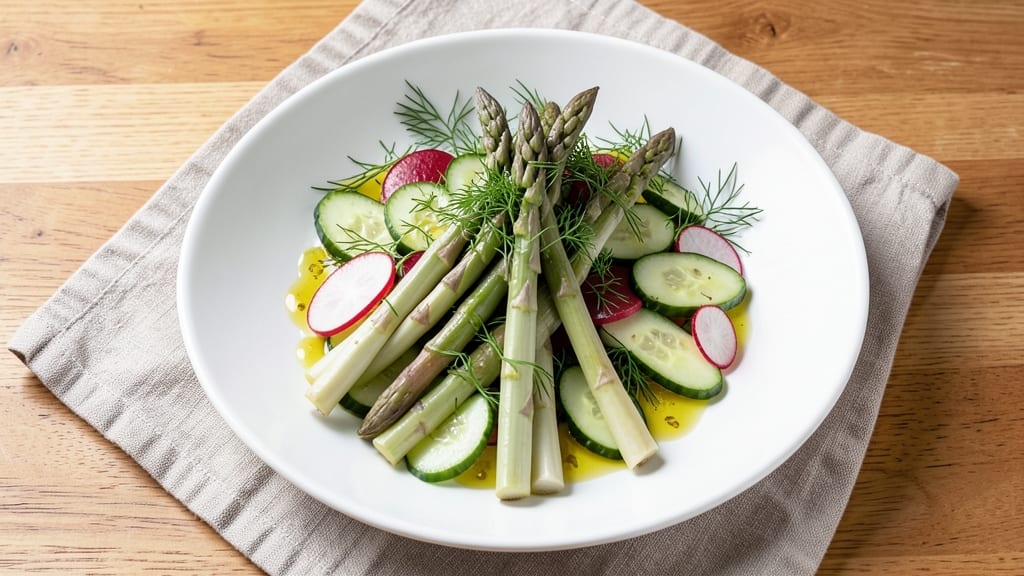
This asparagus and cucumber salad recipe brings fresh spring flavors to your table with just 15 minutes of prep time. The secret to its crisp texture lies in blanching the asparagus—transforming tough stems into tender, bite-sized perfection that pairs beautifully with cool cucumber slices.
I developed this recipe during a particularly busy week when I needed a salad that felt special without requiring hours of effort.
The foundation of this salad is a zesty dill dressing that balances the earthiness of asparagus with bright, herby notes. Fresh dill, lemon juice, and a touch of honey create a dressing that clings to every ingredient while keeping the salad light and refreshing.
Toasted almonds add crunch, while thinly sliced radishes bring a peppery contrast that elevates the entire dish.
By the time you're done assembling, you'll have a salad that's vibrant, texturally exciting, and packed with fresh flavors. The blanched asparagus stays crisp even when tossed with dressing, while the cucumber maintains its cool freshness.
This is the kind of salad that transforms a simple lunch into something memorable—perfect for picnics, potlucks, or a light weeknight dinner.
Optional garnishes like fresh mint or a sprinkle of feta cheese can take it to the next level. The recipe scales easily, so you can make a single serving or double it for a crowd. Let's get started—your taste buds will thank you.
Ingredients for asparagus and cucumber salad
Fresh spring ingredients that transform into a salad bursting with crisp textures and zesty brightness.
| Ingredient | Amount | Notes |
|---|---|---|
| Asparagus Spears 🌱 | 1 lb | Trimmed, woody ends removed |
| Persian Cucumber 🥒 | 1 whole | Seedless, thinly sliced |
| Radishes 🌶️ | 4 whole | Thinly sliced, any variety |
| Fresh Dill 🌿 | ¼ cup | Finely chopped, stems included |
| Extra-Virgin Olive Oil 🫒 | ½ cup | Light, fruity variety preferred |
| Lemon Juice 🍋 | ¼ cup | Freshly squeezed, strained |
| Raw Honey 🍯 | 1 tbsp | For subtle sweetness |
| Toasted Sliced Almonds 🥜 | ¼ cup | Skin-on for texture |
| Diamond Crystal Kosher Salt 🧂 | ½ tsp | Fine grain preferred |
| Freshly Ground Black Pepper 🌶️ | ¼ tsp | Coarse grind for texture |
| Fresh Mint Leaves 🌿 | ⅛ cup | Optional garnish, torn |
| Crumbled Feta Cheese 🧀 | ¼ cup | Optional garnish, optional |
The asparagus makes or breaks this salad. Look for bright green spears with tightly closed tips—they're sweeter and more tender. Trader Joe's and Whole Foods often carry the best quality, but any grocery store will have decent spears if they're fresh. Trim the woody ends carefully (about an inch) and snap the rest—it'll break naturally where it's tender. For extra crispness, blanching is key: boil for 2 minutes, then plunge into ice water. Don't skip this step—it turns tough stems into delicate bites.
No fresh dill? Dried dill at one-third the amount works in a pinch, but the flavor won't be as bright. The honey adds just enough sweetness to balance the tangy dressing—substitute maple syrup if you're avoiding honey. For the cucumber, Persian types are seedless and perfect, but any cucumber works if you remove the seeds. Radishes add a peppery kick—French breakfast radishes are my favorite, but any color works. The almonds should be toasted until golden—5 minutes in a dry pan is perfect. Too dark and they'll taste bitter.
This salad keeps best when stored in an airtight container with dressing on the side—3-4 days in the fridge. The asparagus stays crisp for about 2 days if you skip the dressing until serving. For meal prep, assemble everything except the dressing, then toss just before eating. The flavors actually improve overnight as everything marries. Garnishes like mint and feta can be added fresh when serving—they're purely decorative but take it to restaurant quality.
Why You'll Love This Recipe
- No-Cook Magic: I swear by this when I’m too tired to boil water—just snap the asparagus, slice the cucumber and radishes, and toss with dill and olive oil. The crunch alone makes it feel like a full meal with zero effort.
- Herb-Packed Punch: That fresh dill and bright Persian cucumber? It’s like a burst of spring in every bite, especially when you let the olive oil soak in for 10 minutes. The radishes add just enough sharpness to keep it from being too mild.
- Potluck Hero: Between us, this is my go-to for picnics, office parties, or even a last-minute side for grilled chicken. It holds up beautifully in a container, stays crisp, and looks fresh enough to impress—no one will guess it’s this simple.
- Budget Brightener: Asparagus and cucumbers are seasonal steals, and a bunch of dill lasts forever if you store it right. I make double batches and keep it in the fridge for days—cheap, colorful, and still delicious when reheated (yes, really).
Step-by-step instructions for crisp blanched asparagus salad
This method delivers perfectly tender asparagus with a satisfying crunch—no soggy greens here.
Blanch the Asparagus Spears
Fill a medium pot with 2 inches of water and bring to a rolling boil. While waiting, trim the tough woody ends from the 1 lb asparagus spears—simply bend each spear until it snaps naturally. This ensures clean breaks and prevents fibrous bites.
Once boiling, add the asparagus and cook for exactly 1 minute and 30 seconds. You'll see the spears turn vibrant green and become bright but still firm to the touch. Immediately drain in a colander and plunge them into an ice bath for 30 seconds to halt cooking and preserve that crisp-tender texture. Drain again and pat dry with paper towels—this step is crucial for preventing a watery salad.
Prepare the Vegetable Components
Using a mandoline or sharp knife, thinly slice the 1 whole Persian cucumber and 4 whole radishes into 1/8-inch thick rounds. I like to work directly over a large mixing bowl to catch everything as it falls. The cucumber should yield about 3 cups of delicate slices, while the radishes will add a satisfying peppery bite.
Arrange the sliced vegetables on a paper towel-lined plate and sprinkle with ½ teaspoon Diamond Crystal kosher salt. Let them sit for 10 minutes while you prepare the dressing. This drawing step removes excess moisture, which is essential for maintaining crispness in the final salad. The vegetables will look slightly wilted after this time—that's normal and actually improves texture.
Make the Zesty Dill Dressing
In a small bowl, whisk together the 0.5 cup extra-virgin olive oil, 0.25 cup lemon juice, 1 tablespoon raw honey, 0.25 teaspoon freshly ground black pepper, and 0.25 cup finely chopped fresh dill (including stems). The mixture should emulsify naturally—if it separates, simply whisk vigorously for 10 seconds to recombine.
Taste and adjust seasoning: the honey should balance the acidity while the dill adds bright, herbal notes. I find this dressing works best when made fresh—it's worth the few extra minutes to create that perfect harmony of flavors. The dressing should coat the back of a spoon with a silky, slightly thick consistency.
Assemble and Garnish
In a large serving bowl, gently combine the blanched asparagus, cucumber slices, and radishes. Pour the dressing over the vegetables and toss carefully with tongs to distribute evenly. You want to maintain some separation between the ingredients to showcase their individual textures and colors.
Sprinkle with the 0.25 cup toasted sliced almonds and, if using, the 0.125 cup torn fresh mint leaves and 0.25 cup crumbled feta cheese. The almonds add satisfying crunch, while the mint and feta provide contrasting textures and flavors. Serve immediately while the vegetables are still crisp—this salad doesn't improve with time.
Serve with Confidence
Divide the salad among four plates, ensuring each serving contains a mix of asparagus, cucumber, and radish slices. The presentation should show off the vibrant green asparagus against the pale yellow cucumber and pink radishes, creating an appealing visual contrast.
This salad delivers a perfect balance of textures—crisp vegetables, creamy feta, crunchy almonds—and flavors that dance between fresh, tangy, and slightly sweet. The blanching technique ensures the asparagus remains tender-crisp rather than becoming limp, while the dressing ties everything together with its bright, herbaceous profile. Enjoy immediately for the best experience!
Pro Tips For Making Asparagus And Cucumber Salad
- CHAR ASPARAGUS FIRST: I learned this the hard way—raw asparagus in salad makes it soggy within 30 minutes. Blanch the spears for 90 seconds in boiling salted water, then plunge into ice water to stop cooking. This keeps them crisp and bright, not limp and sad.
- SLICE CUCUMBERS THICK: Thin slices turn mushy fast. Cut Persian cucumbers into ¼-inch thick half-moons instead—thicker pieces hold their shape and release less water. Skip the peeling; the skin adds texture and nutrients.
- SALT THE RADISHES: Radishes get bitter if they sit too long. Toss them with a pinch of salt and let them sit for 5 minutes before adding to the salad. This draws out excess moisture and mellows their sharpness—trust me, it makes a real difference.
- DRESS JUST BEFORE SERVING: Olive oil and acid (like lemon juice) break down cucumbers fast. Mix the dressing separately and toss it in right before eating. If you must prep ahead, keep the dressing in a jar and add it at the last second—no one wants a watery pile of veggies.
Common mistakes when making perfect results
Overcooking Asparagus
The biggest mistake is letting asparagus cook too long during blanching. When I first tried this recipe, I left the spears in the boiling water for 2 minutes and 30 seconds instead of 1 minute and 30 seconds, and they turned mushy.
Always use a timer and test one spear by piercing it with a fork—it should be tender but still firm. Overcooked asparagus will ruin the salad's crisp texture. 🌱
Skipping the Ice Bath
Many people forget the ice bath step after blanching, which is crucial for stopping the cooking process immediately. Without it, the asparagus continues cooking in the residual heat, becoming limp. I learned this the hard way when my first batch turned out sad and soggy.
Fill a bowl with ice water and plunge the asparagus in for 30 seconds right after draining.
Using Unripe Vegetables
Picking vegetables that aren't at their peak freshness can make your salad taste bland or bitter. For cucumbers, look for ones that are firm and have a slight give when pressed.
Radishes should be crisp and bright in color. I always check the asparagus tips—they should be tightly closed, not wilted or opening. Using past-prime ingredients will make your salad taste disappointing.
Over-Tossing the Salad
When assembling, it's tempting to toss everything vigorously, but this can crush the vegetables and release too much moisture. Instead, gently combine the ingredients with tongs, keeping them separate to showcase their individual textures.
I've seen salads become watery and sad when tossed too much—this salad relies on its crisp components, so handle them with care.
Neglecting the Salting Step
Many people skip the 10-minute salting step before assembling the salad, which is essential for drawing out excess moisture. Without it, the cucumber and radish slices will release water when mixed with the dressing, making the salad soggy.
Trust me, this simple step makes a huge difference in texture. Just sprinkle the sliced vegetables with salt and let them sit while you prepare the dressing.
Using Bottled Dressing
Store-bought dressings often contain additives that can make your salad taste artificial. The homemade dill dressing in this recipe is designed to complement the fresh ingredients perfectly. I've tried using bottled dill dressing before, and it just didn't have the same bright, fresh flavor.
The secret is making it fresh—whisk together the olive oil, lemon juice, honey, and dill right before serving.
Nutrition facts
Frequently asked questions
Why does this salad need blanched asparagus instead of raw?
Blanching transforms tough asparagus stems into tender, bite-sized perfection while keeping them crisp. Raw asparagus can be fibrous and overpowering, while blanching for just 1 minute 30 seconds makes it tender yet satisfyingly firm. This technique is key to the salad's texture and flavor balance.
Can I make this salad ahead of time?
Yes, but with a few adjustments! Store the blanched asparagus, cucumber, and radishes separately in an airtight container for up to 2 days. Keep the dressing separate until ready to serve to maintain crispness. Assemble everything 30 minutes before eating for the best texture. The flavors actually improve overnight!
What if I don't have fresh dill for the dressing?
Use 1 teaspoon dried dill instead, but reduce the amount by one-third. For extra flavor, add ½ teaspoon dried tarragon or a pinch of dried marjoram. The dressing will still be delicious—just not as vibrant. Fresh dill gives the brightest flavor, but this works in a pinch!
How can I make this salad more substantial for a main course?
Add ½ cup cooked quinoa or ½ cup cooked chickpeas for extra protein and heartiness. For a richer option, top with ¼ cup crumbled goat cheese or 2 slices of grilled chicken breast. The salad's bright flavors will still shine through while making it more filling.
What's the best way to store leftovers?
Store the salad components separately in airtight containers for up to 3 days. Keep the dressing in a small jar and toss it with the vegetables just before serving. The asparagus stays crisp for about 2 days if you skip the dressing until ready to eat. For best results, eat within 24 hours of assembly.