
Salads
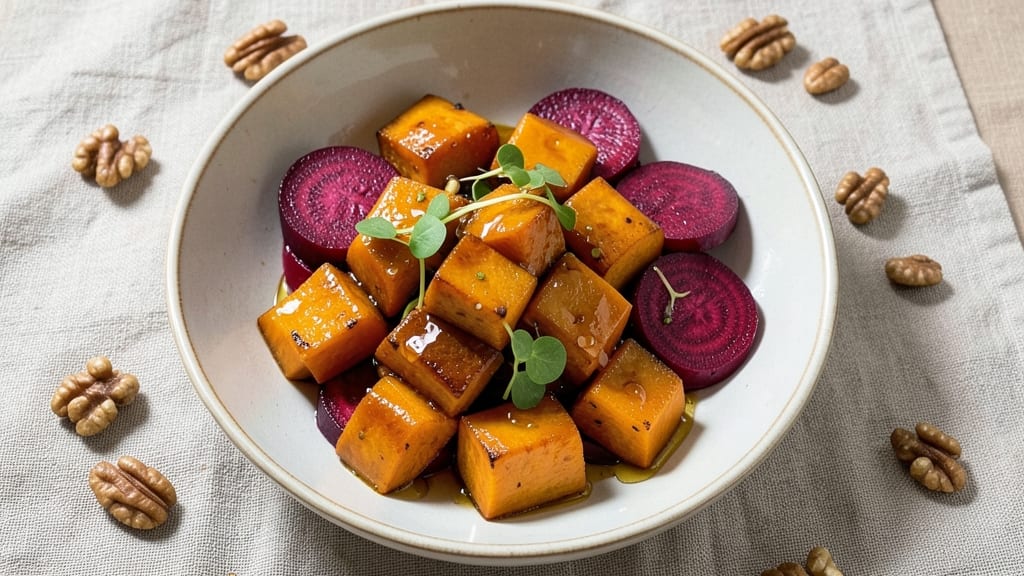
This butternut and beetroot salad transforms humble ingredients into a vibrant, crispy-edged masterpiece that balances sweet earthiness with nutty crunch. 🌟 After years of experimenting with roasted vegetables, I discovered the perfect harmony between caramelized squash and tender beets—both roasted until their edges turn golden and their centers stay tender.
The secret lies in the dressing: a tangy blend of maple syrup, apple cider vinegar, and Dijon that binds everything together without overpowering the natural flavors.
The recipe begins with 30 minutes of hands-off roasting, where butternut squash and beets develop their signature caramelized sweetness. While they cook, you'll toast walnuts in the same pan for that irresistible crunch, then slice everything into uniform pieces for a visually stunning presentation.
This isn't just a salad—it's a complete dish that's hearty enough for dinner but fresh enough for lunch.
What makes this salad truly special is how the textures play together: crispy walnuts contrast with the creamy beets and tender squash, while the dressing ties it all into a cohesive bite.
The result is a dish that's as beautiful as it is delicious, with colors that pop against any plate. It's the kind of salad that makes you want to serve it at gatherings, knowing it'll be the standout dish.
Best of all, this recipe scales effortlessly—double or halve the ingredients without losing balance. The roasted vegetables keep well in the fridge for up to three days, making this the perfect make-ahead meal. Let's create this earthy, satisfying salad that proves vegetables can be the star of the plate.
Ingredients for butternut and beetroot salad
Earthy sweetness meets crispy crunch—these vibrant ingredients transform into a showstopping salad.
| Ingredient | Amount | Notes |
|---|---|---|
| Butternut Squash 🍠 | 1 ½ lb | Cubed, skin removed |
| Beetroot 🍠 | 1 lb | Medium beets, peeled |
| Walnuts 🥜 | 1 cup | Raw, uncooked |
| Extra-Virgin Olive Oil 🫒 | ½ cup | For roasting and dressing |
| Maple Syrup 🍯 | 2 tbsp | Pure, grade B preferred |
| Apple Cider Vinegar 🍎 | 2 tbsp | Raw, unfiltered |
| Dijon Mustard 🌶️ | 1 tbsp | High-quality, smooth |
| Salt 🧂 | 1 tsp | Diamond Crystal kosher |
| Black Pepper 🌶️ | ½ tsp | Freshly cracked |
| Fresh Thyme Leaves 🌿 | ¼ cup | Chopped, stems removed |
| Fresh Arugula 🌱 | 4 cups | Baby leaves preferred |
| Lemon Juice 🍋 | 1 tbsp | Freshly squeezed |
The butternut squash and beetroot are the stars here. Look for squash with smooth skin and no soft spots—the smaller the better, as it roasts more evenly. Beets should be firm and heavy for their size; Trader Joe's and Whole Foods often carry pre-washed, pre-cut varieties if you're short on time. For the walnuts, raw is best—toast them yourself in the same pan you roast the veggies to save cleanup. Fresh thyme is ideal, but dried works at one-third the amount if you're in a pinch. The arugula adds that peppery bite—baby leaves are gentler but still pack flavor.
No maple syrup? Agave nectar or date syrup works just as well for that caramelized touch. Skip the Dijon? Yellow mustard at double the amount gives a similar tang. The dressing can be made ahead—just store it separately until ready to toss. For extra crunch, toasted pecans or candied walnuts are great swaps. If you can't find baby arugula, regular arugula or baby spinach will work, though the texture will differ slightly. The key is balancing sweetness and acidity—adjust the lemon juice to taste once everything's combined.
Roasted veggies keep beautifully in the fridge for 3-4 days, while the dressing lasts 1 week if stored in a sealed jar. Assemble the salad just before serving to maintain crispness. For make-ahead convenience, roast the veggies and toast the nuts ahead, then store separately. The dressing can be prepped the night before—it actually improves as the flavors meld. Portion into containers for easy grab-and-go lunches, or double the batch for dinner parties—this salad is always a crowd-pleaser.
Why You'll Love This Recipe
- One-Pan Magic: I swear by this—roast the squash and beets together, then toss with walnuts and dressing. No extra bowls, no extra mess, just done. The oven does all the work while I sip my coffee.
- Sweet-Savory Balance: That maple syrup glaze on the roasted squash? It’s the secret weapon. Earthy beets meet caramelized sweetness, and the walnuts add a crunch that keeps me reaching for seconds every time.
- Meal Prep MVP: Between us, this salad lasts four days in the fridge without wilting. Pack it for work, toss it in lunches, or serve it at potlucks—it’s the one dish that never disappoints (and actually tastes better later).
- Budget-Friendly Powerhouse: Butternut squash and beets are cheap, hearty, and pack serious flavor. A single roast yields leftovers for days, and I’ve fed six people for under $10 with this—plus, walnuts stretch the portion without breaking the bank.
Step-by-step instructions for roasted butternut and beetroot salad
Transform humble ingredients into a showstopping salad where caramelized sweetness meets irresistible crunch.
🔥 Step 1: Roast the Vegetables to Perfection
Preheat your oven to 400°F and line two large baking sheets with parchment paper. Toss the 1.5 lb cubed butternut squash and 1 lb peeled beetroot with 2 tablespoons olive oil, ½ teaspoon salt, and ¼ teaspoon black pepper. Spread them in a single layer, leaving space between pieces—they'll expand as they roast.
Roast for 25-30 minutes until the edges are deep golden brown and a knife slides in easily. Here's the thing—roasting brings out their natural sweetness and creates that perfect caramelized texture. Flip the vegetables halfway through for even browning. Remove from oven and let cool slightly before handling.
🍳 Step 2: Toast the Walnuts and Prepare the Dressing
While the vegetables roast, pulse the 1 cup walnuts in a food processor until they reach a coarse crumbly texture—you want to preserve some texture for that satisfying crunch. Spread them on a separate baking sheet and toast in the oven for 8-10 minutes until fragrant and lightly golden. Watch them closely—they burn quickly!
In a small bowl, whisk together the remaining 0.33 cup extra-virgin olive oil, 2 tablespoons maple syrup, 2 tablespoons apple cider vinegar, 1 tablespoon Dijon mustard, 1 tablespoon lemon juice, and the remaining ½ teaspoon black pepper. Taste and adjust seasoning—this dressing should balance sweet, tangy, and slightly peppery notes. I like to add just a pinch more salt if needed.
🥘 Step 3: Assemble the Salad with Textural Contrast
Gently toss the 4 cups fresh arugula with half of the toasted walnuts and ¼ cup chopped fresh thyme leaves in a large bowl. The arugula's peppery bite will complement the sweet roasted vegetables beautifully. Add the cooled butternut squash and beetroot, reserving any roasting juices that accumulated on the baking sheet.
Drizzle the dressing over the salad and toss gently to combine. Here's where it gets fun—fold in the remaining toasted walnuts and any reserved roasting juices. The warm dressing will help the flavors meld together while maintaining that crispy texture we worked so hard to achieve.
⏰ Step 4: Rest and Serve for Maximum Impact
Let the salad rest for 10-15 minutes before serving. This brief pause allows all the components to come together—cooling slightly, absorbing flavors, and developing that perfect balance of textures. The butternut squash should be tender with crisp edges, the beetroot earthy and slightly caramelized, and the walnuts maintaining their satisfying crunch.
Garnish each serving with an extra sprinkle of chopped fresh thyme and a final drizzle of dressing. Serve immediately while the vegetables are still warm from the oven—this salad tastes best when every component is at its peak. The contrast of temperatures and textures makes each bite unforgettable!
Pro Tips For Making Butternut And Beetroot Salad
- ROAST BEETS UNTIL TENDER: I learned this the hard way—beetroots need a good 45 minutes at 200°C (400°F) to soften properly, not just until the skin splits. Undercooked ones turn to mush when sliced; overcooked ones lose their texture. Pierce them first, then roast whole with a drizzle of olive oil—no peeling needed.
- PEEL ONLY WHEN NECESSARY: Butternut squash skin is edible and adds texture, but if you’re peeling, do it after roasting—it’s easier to handle and you avoid wasting the good stuff. Just scrub it clean first and cut it lengthwise before roasting, skin-side up. (Yes, even if you’re impatient like me.)
- TOAST WALNUTS LOW AND SLOW: Crank the heat to medium-low for toasting walnuts—high heat burns them before they’re crisp. Two minutes max, stirring constantly, until they’re golden and fragrant. Skip the pan entirely if you’re lazy: toss them in a dry skillet and walk away. (Your future self will thank you.)
- COMBINE HOT AND COLD: Toss roasted squash and beets into the salad bowl while still warm—it helps the maple syrup cling better and softens the texture. Let them cool just enough to handle, then mix in the walnuts and dressing. Cold salad? The dressing will pool at the bottom. (Does it look weird? Yes. Does it work? Every single time.)
Flavor customization for this recipe
Sweet & Spicy Twist
Add 1 teaspoon smoked paprika and ½ teaspoon cayenne pepper to the roasting vegetables for a subtle smoky kick. Balance it with 1 extra tablespoon maple syrup in the dressing to keep the sweetness in check.
I love this version with pickled red onions—just slice ½ small red onion thin and soak in 2 tablespoons apple cider vinegar and 1 teaspoon sugar for 15 minutes before adding. 🌶️
Creamy Tahini Dressing
Swap the maple dressing for a rich tahini version by mixing ¼ cup tahini, 2 tablespoons lemon juice, 1 tablespoon maple syrup, 2 tablespoons water, and 1 teaspoon Dijon mustard.
Thin with water until pourable—this adds a nutty depth that pairs beautifully with the roasted veggies. I garnish with toasted sesame seeds for extra crunch. 🥜
Citrusy Brightness
Boost freshness by adding 1 tablespoon grated orange zest and 2 tablespoons fresh orange juice to the dressing. The citrus cuts through the earthiness of the beets and squash while adding a refreshing pop.
I also toss in ¼ cup chopped cilantro for a bright, herbaceous finish. This version works especially well for summer lunches. 🍊
Herb-Infused Variations
For a Mediterranean twist, swap thyme for fresh rosemary and add ¼ cup chopped kalamata olives to the salad. The briny olives contrast perfectly with the sweet roasted vegetables.
Or try fresh mint and crumbled feta (if not keeping it vegan) for a Greek-inspired flavor profile. I find mint pairs surprisingly well with the earthy beets. 🌿
Smoky Maple Glaze
Take the dressing to the next level by making a smoky glaze: simmer 2 tablespoons maple syrup, 1 teaspoon liquid smoke, and ½ teaspoon Dijon mustard in a small saucepan for 3-4 minutes until slightly thickened.
Drizzle this over the assembled salad for a deep, smoky sweetness that ties everything together. 🔥
Crunchy Add-Ins
Beyond walnuts, try toasted pumpkin seeds or crispy fried shallots for extra texture. For a sweeter crunch, add candied pecans—toss ½ cup pecans with 1 tablespoon maple syrup and ½ teaspoon cinnamon, then bake at 350°F for 8-10 minutes.
These variations keep the salad exciting while maintaining that perfect balance of flavors. ✨
Nutrition facts
Frequently asked questions
Can I use canned beets instead of fresh?
Drain and rinse 1 (15 oz) can of beets before cubing them. They'll be softer than roasted fresh beets, so reduce roasting time to 15-20 minutes and check for tenderness early. The flavor works just as well—just skip the peeling step.
How do I prevent the butternut squash from burning?
Roast at 400°F but flip the squash cubes halfway through cooking. Use a baking sheet with edges to prevent spills, and leave 1-inch space between pieces. If they brown too quickly, move them to a lower oven rack. The key is patience—slightly underdone squash will caramelize beautifully while cooling.
What's the best way to store leftovers?
Keep roasted vegetables and toasted walnuts in separate airtight containers for up to 3 days. Store the dressing separately and assemble only when ready to eat. For longer storage, freeze the roasted veggies (up to 2 months)—just thaw overnight before using. The arugula keeps best in the fridge for 2 days if stored dry.
Can I make this salad ahead of time?
Yes! Roast the vegetables and toast the walnuts 1 day ahead, then store them separately. Assemble the salad just before serving to maintain crispness. The dressing can be made 3 days ahead—it actually improves as flavors meld. This makes it perfect for meal prep!
What if I don't have Dijon mustard?
Use 2 tablespoons yellow mustard instead—it's milder but works well. For extra tang, add ½ teaspoon apple cider vinegar to the dressing. The salad will still have that perfect balance of sweetness and acidity, just with a slightly different texture.