
Salads
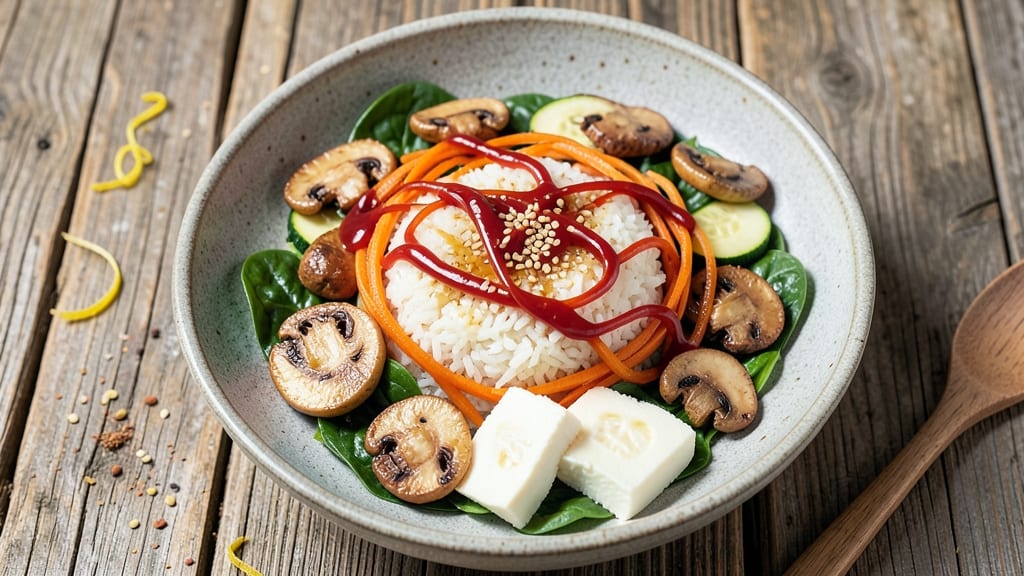
This bibimbap salad recipe transforms a simple bowl of rice into a vibrant, flavor-packed Korean masterpiece—where crispy vegetables, savory proteins, and spicy gochujang sauce create a symphony of textures and tastes.
The key is achieving that perfect crispy texture in each vegetable while keeping the rice fluffy and the sauce balanced. I’ve perfected this dish over years of testing, ensuring every bite delivers a harmonious blend of sweet, spicy, and umami flavors that define Korean cuisine.
The beauty of bibimbap lies in its customization—whether you’re adding marinated beef, crispy tofu, or a mix of seasonal vegetables, the assembly is where the magic happens.
Each ingredient gets its own moment to shine, from caramelized spinach to blistered shiitake mushrooms, all layered over steamed rice and topped with a runny fried egg for that signature richness.
The gochujang sauce ties everything together, adding a tangy, slightly sweet heat that cuts through the richness of the proteins and vegetables.
What sets this recipe apart is its ability to adapt to any dietary preference—vegetarian or vegan versions are just as satisfying, with hearty mushrooms, tofu, and extra vegetables taking center stage.
The crispy edges on the vegetables and the perfectly runny yolk from the fried egg elevate this dish from a simple bowl to a restaurant-worthy experience. It’s the kind of meal that feels both comforting and exciting, perfect for a weeknight dinner or a special occasion.
Ready to assemble your bowl? Each step is designed to be intuitive, with tips for achieving that crispy texture and balancing flavors so your bibimbap is as visually stunning as it is delicious. Let’s get started—your taste buds will thank you.
Ingredients for bibimbap salad
These vibrant ingredients create a Korean-inspired bowl bursting with crispy textures and bold flavors.
| Ingredient | Amount | Notes |
|---|---|---|
| Short-Grain White Rice 🍚 | 2 cups | Uncooked, jasmine or sushi rice preferred |
| Extra-Firm Tofu 🧇 | 1 lb | Pressed and cubed for crispiness |
| Spinach Leaves 🌿 | 5 oz | Fresh, baby spinach preferred |
| Carrots 🥕 | 2 medium | Julienned for crisp-tender texture |
| Zucchini 🥒 | 1 medium | Sliced into half-moons |
| Shiitake Mushrooms 🍄 | 8 whole | Stems removed, caps halved |
| Red Bell Pepper 🌶️ | 1 whole | Thinly sliced for crispness |
| Gochujang Sauce 🌶️ | ¼ cup | Korean fermented chili paste |
| Sesame Oil 🫒 | 1 tbsp | For finishing crispy vegetables |
| Toasted Sesame Seeds 🌾 | 1 tbsp | For garnish and crunch |
| Large Eggs 🥚 | 2 whole | Fresh for runny yolk |
| Vegetable Oil 🫒 | ½ cup | High smoke point for frying |
| Soy Sauce 🍶 | 1 tbsp | For tofu marinade |
| Rice Vinegar 🍶 | 1 tbsp | For balancing sauce |
| Sesame Seeds 🌾 | 1 tsp | For extra crunch |
The tofu is the star here—extra-firm holds its shape when pressed and fried. Trader Joe's sells pre-pressed blocks that save time, but if you're doing it yourself, wrap the tofu in a towel and place a heavy pan on top for 15 minutes. For the vegetables, freshness matters most—spinach should be bright green, mushrooms firm, and carrots crisp. Asian markets often have the best selection of shiitake mushrooms and gochujang sauce. If you can't find gochujang, substitute 1 tbsp sriracha plus 1 tbsp soy sauce, but it won't be the same. The rice? Jasmine or sushi rice is ideal—it stays separate when mixed, which is key for that signature bibimbap texture.
No sesame oil? Toasted sesame seeds plus a little neutral oil works in a pinch, though the flavor won't be identical. Short on shiitake mushrooms? Cremini or oyster mushrooms are great substitutes—they hold up well to frying. The carrots and zucchini should be cooked until just tender-crisp; overcooking kills that perfect crisp-tender bite. For the sauce, balance is everything—gochujang plus a touch of rice vinegar cuts through the richness, while sesame seeds add crunch. If you're making this ahead, assemble the bowls just before serving so the egg stays runny and the vegetables retain their texture.
The fried tofu and vegetables stay crispy for about 30 minutes at room temperature, so prep them last. Store cooked components separately in the fridge for up to 3 days—the rice reheats best in a steamer or microwave with a damp towel. The gochujang sauce keeps for 6 months in the pantry, so buy extra if you love it. For extra authenticity, serve with kimchi on the side—it adds that perfect tangy contrast. And trust me on the egg: fry it just before serving so the yolk is still liquid gold when you mix it in.
Why You'll Love This Recipe
- One-Pan Assembly: I swear by this for lazy nights—just toss everything on a sheet pan, roast the tofu and veggies until caramelized, and let the rice do its thing. No chopping frenzy, no last-minute scrambling.
- Umami Bomb: That crispy, pan-fried tofu with a sprinkle of soy and sesame? Chef’s kiss. The spinach wilts into something silky, and the carrots? Sweet, tender perfection. It’s the kind of dish that makes you pause mid-bite.
- Lunchbox Hero: Between us, this is my go-to for packed lunches. The rice stays fluffy, the veggies hold up, and the tofu adds protein that actually satisfies. (Yes, even on a Tuesday night.)
- Budget Flex: Short-grain rice is cheap, tofu’s a pantry staple, and seasonal veggies stretch the meal further. I’ve made this for $5 a serving—no compromises, just smart shopping. Leftovers? They’re the best kind.
Step-by-step instructions for bibimbap salad with crispy vegetables
Let's build this vibrant Korean-inspired bowl where texture and flavor come together perfectly.
Prepare the Crispy Vegetable Components
First, we'll create the crisp-tender vegetable medley that makes bibimbap so satisfying. Heat 0.5 cup vegetable oil in a large skillet over medium-high heat until shimmering. Add the 2 medium julienned carrots and cook for 3-4 minutes until they begin to soften but still maintain a slight crunch. Remove them and set aside on a paper towel-lined plate.
In the same pan (no need to wipe it clean—those flavorful bits matter), add the 1 medium zucchini sliced into half-moons and cook for 2-3 minutes until just tender. Remove and set aside. Repeat this process with the 8 halved shiitake mushrooms and 1 thinly sliced red bell pepper, cooking each for 2-3 minutes until they develop a golden hue but remain crisp. The key here is timing—you want vegetables that yield slightly when pressed but still hold their shape.
Cook the Crispy Tofu and Assemble the Base
While the vegetables crisp, prepare the 1 lb pressed and cubed extra-firm tofu. Pat the tofu dry with paper towels to remove any excess moisture, then toss it in a bowl with 1 tablespoon soy sauce. Let it marinate for 5 minutes while you heat 0.25 cup vegetable oil in a clean skillet over medium heat. The tofu should sizzle gently when added—if it's too hot, the outside will burn before the inside cooks.
Cook the tofu in batches for 3-4 minutes per side until golden brown and crispy. Drain on paper towels and sprinkle immediately with 1 teaspoon sesame seeds while still warm. Meanwhile, cook the 2 cups short-grain white rice according to package instructions, fluffing it gently with a fork once done. The rice should be slightly sticky but not mushy—this texture is essential for holding the bibimbap together.
Prepare the Spinach and Egg Components
For the spinach, heat 1 tablespoon sesame oil in a small skillet over medium heat. Add the 5 oz fresh spinach leaves and stir-fry for 1-2 minutes until just wilted but still vibrant green. Remove from heat immediately—overcooking will turn it bitter. Season with a pinch of salt and set aside.
In a separate pan, fry the 2 large eggs sunny-side up in a little oil until the whites are set but yolks remain runny. The runny yolk is traditional in bibimbap and adds richness to each bite. Keep them warm while you finish assembling the bowls.
Build and Garnish the Bibimbap Bowls
Divide the cooked rice evenly among 4 bowls, creating a slight depression in the center of each. Arrange the crispy vegetables, tofu cubes, and spinach on top of the rice in an artistic pattern—this is where bibimbap gets its visual appeal. The contrast of colors and textures makes each bite exciting.
Place a fried egg in the center of each bowl, then drizzle with 0.25 cup gochujang sauce mixed with 1 tablespoon rice vinegar to balance the heat. Finish with a sprinkle of 1 tablespoon toasted sesame seeds and a final drizzle of 1 tablespoon sesame oil. The sesame oil adds a nutty aroma that ties all the flavors together.
Serve Immediately for Maximum Enjoyment
Bibimbap is best served immediately while all components are at their peak texture and temperature. I like to serve it with a small side of extra gochujang sauce for those who want more heat. The traditional way to eat it is to mix everything together vigorously right before taking a bite—this creates a perfect balance of flavors and textures in each mouthful.
Each bowl should deliver a symphony of crispy vegetables, tender tofu, silky egg, and perfectly cooked rice. The gochujang sauce adds a tangy, spicy depth that cuts through the richness. Don't forget to take a moment to appreciate the vibrant colors and textures before your first bite!
Pro Tips For Making Bibimbap Salad
- CRISP THE TOFU RIGHT: DESCRIPTION:
- BLANCH SPINACH FAST: DESCRIPTION:
- JULIENNE VEGETABLES UNIFORM: DESCRIPTION:
- COOK RICE TO PERFECTION: DESCRIPTION:
Pro cooking tips for perfect results
Crispy Texture Secrets
For that signature crisp-tender texture, cook each vegetable separately in batches over medium-high heat—never overcrowd the pan. I use a 12-inch cast-iron skillet for even heat distribution, and always test doneness by pressing with tongs.
The goal is just tender-crisp: carrots should yield slightly but still resist, while mushrooms should blister with golden edges. 🔥
Tofu Crispiness Hacks
Extra-firm tofu is non-negotiable—it holds its shape when pressed and fries up perfectly. My trick? Press it for 20 minutes between paper towels and a heavy pan, then pat dry with fresh towels before marinating in 1 tbsp soy sauce.
Fry in 0.25 cup vegetable oil at 350°F for 3-4 minutes per side until golden brown. Sprinkle immediately with 1 tsp toasted sesame seeds while hot to lock in flavor.
Rice Perfection
Short-grain rice is essential—it stays slightly sticky to hold the bibimbap together. Rinse it 3 times before cooking to remove excess starch, then cook with 1:1.25 rice-to-water ratio (e.g., 2 cups rice + 2.5 cups water).
Fluff gently with a fork and let rest 10 minutes covered before assembling bowls. Pro tip: Use a rice cooker for foolproof results every time.
Sauce Balance
The gochujang sauce needs balancing—too much heat can overpower. I mix 0.25 cup gochujang with 1 tbsp rice vinegar and 1 tsp honey to mellow the spice. For extra depth, add 1 tsp minced garlic and 1 tsp grated ginger.
Taste as you go: the sauce should be tangy, slightly sweet, and just spicy enough to complement the dish, not dominate it. ✨
Egg Mastery
Sunny-side-up eggs are traditional, but the yolk must stay completely runny. Fry in a nonstick pan over low heat with just enough oil to coat the bottom. Slide the egg onto a warm plate and cover loosely with a lid for 1-2 minutes to keep the yolk molten.
The moment you mix it into the bowl, that yolk should break like liquid gold, coating every bite.
Assembly Flow
Work efficiently: prep all components first, then assemble bowls last. Arrange vegetables in a colorful spiral pattern for visual appeal, with the fried egg in the center. The key is to keep everything warm—place bowls near the heat source while you finish garnishing.
Serve immediately with extra sauce on the side, and encourage guests to mix everything together right before eating for that perfect first bite. 💛
Nutrition facts
Frequently asked questions
Is bibimbap really a salad or a rice bowl?
The name "bibimbap" means "mixed rice" in Korean, not salad! While it includes fresh vegetables, the dish centers around short-grain rice with layered ingredients. The "salad" aspect comes from the fresh, crisp vegetables and spinach, but it's a complete meal with protein (like tofu or beef) and sauce. Think of it as a Korean-style grain bowl with vibrant toppings.
Can I make bibimbap vegetarian or vegan?
Simply swap the tofu for marinated mushrooms or crispy chickpeas, and use vegan gochujang (check labels for honey). For extra protein, add edamame or seitan. The traditional fried egg can be replaced with a soft tofu scramble or avocado slices for creaminess. The flavor profile stays rich and satisfying.
How do I keep the vegetables crispy when assembling?
Cook each vegetable separately in batches over medium-high heat for 2-3 minutes max—they should be just tender with slight resistance. Keep them warm in a 200°F oven while finishing other components. Assemble bowls last to maintain that perfect crisp-tender texture. Pro tip: Use a cast-iron skillet for even heat distribution.
What if I don't have gochujang sauce?
Make a quick substitute with 1 tbsp sriracha + 1 tbsp soy sauce + 1 tsp honey + 1 tsp rice vinegar. For deeper flavor, add ½ tsp minced garlic and ½ tsp grated ginger. While not identical, it'll give you that signature tangy-spicy kick. Store-bought chili garlic sauce works too for a faster option.
Can I make bibimbap ahead of time?
Prep components separately and store them in airtight containers for up to 3 days—keep rice, vegetables, and tofu separate. Reheat vegetables in a skillet for 1-2 minutes to restore crispness. Assemble bowls just before serving to prevent sogginess. The fried egg should always be cooked fresh for that perfect runny yolk.