
Salads
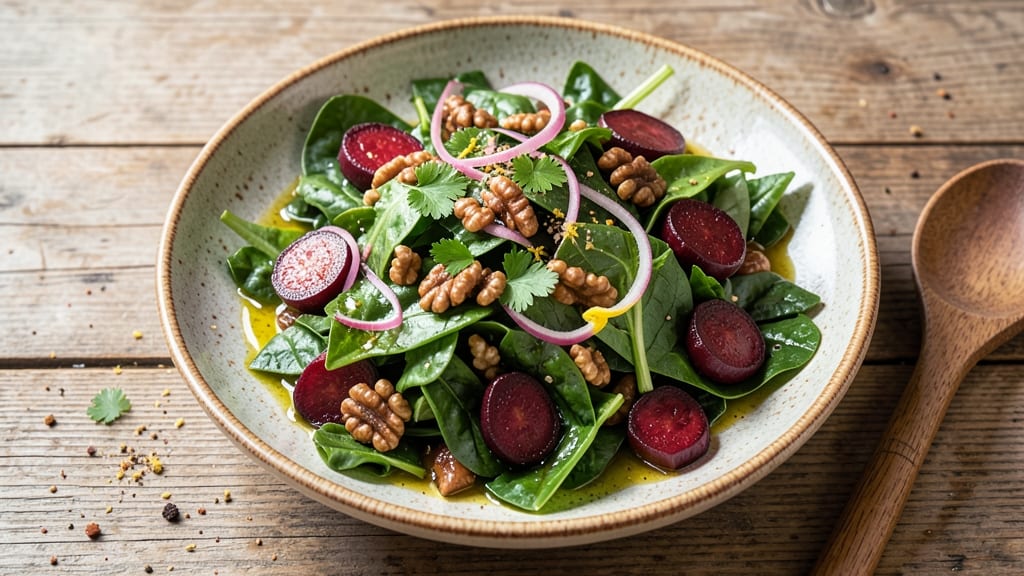
This beetroot leaves salad recipe transforms often-overlooked greens into a vibrant, nutrient-packed dish that's as beautiful as it is delicious. The earthy flavor of beetroot leaves pairs perfectly with bright citrus and crunchy textures, creating a salad that's both satisfying and health-boosting.
I discovered this recipe while exploring ways to use every part of the beet—because why let those nutrient-rich leaves go to waste?
The secret to this salad lies in its balance: tender beetroot leaves form the base, while lemon juice and olive oil brighten the flavor profile. Adding toasted nuts or seeds provides that satisfying crunch, and optional ingredients like roasted vegetables or avocado elevate it to a full meal.
What makes this recipe special is how it highlights beetroot leaves' natural sweetness while keeping preparation simple and efficient.
What you'll end up with is a salad that's packed with iron, fiber, and vitamins while delivering a delightful mix of textures and flavors. The beetroot leaves provide an earthy depth, the lemon dressing adds a zesty tang, and the crunchy toppings bring everything together.
It's the kind of salad that feels both elegant and effortless—perfect for meal prep or a quick weeknight dinner.
This recipe works beautifully as a standalone dish or alongside grilled proteins and fish. The versatility of beetroot leaves means you can adjust the ingredients based on what you have on hand, making it a go-to for any season. Let's get started on creating this vibrant, health-focused salad!
Ingredients for beetroot leaves salad
Earthy beetroot leaves shine with zesty lemon and crunchy walnuts—simple ingredients for a vibrant, nutrient-packed salad.
| Ingredient | Amount | Notes |
|---|---|---|
| Beetroot Leaves 🥬 | 4 cups | Fresh, stems removed, roughly chopped |
| Extra-Virgin Olive Oil 🫒 | ¼ cup | Cold-pressed, fruity variety |
| Fresh Lemon Juice 🍋 | 3 tbsp | Freshly squeezed, seeds strained |
| Toasted Walnuts 🥜 | ½ cup | Chopped, lightly toasted |
| Red Onion 🧅 | ¼ cup | Thinly sliced, soaked in cold water |
| Fresh Parsley 🌿 | ¼ cup | Chopped, for garnish |
| Maple Syrup 🍯 | 1 tbsp | Pure, for subtle sweetness |
| Salt 🧂 | ½ tsp | Sea salt, to taste |
| Black Pepper 🌶️ | ¼ tsp | Freshly ground |
| Avocado 🥑 | 1 whole | Ripe, sliced, optional topping |
| Roasted Beets 🍠 | 1 medium | Peeled, cubed, roasted |
| Sunflower Seeds 🌻 | ¼ cup | Toasted, for extra crunch |
| Balsamic Vinegar 🍷 | 1 tbsp | For drizzling, optional |
The beetroot leaves are the star, so pick the freshest, darkest greens you can find—avoid any with yellowing or wilted spots. Whole Foods or local farmers' markets usually have the best quality. If you can't find beetroot leaves, substitute Swiss chard or spinach, but the flavor will be different. The walnuts should be toasted until fragrant—Costco or Trader Joe's often sell them pre-toasted, which saves time. For the beets, organic beets from the store work perfectly, but if you're growing your own, use the greens first—they're packed with nutrients.
No maple syrup? Agave nectar or a touch of date syrup works just as well. The avocado is optional, but if you skip it, add extra roasted beets or toasted pumpkin seeds for creaminess. Short on sunflower seeds? Pepitas or chopped almonds are great substitutes. The lemon juice should be freshly squeezed—bottled juice lacks brightness. For extra tang, add a pinch of chili flakes or a dash of hot sauce. The balsamic vinegar is purely for drizzling—skip it if you prefer a lighter dressing.
This salad keeps best in the fridge for 2-3 days if stored in an airtight container, but the beets and avocado will soften over time. Toast the nuts and seeds fresh before serving for maximum crunch. For meal prep, store the dressing separately and toss everything together right before eating. The beetroot leaves hold up well, but add the avocado and dressing last to prevent browning. Portion into individual containers for grab-and-go lunches—it's perfect for work or picnics.
Why You'll Love This Recipe
- No-Waste Win: I used to toss those beetroot leaves—now they’re my secret weapon. A quick rinse and rough chop (no fancy knife skills needed) turns them into something vibrant and satisfying, all while cutting grocery waste.
- Earthy Zing: That lemon juice and olive oil combo? It’s like a bright, tangy hug for the salad. The red onion adds a sharp crunch, while the walnuts bring a nutty crunch—simple ingredients that pack serious flavor without overpowering.
- Lunchbox Hero: Between us, this is my go-to for packed lunches. It holds up for days in the fridge, stays crisp, and tastes even better cold. Honestly, it’s the only salad I actually look forward to eating at work.
- Budget Brightener: Beetroot leaves are often overlooked but packed with nutrients—and cheap. A handful goes a long way, and the rest of the ingredients? Pantry staples. It’s fresh, filling, and won’t break the bank.
Step-by-step instructions for earthy beetroot leaves salad
Transform humble beet greens into a vibrant, nutrient-packed salad with bold flavors and satisfying textures.
Prepare the Beetroot Leaves and Roasted Beets
Start by thoroughly washing the 4 cups beetroot leaves to remove any dirt or sand. Remove the thick stems and roughly chop the leaves into bite-sized pieces—this ensures even distribution in the salad and prevents large, tough pieces. For the 1 medium roasted beets, peel away the skin and cut into ½-inch cubes for a perfect balance of texture and flavor.
Here's the thing—roasted beets add natural sweetness that pairs beautifully with the earthy greens. If you're using store-bought roasted beets, ensure they're still warm from the oven for maximum flavor infusion. Set both the chopped beetroot leaves and beet cubes aside in separate bowls until ready to assemble.
Create the Zesty Lemon Dressing
In a small bowl, whisk together the 0.25 cup extra-virgin olive oil, 3 tbsp fresh lemon juice, 1 tbsp maple syrup, 0.5 tsp salt, and 0.25 tsp black pepper. The lemon juice should be freshly squeezed and strained to remove seeds—this prevents bitterness in your dressing. Taste the mixture and adjust the seasoning if needed; you want a balance of tangy, sweet, and slightly salty.
This dressing is the heart of your salad. The olive oil provides richness, while the lemon juice brightens the earthy flavors of the beetroot leaves. The maple syrup adds just enough sweetness to complement the natural bitterness of the greens without overpowering them. Whisk vigorously for about 30 seconds to emulsify the ingredients properly.
Assemble the Salad Base
In a large mixing bowl, combine the prepared beetroot leaves and roasted beets. Add the 0.25 cup thinly sliced red onion (drained from the cold water soak) and the 0.5 cup toasted walnuts. The walnuts should have a light golden color and a nutty aroma—this indicates proper toasting. Toss everything gently but thoroughly to distribute the ingredients evenly.
Don't skip the red onion soak. Soaking for 5 minutes in cold water removes some of the sharpness, making the flavor more mellow and pleasant. The walnuts add a satisfying crunch that contrasts with the tender greens and soft beets. This is where the salad starts to come together visually—mix until you see an even distribution of colors and textures.
Add the Dressing and Final Touches
Pour the lemon dressing over the salad and toss gently but thoroughly to coat all the ingredients evenly. The salad should glisten slightly from the dressing, but don't overmix—you want to preserve some of the natural textures. Sprinkle with the 0.25 cup toasted sunflower seeds and 0.25 cup fresh parsley right before serving. The sunflower seeds add another layer of crunch and nutty flavor, while the parsley provides a fresh, herbaceous note.
Real talk: This is the moment that matters. The dressing should cling to the leaves without making them soggy. If the salad seems too dry, add a splash of water or a drizzle of extra olive oil to help the dressing adhere. The parsley should be chopped finely enough to distribute evenly but not so fine that it dissolves into the salad.
Serve with Optional Toppings
Divide the salad among 4 plates and serve immediately. For an extra touch of elegance, drizzle each serving with 1 tbsp balsamic vinegar just before eating. The balsamic adds a tangy depth that enhances all the other flavors. If you're using the 1 whole avocado, slice it and arrange the pieces on top of each serving for a creamy contrast to the earthy greens.
Each bite should deliver a perfect balance of textures—crunchy walnuts and seeds, tender greens, soft beets, and the creamy avocado if included. The dressing should tie everything together with its bright, zesty flavor. Serve this salad as a light lunch or a side dish to complement grilled proteins or hearty grains.
Pro Tips For Making Beetroot Leaves Salad
- WILT LEAVES LOW AND SLOW: I learned this the hard way—cramming beetroot leaves into a boiling pot turns them to mush faster than you can say "salad disaster." Instead, simmer them in just enough water to cover the bottom (about 2 inches) on medium-low heat for 5-6 minutes. They’ll stay tender but hold their shape—no sad, limp pile here.
- TOAST WALNUTS UNTIL GOLDEN: That pale, sad walnut shortcut? Not cutting it. Toast them in a dry pan over medium heat until they’re not just fragrant but deep golden, about 5-7 minutes. Stir constantly—burnt walnuts taste bitter, and you’ll regret skipping this step when the crunch falls flat. (Yes, even if you’re impatient like me.)
- THINLY SLICE THE ONION: Thick onion slices? They’ll sit like rocks in your salad, stealing all the attention from the delicate greens. Grab a sharp knife and slice them paper-thin—almost translucent—so they soften just enough to mingle without overpowering. Pro move: Toss them in a tiny splash of lemon juice right after slicing to mellow their bite.
- DRESS SALAD JUST BEFORE SERVING: I used to toss everything together hours ahead, only to come back to wilted leaves and a dressing that’s turned the salad into a soggy mess. Wait until the last 5 minutes—drizzle the olive oil and lemon right over the warm (but cooled) leaves, then fold gently. The heat from the leaves will make the dressing cling like magic, and the walnuts stay crisp. No sad, watery aftermath.
Essential equipment for great beetroot leaves salad
Salad Mixing Tools
You don’t need fancy equipment for this salad, but a few key tools make prep easier. A large mixing bowl (I love the OXO Good Grips brand) keeps ingredients contained while tossing.
For chopping beetroot leaves, a sharp chef’s knife (like Mercer Culinary) and a cutting board (I prefer bamboo for grip) are essential. A mandoline (optional) speeds up thin red onion slices if you're feeling ambitious. 🥬
Dressing Essentials
For the lemon dressing, a small whisk or fork works perfectly in a glass measuring cup (I use Pyrex) to combine ingredients. A microplane (like Bamix) is handy for zesting extra lemon if you want to boost flavor.
For measuring liquids precisely, a liquid measuring cup with spout (I recommend OXO’s) prevents spills. Always use a fine-mesh strainer to remove lemon seeds—OXO’s collapsible strainer is my go-to. 🍋
Nut & Seed Prep
Toasted walnuts and sunflower seeds need lightly oiled baking sheets (I use USA Pan) and a spatula for easy transfer. A small saucepan (like All-Clad’s Stainless) is perfect for toasting seeds on the stovetop if you prefer that method over the oven.
For chopping nuts, a cleaver (like Victorinox) handles the job efficiently. Prep nuts in batches to avoid burning—2-3 minutes max on medium heat. 🥜
Optional Extras
If adding avocado, a serrated knife (I swear by Wüsthof) gives clean slices without crushing. For roasted beets, a vegetable peeler (like OXO’s) removes skins quickly.
A small drizzling bottle (I use Glasslock) makes balsamic vinegar application elegant. Store all optional toppings separately until ready to serve to maintain freshness. 🥑
Storage Containers
For meal prep, glass airtight containers (I recommend Glasslock 16-ounce) keep the salad fresh for 2-3 days. Divide components—dressing in a separate compartment—to prevent sogginess. A salad spinner (like OXO’s) helps dry leaves before storage, extending crispness. Label containers with dates to track freshness. ❄️
Nutrition facts
Frequently asked questions
Can I use beetroot leaves if they look wilted or yellow?
Freshness matters! Look for leaves that are deep green and crisp. If yours are slightly wilted, place them in ice water for 10 minutes to revive them before using. Avoid yellow or slimy leaves—they indicate spoilage. For best flavor, use leaves within 2-3 days of purchase and store them in a damp paper towel in the fridge.
What's the best way to store leftover beetroot leaves salad?
Store the salad base (leaves, beets, nuts, seeds) in an airtight container for 2 days max. Keep the dressing separate until ready to eat—this prevents sogginess. For longer storage, freeze the dressing in ice cube trays and thaw as needed. Add fresh lemon juice before serving to maintain brightness.
Can I make this salad without roasted beets?
Swap roasted beets for steamed or sautéed beets (tossed in olive oil and herbs) or add roasted sweet potatoes for natural sweetness. For extra crunch, include toasted chickpeas or crispy kale chips. The key is balancing earthy flavors with something sweet or nutty to complement the leaves.
Why does my beetroot leaves salad taste bitter?
Bitterness usually comes from overcooked leaves or old dressing. Use fresh, young leaves and store them properly. For the dressing, balance flavors with more maple syrup (sweetness) or a pinch of salt. A squeeze of fresh lemon juice right before eating can also brighten the flavor. Try adding a handful of fresh herbs like mint or basil to mask bitterness.
How can I make this salad more protein-packed?
Add toasted edamame, crumbled tempeh, or grilled chickpeas for plant-based protein. For animal proteins, top with grilled shrimp or crumbled feta cheese. The salad holds up well with these additions—just add them after tossing the base. Aim for ½ cup protein per serving to balance the meal.