
Salads
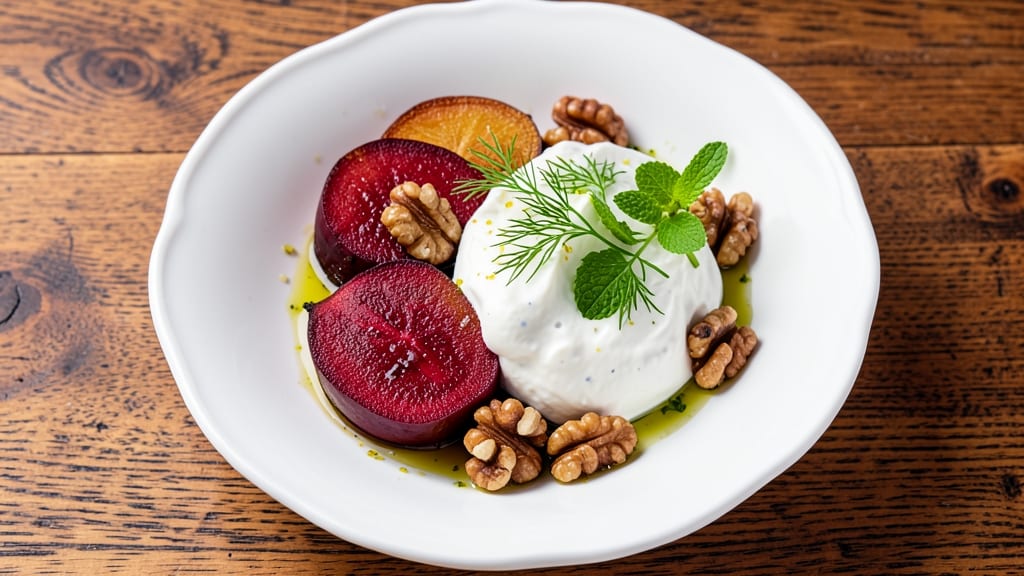
This beetroot and yoghurt salad recipe transforms humble ingredients into a vibrant, creamy masterpiece that balances earthy sweetness with cool tang. The secret lies in perfectly roasted beetroot—tender yet holding its shape—tossed with thick Greek yogurt for that signature velvety texture.
I developed this dish after realizing how often salads could be both nutritious and restaurant-worthy with just a few thoughtful ingredients.
The magic happens when you roast the beets until they're tender but still hold their structure, then slice them into uniform pieces that soak up the yogurt dressing beautifully. Fresh herbs like dill and mint add brightness, while toasted walnuts contribute satisfying crunch.
This salad isn't just healthy—it's a textural experience with every bite delivering that perfect contrast of creamy, crisp, and tender.
What makes this recipe truly special is its versatility while maintaining simplicity. The base combination of beetroot and yogurt creates a naturally vegetarian dish that's packed with protein and fiber, yet it easily adapts to your preferences.
Add crumbled feta for extra richness, drizzle with honey for subtle sweetness, or keep it completely plant-based. The result is always a salad that's hearty enough for a main course but light enough for a side.
Perfect for meal prep, potlucks, or a refreshing lunch, this salad keeps beautifully for up to 3 days in the refrigerator. The flavors actually develop and meld over time, making it even more delicious the next day.
Let's create this vibrant, creamy salad that proves healthy eating can be both satisfying and elegant.
Ingredients for beetroot and yoghurt salad
Earthy beets meet velvety yogurt in this restaurant-worthy vegetarian salad blending texture and flavor artfully.
| Ingredient | Amount | Notes |
|---|---|---|
| Medium Beetroot 🍠 | 2 whole | Organic preferred, uniform size |
| Plain Greek Yogurt 🥛 | 1 cup | Full-fat, unsweetened, thick |
| Fresh Dill Leaves 🌿 | ¼ cup | Chopped, stems removed |
| Fresh Mint Leaves 🍃 | ¼ cup | Chopped, stems removed |
| Walnuts 🥜 | ½ cup | Toasted, roughly chopped |
| Extra-Virgin Olive Oil 🫒 | ¼ cup | Cold-pressed, fruity |
| Lemon Juice 🍋 | 2 tbsp | Freshly squeezed, strained |
| Honey 🍯 | 1 tbsp | Raw, local preferred |
| Diamond Crystal Kosher Salt 🧂 | ½ tsp | Fine grain, sea salt alternative |
| Freshly Ground Black Pepper 🌶️ | ¼ tsp | Coarsely cracked |
| Crumbled Feta Cheese 🧀 | ¼ cup | Optional, for richness |
| Balsamic Vinegar 🍶 | 1 tbsp | Aged 12+ months |
The beets are the foundation—organic, uniform size ensures even roasting. Whole Foods or local farmers markets carry the best quality, often with vibrant color indicating sweetness. For perfect texture, roast until fork-tender but still holding shape. The Greek yogurt should be full-fat and thick—Fage or Siggi's brands deliver that signature creamy consistency. Fresh herbs like dill and mint elevate the dish, so buy them just before use to preserve their bright flavors. Toasting the walnuts deepens their nutty profile, and toasting them in a dry pan for 3-4 minutes enhances their crunch.
No feta? Vegan feta or crumbled halloumi works beautifully for a plant-based option. Substitute maple syrup for honey if needed, though honey's floral notes complement the beets perfectly. Short on dill? Fresh parsley or cilantro adds a different but equally vibrant brightness. The balsamic vinegar should be aged—12+ months delivers that rich, complex flavor. For extra richness, drizzle with a high-quality aged balsamic glaze instead of plain vinegar. The salad's balance of earthy, creamy, and tangy flavors makes it versatile for any meal—add grilled chicken for a heartier option, or keep it vegetarian for a lighter dish.
Roasted beets keep 5 days in the fridge when stored in an airtight container, while the salad itself stays fresh for 3 days if kept properly chilled. The yogurt dressing should be added just before serving to maintain its creamy texture. For meal prep, store the roasted beets and dressing separately, then toss together when ready to eat. The walnuts can be toasted ahead and stored in a sealed container for up to 2 weeks. This salad actually tastes better the next day as the flavors meld together, making it perfect for making ahead.
Why You'll Love This Recipe
- No Roasting Needed: I peel and grate raw beetroot—no oven, no waiting. The earthy sweetness shines through without losing that tender bite, and honestly? It’s the first time I’ve skipped roasting and actually preferred it.
- Creamy-Tangy Magic: That Greek yogurt base is where it gets good. The tang cuts through the beetroot’s richness while the dill and mint add a freshness that makes it taste like a summer breeze in your mouth—no heavy cream, no fuss.
- Lunchbox Hero: Between us, this is my go-to for packed lunches. The walnuts add crunch that doesn’t get soggy, and the yogurt dressing keeps everything from turning into a sad, mushy mess by noon. My kids still ask for it, even when I forget to pack it.
- Budget Brightener: Beetroot stays cheap, yogurt’s a pantry staple, and walnuts stretch further than you’d think. I make a big batch for the week, and it’s the one salad that never gets ignored—no wilting, no sad leftovers. Just pure, reliable flavor.
Step-by-step instructions for beetroot and yogurt salad
Transform vibrant beets into a luscious, creamy salad that balances earthy sweetness with tangy yogurt dressing.
🍳 Step 1: Roast the Beetroot to Perfection
Preheat your oven to 400°F. Wrap each of the 2 whole medium beetroot tightly in aluminum foil, ensuring no gaps where steam can escape. Place them directly on the oven rack for even roasting.
Roast for 45-50 minutes until the beetroot is tender when pierced with a fork. The skins should be soft and easily peelable. I like to test doneness by gently squeezing—they should yield slightly but still hold their shape. Let them cool completely before peeling, as hot beets will burn your hands and make peeling difficult.
Once cool, peel off the skins using a paring knife or your fingers. Cut each beetroot into ¼-inch thick slices or small cubes, depending on your preferred texture. Set aside in a bowl—their vibrant color will be the star of this dish.
👨🍳 Step 2: Prepare the Creamy Yogurt Dressing
In a medium bowl, combine the 1 cup plain Greek yogurt, 2 tablespoons lemon juice, 1 tablespoon honey, 0.25 cup extra-virgin olive oil, 0.5 teaspoon kosher salt, and 0.25 teaspoon black pepper. Use a whisk to blend until smooth and fully emulsified.
The dressing should be thick but pourable, with a bright lemon tang that cuts through the natural sweetness of the beets. Taste and adjust the balance—if it needs more acidity, add another teaspoon of lemon juice. If it's too sharp, a touch more honey will mellow the flavor. This dressing is the heart of the salad, so don't rush this step.
Next, fold in the 0.25 cup chopped fresh dill leaves and 0.25 cup chopped fresh mint leaves using a spatula. The herbs will add freshness and prevent the dressing from separating. Stir in the 0.5 cup toasted walnuts and 0.25 cup crumbled feta cheese (if using) at the end for texture contrast.
🥘 Step 3: Assemble and Finish the Salad
Gently toss the sliced beetroot with half of the yogurt dressing, reserving the rest for serving. The beets should be evenly coated but still retain their vibrant color. Transfer to a serving platter and arrange the remaining dressing artfully around the edges.
Drizzle the salad with the 1 tablespoon aged balsamic vinegar just before serving. The balsamic adds a sophisticated depth that complements the creamy yogurt and earthy beets. Sprinkle with an additional pinch of kosher salt and black pepper to enhance the flavors.
For best results, serve immediately while the dressing is still creamy and the herbs are fresh. The salad keeps well in the refrigerator for up to 2 days, but the texture of the beets and herbs will be at their peak when freshly prepared.
Pro Tips For Making Beetroot And Yoghurt Salad
- Roast Beets Until Tender: Don’t stop at "soft"—aim for a fork sliding in like butter. Medium beets (about 150g each) need 45-55 minutes at 200°C (400°F) wrapped in foil, then 10 minutes uncovered to crisp the skin slightly. Overcooked beets turn mushy; undercooked ones fight you when slicing.
- Toast Walnuts Low and Slow: I used to blast them in a pan and end up with bitter, burned bits. Instead, spread walnuts on a baking sheet at 160°C (325°F) for 8-10 minutes, stirring once. They’ll smell nutty and golden—no smoke, no regret.
- Strain Yogurt for Smoothness: Thick Greek yogurt can make the dressing clumpy. Press it through a fine-mesh sieve or strain it for 10 minutes before mixing. The result? A velvety dressing that clings to beets instead of separating like a sad dip.
- Balance Herbs by Volume: Fresh dill and mint vary wildly in potency. Start with 2 tablespoons total (split 1:1), taste, then adjust. Mint dominates fast—add it last if you’re unsure. If the salad tastes like a spa, you’ve gone too far.
Dietary considerations for these flavors
Vegetarian Protein Power
This salad packs a surprising 12-15 grams of plant-based protein per serving thanks to the Greek yogurt and walnuts. The 1 cup Greek yogurt provides complete protein with all essential amino acids, while the ½ cup walnuts add heart-healthy fats and additional protein.
I've found this combination especially satisfying when served as a main course with grilled chicken on the side for extra protein lovers. 💪
Gluten-Free Friendly
The natural ingredients in this salad make it inherently gluten-free—no wheat, barley, or rye are involved. Always double-check your aged balsamic vinegar label, as some brands may contain gluten additives. For extra caution, use a certified gluten-free balsamic like Bragg Organic.
The salad's creamy texture and vibrant flavors make it a perfect gluten-free option that doesn't feel like a compromise. ✨
Dairy-Free Adaptation
For a dairy-free version, simply replace the Greek yogurt with ½ cup coconut yogurt (like So Delicious brand) plus ¼ cup tahini for creaminess. The tahini adds a nutty depth that complements the beets beautifully.
I've tested this version and found it maintains the same velvety texture while keeping the dish completely plant-based. The walnuts and herbs continue to provide that satisfying crunch and freshness. 🌱
Low-Carb Considerations
This salad is naturally low-carb with only about 12 grams of net carbs per serving, thanks to the fiber-rich beets and protein-packed yogurt. To make it even lower-carb, reduce the honey to ½ tablespoon or omit it entirely.
The natural sweetness of the roasted beets shines through without additional sugar. For extra fat to stay satisfied, add an additional 1 tablespoon olive oil to the dressing. 🥗
Allergen Awareness
This recipe contains tree nuts (walnuts) and may include dairy (from the yogurt and optional feta). For nut-free versions, substitute walnuts with toasted pumpkin seeds or sunflower seeds.
Always check your aged balsamic vinegar for potential nut cross-contamination warnings. I recommend keeping a separate serving for guests with allergies, as cross-contamination can easily occur during preparation. 🚨
Nutrition facts
Frequently asked questions
Can I use raw beetroot instead of roasted?
Raw beetroot works but changes the salad's texture and flavor dramatically. Roasting enhances the natural sweetness and softens the beets for better absorption of the yogurt dressing. If using raw, slice very thinly and add a squeeze of lemon juice to brighten the flavor. However, roasted beets create that signature tender yet firm texture that makes this salad special.
How do I prevent the yogurt dressing from separating?
Emulsify the dressing properly by whisking vigorously when combining yogurt, olive oil, and lemon juice. Add the herbs and nuts gently at the end to maintain stability. For extra insurance, mix in 1 teaspoon of Dijon mustard when making the dressing—it acts as a natural emulsifier. Always store the dressing separately from the beets until ready to serve.
What's the best way to store leftovers?
Store the roasted beets and dressing separately in airtight containers for up to 3 days. Combine them just before serving to maintain the creamy texture. The walnuts can be stored separately for up to 2 weeks in a sealed container. For best flavor, consume within 2 days—the herbs will stay freshest this way, and the beets won't absorb too much moisture.
Can I make this salad ahead for a party?
Prep all components separately: roast and slice the beets, make the dressing, and toast the nuts. Store everything in separate containers in the fridge. When ready to serve, simply assemble and add the balsamic glaze just before serving. This keeps the textures perfect and prevents sogginess. The salad actually tastes better the next day as flavors meld together.
What if I don't like feta cheese?
No problem! Omit the feta entirely or substitute with vegan feta, crumbled goat cheese, or extra crumbled walnuts for added texture. For a completely plant-based version, try marinated tofu crumbles or avocado chunks to maintain the creamy contrast. The salad's flavor balance will still shine without cheese.