
Salads
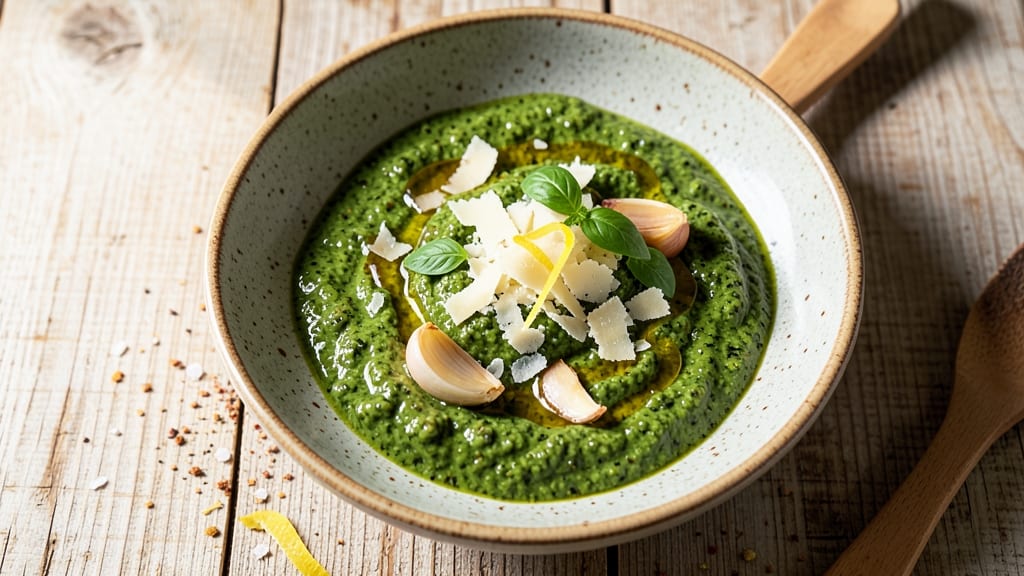
This basil pesto salad dressing recipe transforms fresh basil into a vibrant, herb-infused sauce that elevates every dish it touches. The key lies in blending bright green basil, garlic, Parmesan, and olive oil into a smooth, emulsified dressing that clings beautifully to salads, pasta, or sandwiches.
What sets this version apart is its simplicity—just five core ingredients create a dressing that's restaurant-quality yet takes only minutes to prepare.
The secret to achieving that perfect, silky texture is using a food processor to blend the ingredients until completely smooth, then gradually incorporating olive oil while processing. This creates a stable emulsion that won't separate, ensuring every drizzle delivers consistent flavor.
The dressing's bright, herby notes come from fresh basil and garlic, while Parmesan adds depth and a touch of saltiness that balances everything.
What you'll end up with is a versatile dressing that works equally well on mixed greens, grain bowls, or even as a finishing sauce for grilled meats. The fresh basil flavor shines through without overpowering, making it perfect for both summer salads and heartier winter dishes.
This recipe delivers professional results with minimal effort—ideal for anyone who wants restaurant-quality flavor without the fuss.
Use it immediately or store in an airtight container in the refrigerator for up to five days. The dressing maintains its vibrant color and fresh taste, making it perfect for meal prep.
Whether you're dressing up a simple salad or adding depth to a more complex dish, this basil pesto dressing will become your go-to sauce for adding fresh, herby brightness to any meal.
Ingredients for basil pesto salad dressing
Five ingredients transform fresh basil into vibrant, restaurant-quality dressing in minutes—no fuss!
| Ingredient | Amount | Notes |
|---|---|---|
| Fresh Basil Leaves 🌿 | 2 cups | Packed, stems removed |
| Garlic Cloves 🧄 | 3 cloves | Peeled, roughly chopped |
| Parmesan Cheese 🧀 | ¾ cup | Freshly grated from block |
| Extra-Virgin Olive Oil 🫒 | ¾ cup | High-quality, fruity variety |
| Lemon Juice 🍋 | 2 tbsp | Freshly squeezed |
| Sea Salt 🧂 | ½ tsp | Fine grain preferred |
| Black Pepper 🌶️ | ¼ tsp | Freshly ground |
The basil is your star—pick the freshest, brightest leaves you can find, ideally from a farmers market or the grocery store's produce section. Look for leaves that are a vibrant green, not wilted or yellowing. Trader Joe's and Whole Foods often carry high-quality basil, but any fresh basil works. The Parmesan makes all the difference too—grate it yourself from a wedge for the best flavor; pre-grated cheese gets clumpy and lacks that rich, nutty depth. Fresh garlic cloves add the perfect punch, so don’t skip peeling and roughly chopping them for maximum flavor infusion.
No fresh basil? Spinach or arugula at half the amount can work in a pinch, though the flavor will differ slightly. Running low on Parmesan? Pecorino Romano or nutritional yeast add a similar umami kick. For extra richness, add a splash of pasta water while blending to help emulsify. The olive oil should be extra-virgin and fruity—avoid the cheap stuff, or your dressing will taste flat. Lemon juice can be swapped for white wine vinegar if you prefer a tangier note, but fresh lemon brightens everything up perfectly.
This dressing keeps beautifully—pour a thin layer of olive oil on top before sealing to preserve that vibrant green color. Store in an airtight container in the fridge for up to 5 days. For longer storage, freeze in ice cube trays for up to 3 months, then thaw and whisk with a splash of water to restore its silky texture. It’s perfect for meal prep, so make a batch and keep it on hand for quick, flavorful meals all week.
Why You'll Love This Recipe
- Five-Ingredient Magic: I swear by this combo—no fancy gadgets, just a pulse of basil, a squeeze of lemon, and a glug of olive oil. Honestly, it’s the kind of dressing that makes me feel like a chef without the mess.
- Bright & Bold: That lemon juice cuts through the richness of the Parmesan and olive oil, while the garlic gives it a punchy, savory kick. One taste and you’ll understand why I keep jars of it in the fridge—it’s just that good.
- Weeknight & Weekend: Drizzle it over grilled chicken for dinner, toss it with roasted veggies for a lunch bowl, or use it as a marinade for fish. Between us, it’s my go-to for anything that needs a little extra oomph without extra effort.
- No-Waste Pantry: The leftovers? They last forever—I’ve had this dressing sit in the fridge for weeks and still taste fresh. Plus, you’re using up those wilted basil stems (yes, they work!) instead of tossing them. Smart, right?
Step-by-step instructions for basil pesto salad dressing
This vibrant dressing comes together faster than you can say "fresh basil"—just five minutes of effort for flavor that'll make every salad sing.
Pulse Basil and Garlic Until Finely Chopped
Place the 2 cups packed fresh basil leaves and 3 peeled garlic cloves into a food processor. Pulse in short bursts until you achieve a finely chopped texture—think more like a paste than coarse bits. You want the basil to break down but still retain some texture, not turn into a smooth puree. Stop before it gets too fine, or you'll lose that beautiful herby brightness.
Here's the thing—don't over-process or you'll get bitter basil. I aim for about 10-15 seconds of total pulsing time. The mixture should look like confetti with a few larger pieces still visible. This ensures maximum flavor extraction without turning your dressing into a green paste.
Add Parmesan and Pulse Just Until Combined
Add the 0.75 cup freshly grated Parmesan cheese to the food processor. Pulse again in short bursts, just until the cheese is evenly distributed throughout the basil mixture. You're not trying to make a smooth sauce yet—just incorporate the cheese so every bite gets that salty, umami punch. Over-blending here can make your dressing too thick and lose its fresh character.
I like to scrape down the sides of the processor bowl with a spatula after adding the Parmesan to ensure even distribution. This step is quick—just 3-4 seconds of pulsing should do it. The cheese should be broken down but still visible as small flecks throughout the mixture.
Stream in Olive Oil While Processing
With the food processor running, very slowly drizzle in the 0.75 cup extra-virgin olive oil through the feed tube. This gradual approach prevents the oil from separating and creates a beautifully emulsified dressing. The key is patience—don't pour it all at once or you'll end up with a greasy mess instead of a creamy dressing.
Process for about 30 seconds while adding the oil, until you achieve a thick, vibrant green pesto with no visible oil separation. You're looking for a texture that's thick enough to cling to salad but still pourable. If it's too thick, we'll fix that in the next step. The dressing should smell intensely aromatic—like a basil garden on a sunny day.
Finish with Lemon Juice and Seasonings
Add the 2 tablespoons freshly squeezed lemon juice, 0.5 teaspoon sea salt, and 0.25 teaspoon freshly ground black pepper to the food processor. Pulse just 2-3 times to combine everything evenly. The lemon brightens the flavors and balances the richness of the olive oil, while the salt and pepper round out the taste profile.
Taste the dressing right away—this is crucial. You might need to adjust the seasoning slightly. If it needs more acidity, add another splash of lemon juice. If it needs more salt, add it gradually. Remember, you can always adjust, but you can't un-blend! The dressing should be vibrant green, thick but pourable, and bursting with fresh basil flavor.
Thin to Desired Consistency with Water (Optional)
For a thinner dressing suitable for tossing with greens, transfer the pesto to a bowl and gradually add water, 1 teaspoon at a time, while whisking continuously. Start with about 1 tablespoon and go from there. You want a consistency that coats the back of a spoon but still flows easily. The dressing should be smooth and glossy, not watery or clumpy.
If you prefer a thicker dressing for dipping or drizzling, skip this step entirely. The natural thickness from the cheese and olive oil will hold up beautifully. Either way, your dressing is now ready to transform any salad from ordinary to extraordinary. Store any leftovers in an airtight container in the refrigerator for up to 5 days, or freeze for longer storage.
Pro Tips For Making Basil Pesto Salad Dressing
- STACK THE BASIL FIRST: I learned this the hard way—pile the basil leaves in the middle of your mortar (or food processor) before adding anything else. This keeps the leaves from scattering when you crush them, and you’ll get a more even texture. If you’re using a processor, pulse twice before adding other ingredients to avoid a watery mess.
- SMASH THE GARLIC: Don’t mince the garlic—smash it. Peel the cloves, wrap them in plastic wrap, and crush them with the flat side of a knife or the bottom of a glass. This releases more flavor without burning it, and you won’t taste raw garlic chunks. Works especially well if you’re blending by hand.
- SALT THE PARMESAN: Skip the pre-shredded stuff—it’s coated in anti-caking agents that make your pesto taste like sawdust. Instead, grate fresh Parmesan yourself (the fine holes on a box grater work best) and toss it with a pinch of salt before adding it to the basil. The salt cuts through the richness and balances the acidity of the lemon.
- DRIZZLE THEN PULSE: Start with half the olive oil, blend until smooth, then drizzle in the rest while pulsing. This prevents a greasy, uneven texture—your pesto will emulsify better and stay silky. If it looks too thick, add a splash of lemon juice or water, but no more than 1 tablespoon total.
Regional styles of these flavors
Italian Classic
This basil pesto originated in the Liguria region of Italy, where it was traditionally made with pine nuts, Parmigiano-Reggiano, and Genovese basil. The original version was thicker and used for pasta, but we've adapted it into a lighter dressing perfect for salads.
In Italy, they call it pesto alla Genovese, and it's a protected traditional product—meaning only certain regions can call it authentic pesto. 🌿
The Italian version often skips lemon juice, relying instead on the natural acidity of the basil and garlic. For extra authenticity, use Parmigiano-Reggiano instead of regular Parmesan and add ¼ cup toasted pine nuts to the blend.
The texture becomes richer, and the flavor more complex with those toasted nuts adding a satisfying crunch.
California Twist
In California, this dressing evolved into something brighter and more versatile, perfect for their fresh, farm-to-table cuisine. The key difference here is the addition of lemon juice and sometimes avocado for creaminess.
I've seen versions with sunflower seeds instead of nuts to keep it vegan-friendly, which works beautifully in California's health-conscious culture. 🍋
California chefs also love using this dressing as a marinade for grilled vegetables or even as a dipping sauce for crusty bread. The sunny, fresh flavors align perfectly with California's Mediterranean-inspired cooking style.
For a true West Coast touch, add 1 tablespoon of Dijon mustard when blending to give it a subtle tangy kick.
Southern Italian Adaptation
Down in Southern Italy, particularly in regions like Sicily and Calabria, you'll find variations that incorporate chili flakes and anchovies for a bolder flavor profile. While not traditional for salad dressings, these ingredients add depth that pairs wonderfully with heartier salads or even as a pasta sauce.
The heat from chili flakes cuts through the richness of the olive oil beautifully. 🌶️
For a Southern Italian-inspired version, add ½ teaspoon of red pepper flakes and 1 small anchovy fillet (finely chopped) when blending. The anchovies might sound unusual, but they dissolve completely and add a deep umami note that elevates the dressing.
This version works exceptionally well with roasted vegetable salads or as a topping for grilled meats.
Mediterranean Fusion
Across the Mediterranean, this dressing takes on local flavors while keeping the basil as the star. In Greece, you might find versions with feta cheese instead of Parmesan, creating a tangy, creamy dressing perfect for Greek salads.
The feta adds a wonderful crumbly texture that contrasts beautifully with the smooth basil base. 🧀
For a Mediterranean fusion, swap out the Parmesan for ½ cup crumbled feta and add 1 teaspoon of dried oregano when blending. This version pairs perfectly with cucumber and tomato salads, or even as a drizzle over grilled halloumi cheese.
The oregano adds an earthy note that complements the fresh basil beautifully, creating a dressing that feels both familiar and excitingly new.
Nutrition facts
Frequently asked questions
Can I make this basil pesto without a food processor?
Yes! You'll need a sharp knife and a mortar and pestle for the traditional method. Finely chop the basil leaves and garlic cloves, then pound them together in the mortar until they form a paste. Gradually add the Parmesan and olive oil while continuing to pound. This takes more effort but creates an intensely flavorful dressing. For the best results, use a small food processor if available.
How long will this dressing keep in the fridge?
This basil pesto salad dressing stays fresh for up to 5 days when stored properly. Pour it into an airtight container and press a layer of plastic wrap directly on the surface to prevent oxidation. The vibrant green color will fade slightly over time, but the flavor remains excellent. For longer storage, freeze in ice cube trays for up to 3 months.
What can I do if my dressing separates?
Separation happens when too much oil is added too quickly. Simply whisk in 1 teaspoon of warm water or lemon juice at a time until the dressing emulsifies again. For a thicker consistency, add a bit more Parmesan. If it's still too thin, let it sit for 10 minutes—the oil will often separate to the top but can be whisked back in.
Can I use this dressing on non-salad dishes?
This versatile dressing works beautifully on pasta, grilled meats, roasted vegetables, and even as a dip for crusty bread. For pasta, toss it with hot pasta water to create a quick sauce. For grilled chicken, use it as a marinade for 30 minutes before cooking. The possibilities are endless!
What if I don't have fresh basil?
You can substitute with spinach or arugula at half the amount (1 cup instead of 2 cups). For a different flavor profile, try cilantro or parsley, but the taste will be noticeably different. If you're using dried basil, reduce to 1 tablespoon and add ½ teaspoon of dried basil to the blend, but fresh basil gives the best results.