
Salads
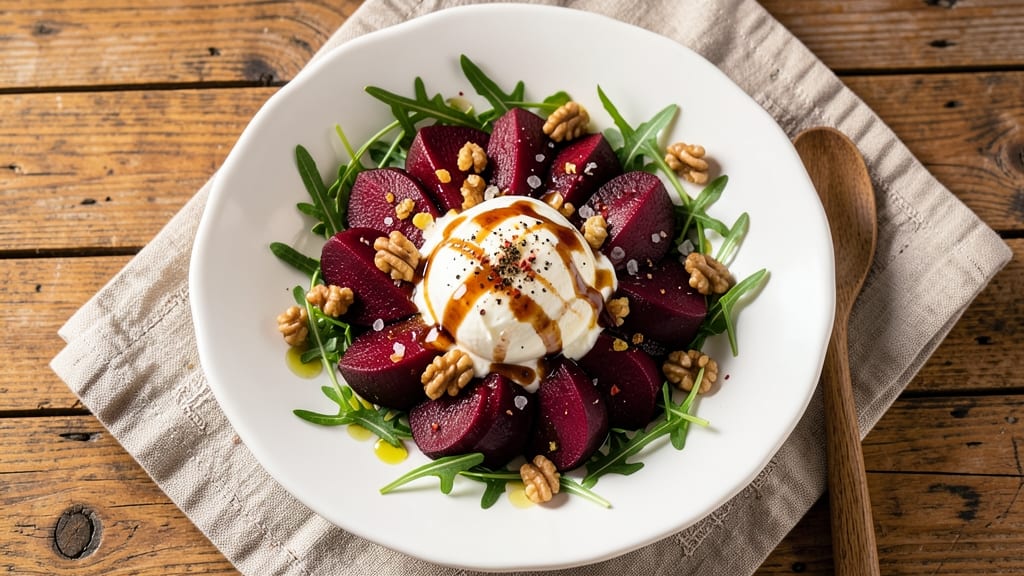
This balsamic beet and burrata salad recipe transforms humble ingredients into a showstopping dish where earthy roasted beets and velvety burrata create perfect balance. 💛 The secret lies in caramelizing the beets until tender-sweet while developing a rich balsamic reduction that ties everything together—no fancy techniques required, just precise timing and fresh ingredients.
What makes this salad truly special is the contrast between the creamy, delicate burrata and the vibrant, slightly tangy beets. I roast the beets until they're fork-tender, then toss them with arugula for peppery bite and toasted walnuts for satisfying crunch.
The balsamic reduction—simmered until thick and glossy—elevates every component with its deep, complex flavor.
By the time you assemble this salad, you'll have a dish that's elegant yet approachable—ideal for summer gatherings or a light weeknight dinner. The creamy burrata melts slightly from the warm beets, while the balsamic reduction adds a sophisticated touch that makes it feel restaurant-worthy.
Presentation matters here: arrange the beets and greens on a platter, top with burrata, and drizzle the reduction artistically.
This salad works beautifully as an appetizer or even a main course when paired with crusty bread. The key is using the freshest ingredients—ripe beets, creamy burrata, and crisp greens—so the flavors truly shine. Ready to create a dish that's as impressive as it is delicious? Let's get started.
Ingredients for balsamic beet and burrata salad
Fresh beets, velvety burrata, and artisanal balsamic create a vegetarian masterpiece that balances sweet, tangy, and creamy notes perfectly.
| Ingredient | Amount | Notes |
|---|---|---|
| Medium Beets 🧅 | 2 whole | Organic preferred, trimmed and peeled |
| Extra-Virgin Olive Oil 🫒 | ¼ cup | High quality, fruity variety |
| Balsamic Vinegar 🍷 | ¼ cup | Aged 10+ years preferred |
| Burrata Cheese 🧀 | 8 oz | Fresh, high-quality brand |
| Baby Arugula 🌿 | 6 oz | Organic preferred, crisp leaves |
| Walnuts 🥜 | ½ cup | Toasted, roughly chopped |
| Diamond Crystal Kosher Salt 🧂 | ½ tsp | For seasoning and reduction |
| Freshly Ground Black Pepper 🌶️ | ¼ tsp | Cracked peppercorns preferred |
| Honey 🍯 | 1 tbsp | Raw, local preferred |
| Crusty Bread 🍞 | 1 loaf | For serving, optional |
| Garlic Cloves 🧄 | 2 cloves | Minced for reduction |
The beets are the foundation—look for organic, medium-sized ones with smooth skins. Whole Foods or Trader Joe's carry excellent options, but any well-stocked grocery store should have them. Burrata quality varies wildly: avoid pre-packaged brands and opt for fresh, artisanal burrata from specialty cheese counters. The aged balsamic vinegar (10+ years) adds depth—giant jars from Italian markets are worth the investment, but Trader Joe's has a solid budget option. For the arugula, organic is key—it should be crisp with vibrant color, not wilted. Walnuts can be toasted fresh or bought pre-toasted; Costco sells them in bulk at great prices.
No aged balsamic? Aged red wine vinegar with 1 tbsp brown sugar mimics the depth. Substituting burrata? Fresh mozzarella or goat cheese works, though texture differs. For arugula, baby spinach or mixed greens stretch the salad. Walnuts too expensive? Pecans or candied pecans add similar crunch. The honey balances acidity—skip it if you prefer a sharper, more tangy profile. For the balsamic reduction, reduce until syrupy—about 1/4 cup should remain. If making ahead, store components separately to maintain crispness.
Roasted beets keep 3 days in the fridge, wrapped in foil. Burrata should be used within 2 days of purchase for optimal creaminess. The balsamic reduction lasts 1 week in an airtight container. Assemble the salad just before serving to preserve texture. For make-ahead convenience, roast and store beets separately, then toss with greens and dressing when ready. The crusty bread pairs beautifully—toast it fresh to complement the warm beets.
Why You'll Love This Recipe
- No Roasting Required: I’ll admit, I used to dread roasting beets—peeling, waiting, mess. Then I discovered boiling them whole (yes, really) until tender. Fifteen minutes later, you’ve got perfectly tender slices with zero fuss, ready to toss with that tangy balsamic glaze.
- Creamy-Meets-Tangy Magic: That first bite of burrata—silky, bursting with cream—paired with the deep sweetness of beets and the sharp kick of balsamic? It’s like a party in your mouth. The arugula adds a peppery punch that cuts through the richness, so you’re not left feeling weighed down.
- Leftovers That Don’t Suck: Most salads wilt by day two, but not this one. The beets hold their shape, the balsamic glaze keeps things bright, and the burrata? Still creamy if you store it separately and add it fresh. I’ve had this for lunch three days in a row—no one’s complained (yet).
Step-by-step instructions for balsamic beet and burrata salad
Transform simple ingredients into a restaurant-worthy salad with perfect balance and texture.
🔥 Step 1: Roast Beets Until Tender and Caramelized
Preheat your oven to 400°F and line a baking sheet with parchment paper. Pierce the 2 whole medium beets several times with a fork to allow steam to escape. Place them directly on the baking sheet and drizzle with 1 tablespoon of the extra-virgin olive oil—just enough to coat lightly. Roast for 45-50 minutes until the beets are fork-tender and their edges begin to caramelize.
Here's the thing—beets vary in size, so check for doneness by piercing with a knife. The knife should slide in easily with just slight resistance. If the skin starts to blacken before they're tender, tent with foil for the last 15 minutes. Let them cool slightly before peeling and slicing into ¼-inch thick rounds. The natural sweetness will deepen as they cool.
🍳 Step 2: Create the Balsamic-Honey Reduction
In a small saucepan, combine 0.25 cup balsamic vinegar, 1 tablespoon honey, 2 minced garlic cloves, and 0.25 teaspoon freshly ground black pepper. Bring to a gentle simmer over medium heat and reduce by half—about 8-10 minutes
Remove from heat and stir in 0.5 teaspoon diamond crystal kosher salt. Let it cool slightly before drizzling—this reduction should be glossy and concentrated. If it thickens too much while cooling, whisk in 1 teaspoon water to restore smoothness. This balance of sweet, tangy, and savory is what makes the salad sing. In a dry skillet over medium heat, toast the 0.5 cup walnuts for 3-4 minutes until fragrant and golden. Watch them closely—they'll darken quickly. Transfer to a plate to cool, then roughly chop. This toasting enhances their nutty depth and adds satisfying crunch to the creamy burrata. In a large bowl, gently combine the 6 oz baby arugula with the sliced beets. Tear the 8 oz burrata cheese into 1-inch pieces (don't press it—this preserves its creamy texture) and nestle them among the greens. Drizzle with the remaining 0.2 tablespoon extra-virgin olive oil and the cooled balsamic reduction, then sprinkle with toasted walnuts. Toss the salad gently just before serving to distribute the dressing evenly. Sprinkle with any remaining 0.25 teaspoon freshly ground black pepper and an additional pinch of diamond crystal kosher salt if needed. The contrast of cool, creamy burrata with the earthy-sweet beets and peppery arugula creates an unforgettable texture and flavor experience. Serve with crusty bread on the side for dipping into any residual dressing. This salad holds together beautifully for 1 hour if stored in an airtight container, though the burrata will soften slightly. For maximum impact, assemble and serve immediately after toasting the walnuts—every bite should deliver that perfect creamy contrast you're after.👨🍳 Step 3: Toast Walnuts and Assemble the Salad
🥘 Step 4: Season and Serve Immediately
Pro Tips For Making Balsamic Beet And Burrata Salad
- ROAST BEETS UNTIL TENDER: I learned this the hard way—beets from the store are often undercooked even after roasting. Wrap them tightly in foil before hitting 400°F (200°C), then roast for 45-55 minutes until a knife slides in like butter. If they’re still firm, add another 10 minutes. Overcooked beets turn mushy; undercooked ones feel like chewing on a tire.
- PEEL BEETS WHEN COOL: Hot beets slip off knives like greased lightning, making peeling a mess. Let them sit in the pan for 5 minutes after roasting—just long enough to cool slightly. The skins will slide off effortlessly, and you’ll avoid staining your counter (or your hands) with magenta handprints.
- DRESS Arugula LAST: Baby arugula wilts faster than a snowflake in summer. Toss it with the balsamic glaze and olive oil right before serving—no more than 2 minutes ahead. If you’re prepping ahead, keep the dressing separate and drizzle it on just as you plate. Burrata’s creamy goodness will shine without soggy greens stealing the show.
- USE AGED BALSAMIC: That cheap, syrupy balsamic glaze? Skip it. For this salad, grab a reduced balsamic vinegar (look for "aceto balsamico tradizionale") or simmer regular balsamic vinegar in a saucepan until it thickens to a glossy syrup. The depth of flavor makes all the difference—no one will notice you spent an extra 10 minutes reducing it.
Troubleshooting this recipe
Undercooked Beets
If your beets feel firm or crunchy after roasting, they need more time in the oven. I’ve found that 400°F for 45-50 minutes works for medium beets, but larger ones may need 5-10 extra minutes.
Pierce them with a fork before roasting to help steam escape, and check doneness by piercing with a knife—it should slide in easily. If they’re still tough, return them to the oven for 10-15 minutes more, tented with foil to prevent burning. 🔥
Burrata Too Firm
Fresh burrata should be soft and slightly spreadable, but if yours feels rubbery, it’s likely overworked or old. Avoid pressing or cutting it too aggressively—tear it gently into 1-inch pieces to preserve its creamy texture.
If your burrata is too firm, let it sit at room temperature for 10-15 minutes before assembling the salad. For extra creaminess, drizzle a tiny bit of the balsamic reduction over it just before serving. 🧀
Balsamic Reduction Too Thin
If your balsamic reduction isn’t syrupy enough, you likely didn’t reduce it long enough. Simmer the mixture over medium heat for 8-10 minutes until it coats the back of a spoon.
If it’s still too thin, continue reducing or transfer it to a small saucepan and simmer uncovered for another 3-5 minutes. For a quicker fix, whisk in 1 teaspoon honey or brown sugar to help thicken it naturally. 🍯
Walnuts Burning
Toasted walnuts can go from golden to burnt in seconds, so keep a close eye on them. Heat your skillet over medium heat and toast the 0.5 cup walnuts for just 3-4 minutes, stirring frequently.
If they start to darken too quickly, remove them immediately and let them cool on a plate. For extra safety, use a 10-inch nonstick skillet—it heats more evenly than larger pans. 🥜
Salad Too Dry
If your salad lacks moisture, the beets might have absorbed too much oil or the greens are wilted. To fix this, drizzle an extra 1 tablespoon of the balsamic reduction over the top just before serving.
For extra freshness, add 1 tablespoon of cold water or ice cubes to the greens while tossing to revive their crispness. If the burrata is too dry, place a small piece on a plate and cover it with a damp paper towel for 2-3 minutes to soften slightly. ✨
Balsamic Reduction Too Sweet
The honey in the reduction balances the balsamic’s acidity, but if it tastes cloying, reduce the honey to ½ tablespoon next time. Alternatively, add 1 teaspoon of lemon juice to the reduction while it’s still warm to cut through the sweetness.
For a more complex flavor, stir in ½ teaspoon of Dijon mustard to add a subtle tang. Taste as you go—adjusting the ratio of balsamic to honey by ¼ teaspoon increments gives you precise control. 💡
Nutrition facts
Frequently asked questions
Can I use cooked beets instead of roasted?
Boiled or steamed beets work perfectly—just make sure they're fork-tender and cooled before slicing. The roasting method caramelizes the edges for extra depth, but cooked beets will still deliver that sweet-tangy flavor. For best texture, boil them whole for 30-40 minutes until soft, then peel and slice.
How do I store leftover salad components?
Store roasted beets in an airtight container for 3 days, and keep burrata in the fridge for 2 days max for optimal creaminess. The balsamic reduction lasts 1 week**—store it separately. Assemble the salad fresh before serving to maintain crisp greens and creamy cheese texture.
What if I don't have aged balsamic vinegar?
No problem! Use regular balsamic vinegar plus 1 tablespoon brown sugar per ¼ cup to mimic the depth. For extra complexity, add ½ teaspoon Dijon mustard to the reduction. The honey in the recipe already balances acidity, so you won't need additional sweetness.
Can I make this salad ahead of time?
Yes, but with smart prep! Roast and store beets separately, and toast walnuts ahead. Assemble just before serving—toss greens with dressing last minute to keep them crisp. For make-ahead convenience, store burrata in its original packaging until ready to use, and keep the balsamic reduction chilled in a jar.
What's the best way to serve this salad?
This dish shines as an elegant appetizer or light main course. For presentation, arrange beets and greens on a platter, then nestle burrata pieces artistically. Drizzle balsamic reduction in zigzags for visual appeal. Serve with crusty bread on the side for dipping into any remaining dressing.