
Salads
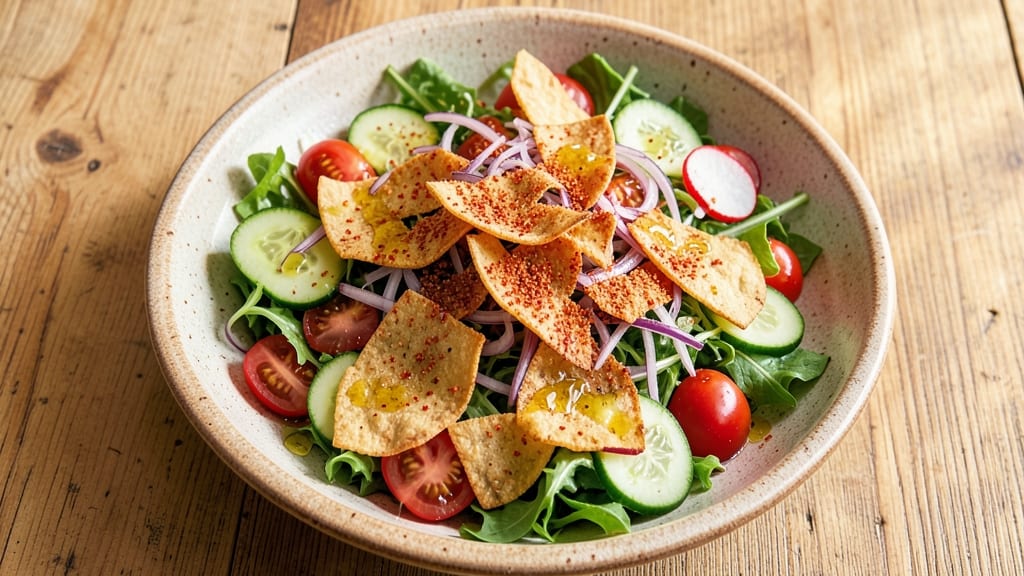
This authentic Lebanese fattoush salad brings the vibrant flavors of Beirut to your table with every crispy bite. 🌟 The secret lies in perfectly toasted pita chips that shatter between your teeth, balanced by the tangy zing of sumac and pomegranate molasses—a classic combination that defines this dish.
Unlike many Western salads, fattoush is a celebration of textures: crunchy, creamy, and fresh all at once.
What sets this recipe apart is the attention to traditional techniques—like toasting the pita in olive oil until golden and crispy, then chopping it into irregular pieces for maximum crunch.
The vegetables (cucumbers, tomatoes, radishes) are cut into bite-sized chunks to soak up the bright lemon dressing, while fresh herbs like parsley and mint add freshness. The dressing, a mix of lemon juice, olive oil, and sumac, ties everything together with its signature tang.
By the time you assemble this salad, you’ll have a dish that’s as visually stunning as it is delicious—layers of color from the vegetables, the golden pita chips, and the vibrant sumac sprinkled on top.
It’s the kind of salad that feels special enough for a gathering but simple enough for a weeknight dinner. The flavors develop even better after 30 minutes, so plan ahead for maximum impact.
Serve this authentic Lebanese fattoush with grilled meats or as a standalone dish when you want something refreshing yet deeply flavorful. The crispy pita chips and tangy dressing ensure every bite is satisfying, making it a standout in any salad lineup.
Let’s get started—your taste buds are in for a treat.
Ingredients for authentic lebanese fattoush salad
Crispy pita chips, vibrant vegetables, and zesty sumac—this salad brings Beirut's bold flavors to your table effortlessly.
| Ingredient | Amount | Notes |
|---|---|---|
| Pita Bread 🍞 | 1 whole | Traditional Lebanese, cut into triangles |
| Extra-Virgin Olive Oil 🫒 | ½ cup | High-quality, fruity variety |
| English Cucumbers 🥒 | 1 ½ lb | Seeded, cut into bite-sized chunks |
| Large Tomatoes 🍅 | 2 whole | Ripe, cut into 1-inch pieces |
| Red Radishes 🥕 | 1 lb | Thinly sliced, for crunch |
| Red Onion 🧅 | 1 whole | Thinly sliced, for sharp bite |
| Fresh Parsley 🌿 | ½ cup | Chopped, stems removed |
| Fresh Mint Leaves 🍃 | ¼ cup | Chopped, for brightness |
| Sumac Spice 🌶️ | 2 tbsp | For signature tangy zing |
| Pomegranate Molasses 🍇 | 2 tbsp | For sweet-tart depth |
| Fresh Lemons 🍋 | 1 whole | Juiced, zest optional |
| Crumbled Feta Cheese 🧀 | ½ cup | Optional, for creamy touch |
| Diamond Crystal Kosher Salt 🧂 | 1 tsp | For seasoning balance |
| Freshly Ground Black Pepper 🌶️ | ½ tsp | For subtle heat |
The pita is non-negotiable for authentic fattoush. Grab traditional Lebanese pita from the international aisle at Whole Foods or your local Middle Eastern market—it’s thinner and crispier than regular pita. Toast it in extra-virgin olive oil until golden and shatter it into irregular pieces (no food processor!). The sumac? Penzeys Spices carries the best—look for a deep red, vibrant color. If you can't find it, substitute lemon zest at half the amount, but it won't be the same. For the vegetables, aim for firm, ripe produce—overripe tomatoes and soggy cucumbers ruin the crunch.
No sumac? Lemon juice plus a pinch of smoked paprika mimics the tang, though it’s not identical. Swap radishes for green apple slices if you’re in a pinch (they add sweetness). The pomegranate molasses can be tricky to find—Trader Joe’s often stocks it, or use balsamic glaze at half the amount. Fresh herbs are a must, but if you’re short on mint, doubled parsley works in a pinch. The feta is optional but adds that creamy contrast—skip it for a vegan version. For the dressing, always use freshly squeezed lemon juice—bottled juice lacks the bright acidity.
Toasted pita chips lose crispiness fast, so assemble the salad right before serving. Keep the sumac and molasses in airtight containers—they stay potent for up to 6 months. Fresh herbs? Wrap them in damp paper towels and store in a sealed bag for 5 days. This salad tastes even better the next day as flavors meld, so make it ahead and toss everything together just before eating. The dressing keeps for 3 days in the fridge—shake well before using.
Why You'll Love This Recipe
- No Chopping Nightmare: I’ll be real—this salad only needs a knife for the tomatoes and radishes. The pita? Just tear it into pieces. The cucumbers? Slice them thick if you’re lazy. Honestly, I’ve made it while scrolling through emails.
- Crunch That Stays Crunchy: That crispy pita, the cool bite of radishes, the burst of juicy tomatoes—it’s the perfect balance. Drizzle with extra olive oil right before serving, and you’ll get that authentic texture. No soggy mess here.
- Picnic or Potluck Hero: Pack it in a jar for lunch or bring it to a BBQ—it’s hearty enough to stand alone or pair with grilled meats. My husband always asks for seconds, even when there’s a full spread.
- Leftovers That Don’t Suck: Unlike most salads, fattoush actually tastes better the next day. The pita soaks up flavors, the dressing gets richer, and it’s still fresh-tasting. Plus, it’s cheap—just a few ingredients stretch for days.
Step-by-step instructions for authentic Lebanese fattoush salad
Transform simple ingredients into Lebanon's most beloved crispy, tangy salad—every bite delivers crunch and zing.
🔥 Step 1: Create Crispy Pita Chips
Preheat your oven to 375°F and line a baking sheet with parchment paper. Cut the 1 whole Pita Bread into 8-10 triangles—traditional Lebanese fattoush uses these crispy chips as the base. Brush each piece generously with 0.25 cup of the Extra-Virgin Olive Oil (about 1 tablespoon each) until they're lightly coated but not soggy.
Arrange the pita triangles in a single layer on the baking sheet, leaving ½ inch between each piece. Bake for 8-10 minutes until the edges turn golden brown and crispy. Here's the thing—don't overcrowd the pan or they'll steam instead of crisp. Flip them halfway through for even browning. Remove immediately and set aside—they'll continue crisping as they cool.
👨🍳 Step 2: Prepare the Tangy Sumac Dressing
In a small bowl, whisk together 2 tablespoons Pomegranate Molasses, juice from 1 whole Fresh Lemons, and the remaining 0.25 cup Extra-Virgin Olive Oil. Add 2 tablespoons Sumac Spice and 1 teaspoon Diamond Crystal Kosher Salt, then whisk until fully dissolved. Taste and adjust—you want a balance of sweet, tart, and tangy.
This is where the magic happens: the sumac gives that signature Lebanese zing while the pomegranate molasses adds depth. I like to let the dressing sit for 5 minutes before using—it mellows slightly and allows the flavors to meld. If it seems too thick, add 1 tablespoon lemon juice to reach your desired consistency.
🥘 Step 3: Assemble the Crunchy Vegetable Base
In a large bowl, combine 1.5 lb English Cucumbers (seeded and chopped), 2 whole Large Tomatoes (cut into 1-inch pieces), 1 lb Red Radishes (thinly sliced), and 1 whole Red Onion (thinly sliced). Sprinkle with 0.5 teaspoon Freshly Ground Black Pepper and toss gently to distribute.
Add 0.5 cup Fresh Parsley and 0.25 cup Fresh Mint Leaves, both chopped. The mint adds that bright, refreshing note that makes this salad truly authentic. Give everything a final toss—you want the herbs distributed evenly but not mashed. Real talk: the radishes should still have some bite, so don't chop them too small.
🥘 Step 4: Layer and Toss with Dressing
Transfer the crispy pita chips to a large serving platter or individual bowls. Arrange the vegetable mixture on top, creating an even layer. Here's the moment that matters: pour the sumac dressing generously over everything, letting it seep into the pita chips and vegetables. Toss gently but thoroughly—you want the dressing to coat every component without making it soggy.
Sprinkle 0.5 cup Crumbled Feta Cheese (if using) over the top just before serving. The feta adds a creamy contrast to the crispy, crunchy, and tangy elements. Let the salad sit for 5-10 minutes before serving—this allows the flavors to meld and the pita chips to crisp up even more from the dressing.
Pro Tips For Making Authentic Lebanese Fattoush Salad
- CHAR THE PITA FIRST: Toss whole pita rounds in a 400°F (200°C) oven for 3-4 minutes before toasting—just until the edges start to brown. This jump-starts the crisping without burning the center, which happens if you pile them in a pan. I learned this the hard way after ending up with chewy, uneven bread that ruined the salad’s texture.
- CUT RADISHES SLIM: Slice those red radishes paper-thin (⅛-inch or less) using a mandoline or sharp knife—thicker pieces turn bitter and soggy when mixed with the dressing. A quick soak in cold water for 10 minutes afterward removes any harshness, but don’t skip the drying step or your salad will taste like a wet rag.
- DRESS IT LAST: Hold off on the olive oil until the very end—tossing everything together right before serving keeps the pita from absorbing too much and turning limp. Use a light hand with the dressing (about ¼ cup total) and let guests drizzle their own. Trust me, this is the thing that matters most for that perfect crunch.
- SALT THE CUCUMBERS: Toss sliced cucumbers with ½ teaspoon salt and let them sit for 10 minutes before rinsing—this draws out excess water and prevents a sad, watery salad. My grandmother swore by this, and she was right: the texture stays crisp, not mushy, even after sitting for a bit. (Yes, even if you’re impatient like me.)
Pro cooking tips for great authentic lebanese fattoush salad
Pita Perfection
For the best texture, toast your pita in a single layer on a baking sheet at 375°F for 8-10 minutes—never stack them! I use Whole Foods Lebanese pita because it's thinner and crisps beautifully. Brush each triangle with 1 tablespoon extra-virgin olive oil before baking, then flip halfway.
The key is golden edges—if they're pale, they'll be soggy. Let them cool completely before breaking into irregular pieces for maximum crunch. 🔥
Sumac Secrets
Sumac is non-negotiable for authentic flavor, but not all sumac is created equal. Penzeys Spices sells the best—look for a deep red, vibrant color. If you can't find it, mix 1 tablespoon lemon zest with ½ teaspoon smoked paprika as a substitute (though it won't be identical).
Toast the sumac in a dry pan for 1-2 minutes before using to deepen its flavor. Store it in an airtight container—it keeps for months but loses potency when exposed to moisture. 🌶️
Dressing Balance
The dressing should coat a spoon but not drown the salad. Whisk 2 tablespoons pomegranate molasses with lemon juice and olive oil first, then add sumac and salt.
Taste as you go—I adjust with ½ teaspoon more sumac if it needs more tang or 1 tablespoon lemon juice if it's too thick. Let it sit for 5 minutes before using; the flavors meld beautifully. Avoid bottled lemon juice—freshly squeezed makes all the difference. ✨
Vegetable Prep
Cut cucumbers and tomatoes into 1-inch chunks—smaller pieces get soggy, larger ones overwhelm. Radishes should be thinly sliced (about ⅛-inch thick) for that signature crunch. Red onion adds sharpness, but soak it in ice water for 10 minutes first to mellow its bite.
Fresh herbs (parsley and mint) should be chopped just before assembling—they wilt quickly. Toss everything gently to preserve texture. 🌿
Layering Like a Pro
Arrange the crispy pita chips first on your platter—they form the crunchy base. Add the vegetable mixture on top, then pour the dressing generously over everything. Toss lightly so the pita stays crisp, not soggy.
Sprinkle feta (if using) just before serving—it melts slightly from the dressing's warmth. Let the salad rest for 5-10 minutes before serving; this lets the flavors develop and the pita crisp up even more. 💫
Nutrition facts
Frequently asked questions
Can I make fattoush without sumac?
While sumac is essential for authentic flavor, you can substitute with 1 tablespoon lemon zest plus ½ teaspoon smoked paprika for a similar tangy kick. For extra depth, add 1 teaspoon dried za'atar—it mimics the earthy notes. Just know the flavor won't be identical, but it'll still taste delicious!
How do I store leftovers?
Store the dressing separately in an airtight container for 3 days. Keep the pita chips and vegetables in a sealed container for 1-2 days, but add fresh dressing when serving. Re-crisp the pita chips in a 350°F oven for 3-5 minutes before reassembling. The flavors actually improve overnight!
What's the best pita bread for this recipe?
Use traditional Lebanese pita—it's thinner and crispier than regular pita. Look for it at Middle Eastern markets or the international aisle at Whole Foods. If you can't find it, lavash bread works well too. Avoid thick sandwich bread—it won't crisp properly and will make the salad soggy.
Can I make this salad ahead of time?
Yes! Prepare all components separately up to 2 days ahead. Store the dressing, chopped vegetables, and toasted pita chips in separate containers. Assemble just before serving to maintain crispness. The flavors will actually develop more overnight, making it taste even better!
Why does my pita get soggy?
Soggy pita usually means one of two things: either you didn't toast it long enough (8-10 minutes at 375°F is key) or you added dressing too soon. Let the pita cool completely before adding vegetables, and toss gently rather than soaking. For extra insurance, arrange the pita chips on top of the salad rather than mixing them in.