
Salads
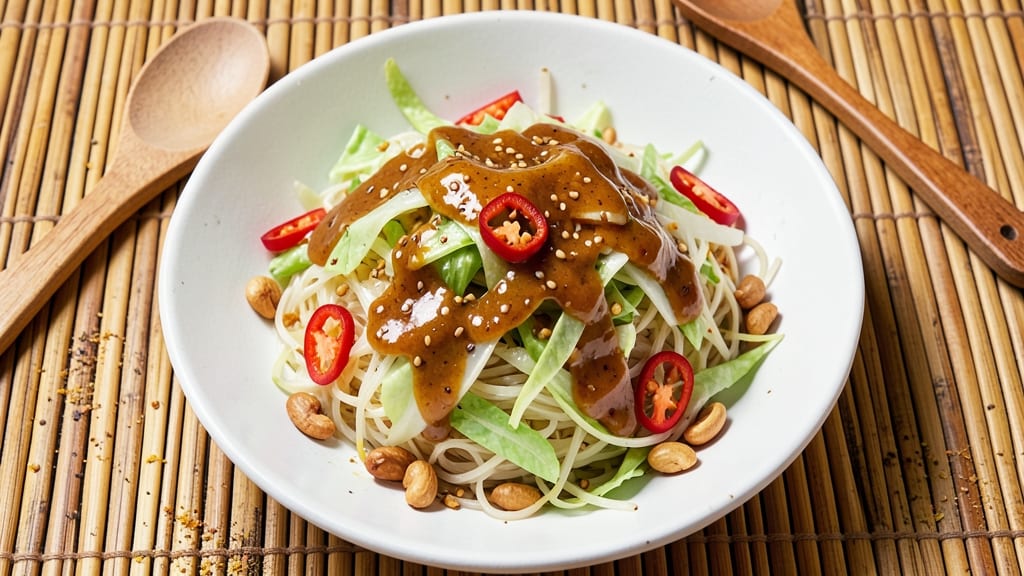
This Asian cabbage noodle salad delivers crisp-tender cabbage and chewy rice noodles in a vibrant, zesty peanut dressing that balances sweet, tangy, and umami flavors.
The secret lies in quick-blanching the cabbage for just enough tenderness while preserving texture, then tossing everything together with a dressing that's both restaurant-quality and simple to make at home. I developed this recipe after realizing how often store-bought versions fell flat—either too soggy or lacking depth of flavor.
The foundation of this dish is properly cooked rice noodles—al dente but still tender enough to hold up to the dressing. Thinly shredded cabbage gets blanched in boiling water for exactly 30 seconds, then shocked in ice water to lock in that perfect crisp-tender bite.
The peanut dressing comes together in minutes with creamy peanut butter, tangy tamarind, and a touch of chili for heat, creating a sauce that clings beautifully to every noodle and cabbage strand.
What you'll end up with is a salad that's refreshing yet satisfying, with each bite offering a perfect balance of textures and flavors. The cabbage stays crisp enough to provide crunch, the noodles maintain their chewy integrity, and the dressing delivers layers of nutty, tangy, and slightly spicy notes.
This dish works equally well as a light lunch, side dish, or even a protein-packed meal when paired with grilled tofu or shrimp.
Best of all, it comes together in under 20 minutes with minimal prep—ideal for weeknight dinners or meal prep. The flavors actually improve as it sits, making it perfect for packing ahead. Let's get started with this foolproof, restaurant-inspired salad that's sure to become a weeknight staple.
Ingredients for asian cabbage noodle salad
Chewy noodles, crisp cabbage, and a dressing that sticks like magic—this salad is restaurant-quality in minutes.
| Ingredient | Amount | Notes |
|---|---|---|
| Green Cabbage 🥬 | 6 cups | Thinly shredded, outer leaves removed |
| Rice Noodles 🍜 | 8 oz | Flat or round, uncooked |
| Peanut Butter 🥜 | ½ cup | Creamy, unsweetened |
| Tamarind Paste 🍋 | 2 tbsp | Or lime juice for tang |
| Soy Sauce 🍶 | 3 tbsp | Low-sodium preferred |
| Sesame Oil 🌱 | 1 tbsp | Toasted, for aroma |
| Red Chili Flakes 🌶️ | 1 tsp | Adjust for heat preference |
| Garlic Cloves 🧄 | 3 cloves | Minced for dressing |
| Ginger Root 🌿 | 1 tbsp | Freshly grated |
| Water 💧 | 1 cup | For noodles and blanching |
| Ice Cubes ❄️ | 2 cups | For shocking cabbage |
| Sesame Seeds 🌱 | 1 tbsp | Toasted, for garnish |
| Green Onion 🧅 | 2 whole | Thinly sliced, for garnish |
| Vegetable Oil 🫒 | 1 tbsp | For cooking noodles |
| Salt 🧂 | 1 tsp | Kosher or sea salt |
The cabbage is non-negotiable—green cabbage has the perfect crunch and holds up to blanching. Grab a small head from the grocery store produce section, or pre-shredded works in a pinch (just skip the outer leaves). The rice noodles? Flat or round both work, but flat ones soak up dressing better. I always buy the 8 oz packages at Trader Joe's—cheaper than Asian markets and lasts forever. For the tamarind, Bob's Red Mill brand is my go-to, but lime juice is a solid swap if you can't find it. The peanut butter needs to be unsweetened and creamy—no crunchy or sweetened varieties here.
No tamarind? Lime juice or rice vinegar works in a bind—just add a pinch more sugar to balance. Running low on sesame oil? Toasted sesame seeds + neutral oil gives you that nutty aroma. The garlic and ginger can be pre-minced from the store, but freshly grated ginger makes all the difference. Want extra protein? Toss in grilled tofu or shrimp after assembly. The cabbage blanching is key—exactly 30 seconds, no more or it turns mushy. And if your rice noodles stick together? Toss them with a little oil while cooking to prevent clumping.
This salad tastes even better the next day—pack it in airtight containers for meal prep. The dressing keeps for 5 days in the fridge, so make extra. Store the cabbage and noodles separately if prepping ahead, then toss with dressing right before eating. The sesame seeds and green onion can be added fresh when serving for extra crunch. Freezes beautifully too—just skip the cabbage if reheating, and toss in fresh after.
Why You'll Love This Recipe
- No-Cook Magic: I swear by this—just soak the rice noodles, shred the cabbage, and toss. That tamarind paste and peanut butter combo does all the heavy lifting while I’m still deciding what to watch on TV.
- Sweet-Savory Balance: The tamarind’s tang cuts through the peanut butter’s richness, and the soy sauce ties it all together. Crunchy cabbage? Yes. Creamy peanut dressing? Absolutely. It’s the kind of dish that makes you go back for seconds without even realizing.
- Lunchbox Hero: Between us, this is my go-to for packed lunches. The noodles hold up for days, and the dressing clings to everything—no soggy messes here. Honestly, my kids ask for it more than their actual school lunch.
- Pantry Staple Power: Peanut butter, soy sauce, and tamarind? Things I already have. No specialty ingredients, no last-minute grocery runs. And if I make a big batch? Leftovers taste just as good reheated (or cold—no judgment).
Step-by-step instructions for Asian cabbage noodle salad
This refreshing salad delivers crisp-tender cabbage and perfectly chewy noodles with a bold, tangy peanut dressing.
Prepare the Crisp-Tender Cabbage
Fill a large mixing bowl with the 2 cups ice cubes and set aside. Thinly shred the 6 cups green cabbage, removing any tough outer leaves first. The goal is to create delicate, bite-sized shreds that stay crisp after blanching.
Bring the 1 cup water to a boil in a medium pot. Add the shredded cabbage in batches and cook for just 30 seconds—this brief blanching preserves color and texture while softening slightly. Immediately drain and transfer to the ice water bath. Let it chill for 5 minutes to shock and crisp the cabbage. Drain well before using.
Cook the Rice Noodles
Heat the 1 tablespoon vegetable oil in a large skillet over medium heat. Add the 8 oz rice noodles and stir constantly for 2-3 minutes until they begin to soften and turn slightly translucent. This dry-toast step prevents them from becoming mushy.
Add the 1 cup water and the 1 teaspoon salt to the skillet. Cover and remove from heat, letting the noodles steam for 5 minutes. They should be tender but still hold their shape—if they're too soft, they'll turn to paste in the salad. Drain any excess water and rinse briefly under cold water to stop cooking. Let them cool completely before combining with the cabbage.
Make the Zesty Peanut Dressing
In a small bowl, whisk together the 0.5 cup peanut butter, 2 tablespoons tamarind paste, 3 tablespoons soy sauce, 1 tablespoon sesame oil, and 1 teaspoon red chili flakes until smooth. The tamarind adds that signature tangy brightness that balances the richness of the peanut butter.
Add the 3 cloves minced garlic and 1 tablespoon freshly grated ginger, then whisk again until fully incorporated. Thin the dressing with 1-2 tablespoons water at a time until it reaches a pourable consistency—it should coat the back of a spoon but still cling to the noodles and cabbage. Taste and adjust seasoning with more soy sauce for saltiness or tamarind for tang.
Assemble the Salad
Gently combine the cooled noodles and crisp cabbage in a large serving bowl. Drizzle the peanut dressing over the top and toss carefully with tongs or clean hands until everything is evenly coated. The cabbage should remain crisp while the noodles soak up the flavorful dressing.
Let the salad sit for 5 minutes to allow the flavors to meld. Garnish with the 1 tablespoon toasted sesame seeds and 2 whole green onions, thinly sliced. Serve immediately while the cabbage is still crisp and the noodles are chewy—not mushy. This salad keeps well for 2 hours in the refrigerator, but the cabbage will soften over time.
Pro Tips For Making Asian Cabbage Noodle Salad
- SOAK NOODLES COLD: The rice noodles in this salad need to be just tender—not mushy, not undercooked. Soak them in room-temperature water for 15-20 minutes (check the package for exact times), then rinse in cold water immediately. This stops the cooking process and keeps them from turning to glue when you toss them later.
- SHRED CABBAGE THIN: I learned this the hard way—thick, uneven shreds mean some parts stay crunchy while others get soggy. Use a sharp knife or mandoline to slice the cabbage paper-thin, then give it a quick massage with a pinch of salt and a squeeze of lime before adding it to the salad. This softens the edges just enough without wilting the whole thing.
- TEMPER THE PEANUT BUTTER: Peanut butter straight from the jar can clump into a greasy mess when mixed with the dressing. Warm it slightly (10 seconds in the microwave, stir, repeat if needed) until it’s smooth but not hot. Then whisk it into the tamarind-soy base while it’s still warm—this ensures it emulsifies properly and coats the noodles evenly.
- DRESS NOODLES SEPARATELY: Tossing the dressing straight onto the noodles makes them soggy before the cabbage even gets a chance. Instead, mix the peanut-tamarind sauce with the shredded cabbage first, let it sit for 5 minutes to soften slightly, then add the drained noodles last. This keeps the texture balanced—crisp where it counts, tender where it matters.
Essential equipment for perfect results
Blanching Essentials
The 30-second blanch for cabbage is non-negotiable—it’s the secret to that perfect crisp-tender texture. I recommend using a fine-mesh strainer with large holes to drain water quickly after blanching. A stainless steel pot (like the All-Clad Stainless) is ideal because it heats evenly and won’t react with acidic ingredients.
For shocking, a large bowl with ice works, but I’ve found a colander placed directly over a sink speeds up draining. 🥬
Noodle Cooking Tools
Rice noodles need gentle handling, so a wide, shallow skillet (like Calphalon’s nonstick) prevents clumping. A wooden spoon helps stir without breaking the noodles. For the steaming step, I cover the skillet with a tight-fitting lid—a silicone lid stays put better than metal.
If you’re prepping ahead, store cooked noodles in a sealed container with a damp paper towel to prevent drying. 🍜
Dressing Mixers
For the peanut dressing, a small mixing bowl (I use Pyrex glass) lets me whisk efficiently. A mini whisk or fork works, but a hand mixer on low speed saves time if you’re making extra dressing.
Measure liquids with a small measuring cup (like OXO’s 1-cup version) for precision—especially the tamarind paste, which can be thick. A microplane for garlic and ginger ensures fine, even mincing. 🥜
Assembly Gear
Tongs are a game-changer for tossing the salad—stainless steel tongs (like KitchenAid’s) grip everything without crushing. A large serving bowl (at least 8-inch diameter) gives space to toss without spills.
For garnishing, a small spoon works for sesame seeds, and sharp kitchen shears make quick work of slicing green onions. If serving immediately, a slate board or wooden tray adds a restaurant-worthy touch. ✨
Optional Upgrades
Want to take it pro? A mandoline slicer (like Benriner’s) gives uniform cabbage shreds in seconds. For extra crunch, toast sesame seeds in a small dry skillet over low heat until fragrant.
If you love texture, add crispy fried shallots (store-bought or homemade) for a gourmet finish. A fine-mesh sieve helps strain excess water from noodles after cooking. 💫
Nutrition facts
Frequently asked questions
Can I use regular cabbage instead of green cabbage?
Green cabbage works best for this recipe because it stays crisp longer after blanching. Regular cabbage (white or purple) will soften more quickly and may not hold its texture well. If that's all you have, try blanching it for just 20 seconds instead of 30 seconds to preserve some crunch.
What if I can't find tamarind paste?
No problem! Substitute with 2 tablespoons lime juice plus 1 teaspoon sugar to mimic tamarind's tangy-sweet flavor. For extra depth, add 1/2 teaspoon fish sauce (if not vegetarian) or a pinch of salt. The dressing will still taste amazing, just slightly different.
How do I prevent my rice noodles from sticking together?
Toss the cooked noodles with 1 teaspoon vegetable oil while they're still warm to create a protective barrier. Use a wooden spoon when stirring, and avoid overcrowding the pot. If they stick anyway, separate them gently with your fingers or a fork before adding to the salad.
Can I make this salad ahead of time?
Store the cooked noodles and blanched cabbage separately in airtight containers for up to 2 days. Keep the dressing separate until ready to serve—toss everything together just before eating to maintain crispness. The cabbage will soften slightly over time, so add a little extra if you prefer more crunch.
How can I make this vegetarian-friendly?
This recipe is already vegetarian, but you can boost protein by adding 1 cup cooked edamame or 1/2 cup roasted chickpeas to the salad. For extra richness, fold in 1/2 cup silken tofu that's been lightly mashed with the dressing. Just be sure to add these ingredients last to preserve their texture.