
Salads
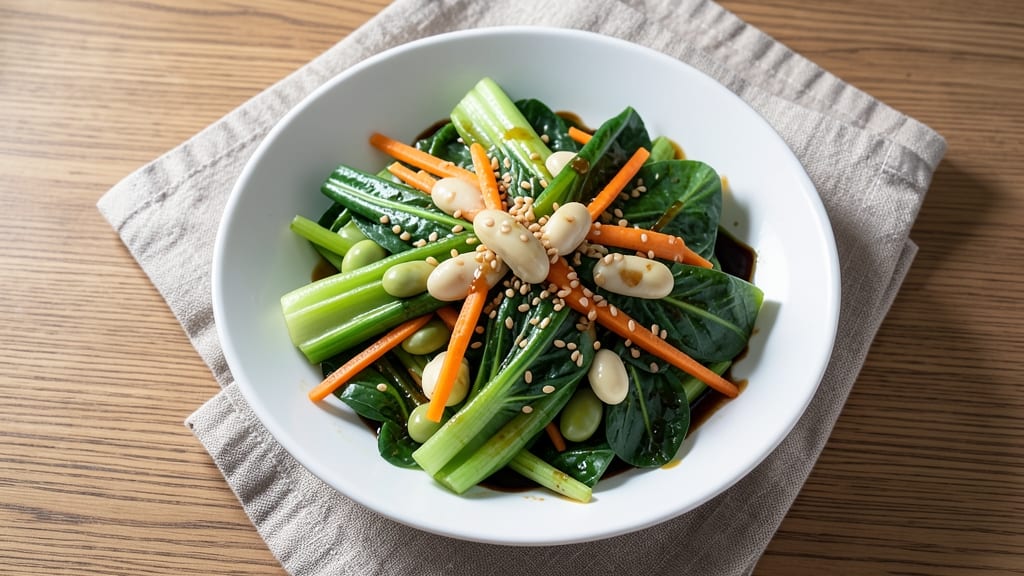
This Asian bok choy salad recipe transforms humble greens into a restaurant-worthy dish with just a wok and simple ingredients. The secret lies in quick-searing the bok choy until crisp-tender, then tossing it with a bright sesame-lime dressing that balances sweet, salty, and tangy flavors.
I developed this recipe after realizing store-bought versions lacked that authentic wok-fried texture and vibrant contrast of colors.
The process is straightforward yet delivers professional results: wash and trim the bok choy, then quickly wok-sear it until the edges blister slightly but the centers stay crisp. Combine with shredded carrots, toasted sesame seeds, and crunchy edamame for texture contrast.
The dressing—sesame oil, soy sauce, lime juice, and a touch of honey—elevates everything with its aromatic depth.
What you'll end up with is a visually stunning salad that's packed with flavor and texture—crispy wok-seared bok choy, sweet carrots, and creamy edamame all coated in that tangy sesame dressing.
The colors pop against the plate, making it perfect for both weeknight dinners and special occasions. This recipe proves you don't need complicated ingredients to create restaurant-quality results at home.
Serve immediately while the bok choy maintains its perfect texture, or prepare components ahead for a quick assembly. The dressing can be made in advance, and the vegetables can be prepped while the wok heats up.
This salad pairs beautifully with grilled proteins or as a light standalone meal. Let's get cooking!
Ingredients for asian bok choy salad
Transform simple greens into a restaurant-worthy dish with these vibrant, flavor-packed ingredients.
| Ingredient | Amount | Notes |
|---|---|---|
| Bok Choy (Baby or Regular) 🥬 | 1 ½ lb | Whole heads, trimmed and halved lengthwise |
| Carrots 🥕 | 2 medium | OR 1 cup shredded (julienne preferred) |
| Shelled Edamame 🌱 | 1 cup | Frozen or fresh, thawed if frozen |
| Sesame Seeds 🌿 | 1 tbsp | Toasted for nutty aroma |
| Sesame Oil 🫒 | 2 tbsp | Toasted sesame oil preferred |
| Tamari or Soy Sauce 🥢 | 2 tbsp | For umami depth |
| Fresh Lime Juice 🍋 | 2 tbsp | Adjust to taste |
| Raw Honey 🍯 | 1 tbsp | Substitute maple syrup for vegan |
| Garlic Cloves 🧄 | 2 cloves | Minced for aromatic base |
| Ginger Root 🌿 | 1 tsp | Freshly grated |
| Neutral Oil 🫒 | 1 tbsp | Avocado or vegetable oil |
| Diamond Crystal Kosher Salt 🧂 | ½ tsp | For seasoning |
| Ground Black Pepper 🌶️ | ¼ tsp | Freshly ground |
| Sesame Seeds (Extra) 🌿 | 1 tbsp | For garnish |
The bok choy is the star—look for bright green, crisp heads with no yellowing. Whole Foods and Asian markets carry the best quality, but regular grocery stores often stock baby bok choy which works perfectly. Trim the thick stems and halve the heads lengthwise for even cooking. The carrots should be fresh and firm, not rubbery—organic baby carrots from the produce section are ideal. Edamame? Trader Joe's frozen pods are my go-to—they're pre-shelled and ready to use. Toast your sesame seeds in a dry pan for 2-3 minutes until fragrant, then cool before using. For the dressing, toasted sesame oil makes all the difference—it's worth seeking out at specialty stores.
No sesame oil? Peanut oil or light olive oil in a pinch, though the flavor won't be identical. Substitute tamari with coconut aminos for a gluten-free option. Fresh ginger is non-negotiable here—dried loses its punch. If you're out, double the amount of ground ginger, but it won't be the same. The honey adds balance to the tangy dressing, but agave nectar or maple syrup works beautifully for vegan versions. For extra crunch, add toasted cashews or crushed peanuts. The edamame can be swapped for shelled peas or green beans if needed, though the texture will differ slightly. Always taste the dressing before tossing—adjust lime or honey to your preference.
Prep the vegetables first: trim bok choy, shred carrots, and thaw edamame. The dressing keeps for 5 days in an airtight container in the fridge, making it perfect for meal prep. Store the salad components separately until ready to assemble—this preserves the crisp texture. The wok-seared bok choy is best eaten immediately, but you can blanch it first if prepping ahead. For leftovers, store the entire salad in a container with a paper towel to absorb excess moisture. Keeps 3 days in the fridge, though the texture softens over time. Freezing isn't recommended for the bok choy, but you can freeze the dressing separately for up to 3 months
Why You'll Love This Recipe
- No-Cook Crunch: This salad takes zero stovetop fuss—just chop, toss, and let the sesame oil work its magic. I’ll often prep it while scrolling through my phone, and it still tastes like I spent hours.
- Umami Bomb: That combo of edamame, sesame seeds, and a drizzle of sesame oil? It’s the kind of flavor that makes you pause mid-bite. The bok choy stays crisp, the carrots add sweetness, and the toasted sesame seeds give it that chef’s touch without effort.
- Lunchbox Hero: Between us, this is my go-to for work lunches or picnics—packs perfectly, stays fresh for days, and even holds up when my kid “forgets” to bring an ice pack. Honestly, the edamame keeps it from getting sad-looking by noon.
- Budget Brightener: A full head of bok choy and a bag of edamame go far—this feeds four for under $8 at my grocery store. Plus, the carrots stretch the flavor without breaking the bank. My wallet and I both approve.
Step-by-step instructions for crispy wok-seared bok choy salad
Transform fresh bok choy into restaurant-quality wok-seared greens with a perfect crisp-tender texture.
Prep and Blanch the Vegetables
Start by trimming the 1.5 lb bok choy, removing any wilted outer leaves and cutting each head in half lengthwise. Peel and slice the 2 medium carrots into thin julienne strips (about ¼-inch wide). In a large pot of boiling water, blanch the bok choy and carrots separately for 30 seconds each—just enough to soften slightly but not cook through. Immediately drain and plunge into ice water to halt cooking and preserve color.
While the vegetables cool, prepare the edamame by thawing if frozen. Drain any excess liquid and set aside. This blanching step ensures your vegetables will achieve that perfect wok-seared texture without turning mushy. The ice bath is critical—it stops the cooking process instantly and makes the vegetables crisp up beautifully when seared.
Create the Sesame-Ginger Dressing
In a small bowl, whisk together the 2 tbsp sesame oil, 2 tbsp tamari or soy sauce, 2 tbsp fresh lime juice, 1 tbsp raw honey, minced 2 cloves garlic, and freshly grated 1 tsp ginger root. The dressing should be smooth and well-combined, with a balance of sweet, tangy, and umami flavors. Taste and adjust—you might want to add a touch more lime for brightness or honey for sweetness.
Here's the thing about this dressing: the sesame oil carries the nutty aroma while the tamari provides that essential umami depth. The honey and lime create a perfect balance that cuts through the richness of the wok-seared vegetables. Let the dressing sit for 5 minutes while you finish preparing the salad—this allows the flavors to meld together.
Wok-Sear the Vegetables for Crispy Texture
Heat a wok or large skillet over high heat until smoking hot. Add the 1 tbsp neutral oil and swirl to coat. Working in batches if needed, add the blanched bok choy and carrots along with the shelled edamame. Stir-fry vigorously for 2-3 minutes until the edges of the bok choy turn deep golden brown and the carrots develop a slight char.
This is where the magic happens—the high heat creates that perfect crisp-tender texture we're after. You'll see the bok choy leaves curl slightly at the edges, and the carrots will develop beautiful caramelized spots. Don't overcrowd the pan or you'll steam the vegetables instead of searing them. If needed, work in two batches to maintain the high heat.
Toss and Garnish for Presentation
Transfer the wok-seared vegetables to a large serving bowl. Immediately pour the prepared dressing over the hot vegetables and toss gently but thoroughly to coat evenly. The residual heat from the vegetables will help emulsify the dressing slightly, creating a glossy finish. Sprinkle with the 1 tbsp toasted sesame seeds and the 1 tbsp extra sesame seeds for garnish.
Let the salad sit for 2-3 minutes before serving to allow the flavors to meld together. The contrast of crispy wok-seared bok choy with the tender edamame and sweet carrots creates a textural experience that's truly satisfying. Serve immediately while the vegetables are still crisp and the dressing is at its peak flavor.
Pro Tips For Making Asian Bok Choy Salad
- Blanch Bok Choy First: I learned this the hard way—raw bok choy gets mushy when tossed with everything else. Instead, shock it in boiling water for 30 seconds, then ice bath. This keeps the stems crisp and the leaves tender without turning to soup. (Yes, even baby bok choy—it makes a difference.)
- Shave Carrots Thin: Skip the julienne if you’re in a hurry, but resist the urge to chop carrots into matchsticks. Use a peeler for thin ribbons—they soften just enough to stay pleasant, not turn to mush. Pro move: Toss them with a pinch of salt while you work to stop them from oxidizing.
- Toast Sesame Seeds Low: After burning three batches, I finally figured out: toast them in a dry pan over low heat, stirring constantly. Two minutes max—watch them like a hawk. High heat = instant smoke; low heat = nutty aroma without bitterness. Sprinkle warm over the salad right before serving.
- Dress Light, Then Toss: I was skeptical until I tried it: mix the sesame oil and dressing separately, then drizzle just enough to coat the greens. Toss gently—over-mixing bruises the bok choy. Add more oil at the table if needed. (Your future self will thank you for not drowning the salad.)
Essential equipment for this recipe
Wok Essentials
A high-quality carbon steel wok is my go-to for this recipe—it heats up fast and retains heat beautifully. I recommend the Mauviel M'Heritage if you're investing in one, but a well-seasoned cast iron wok works too. For beginners, a 14-inch wok is perfect for home cooking.
If you don't have a wok, a heavy-bottomed stainless steel skillet (like All-Clad) will work in a pinch, though it won't get quite as hot. 🔥
Heat Source
Gas stoves are ideal for wok cooking because they give you precise heat control, but electric or induction burners work too. If using electric, look for a flat-top burner—it mimics gas better. I avoid ceramic cooktops for this recipe since they don't get hot enough for proper searing.
For induction cooktops, make sure your wok has a flat base or use a wok ring to improve heat distribution.
Blanching Tools
A large pot with a tight-fitting lid is essential for blanching. I use a stainless steel pot because it heats evenly and won't warp. For draining, a fine-mesh strainer (like OXO Good Grips) works best—it lets water drain quickly while keeping the vegetables contained.
A colander will work too, but it might be too large and spill over. For the ice bath, a large bowl that can hold the blanched veggies plus ice water is key. 🧊
Knife and Cutting
Sharp knives are non-negotiable for this salad. My Japanese santoku knife (like Shun Premier) makes quick work of the bok choy and carrots, but a chef's knife works fine too.
For julienne carrots, a mandoline (like Benedict Mandoline) gives you perfectly even strips, but a sharp knife works if you take your time. A cutting board with a non-slip surface (like Teakhaus bamboo) keeps ingredients secure while you work.
Mixing and Serving
A wooden salad bowl (like West Elm's organic bamboo) is my favorite for tossing—it's gentle on the vegetables and looks beautiful on the table. For mixing the dressing, a small glass bowl with a lid keeps ingredients fresh in the fridge.
If you're serving immediately, a large serving platter (like Le Creuset stoneware) makes presentation easy. Don't forget a pair of tongs for serving—it keeps the salad looking fresh and prevents over-tossing. ✨
Nutrition facts
Frequently asked questions
Can I make this salad without blanching the bok choy?
Blanching is key for that perfect crisp-tender texture! Without it, the bok choy will either stay too tough or turn mushy during wok-searing. For a quick alternative, microwave the bok choy and carrots for 1-2 minutes first, then proceed with the recipe—but blanching in boiling water gives better results. The ice bath after blanching is equally important to stop cooking and preserve color.
What's the best way to store leftovers?
Store the salad components separately in airtight containers. Keep the wok-seared vegetables in one container with a paper towel to absorb moisture, and the dressing in another. Reheat the vegetables gently in a skillet (don't wok-sear again) and toss with fresh dressing when serving. This salad keeps well for 3 days in the fridge, though the texture will soften slightly. Freezing isn't recommended for the bok choy.
Can I substitute regular bok choy for baby bok choy?
Regular bok choy works perfectly—just trim the thick stems and halve the heads lengthwise. Baby bok choy is smaller and cooks faster, but regular bok choy will give you the same crisp-tender texture when blanched and wok-seared properly. For 1.5 lb of regular bok choy, expect about 4-5 heads. The only difference is portion size—regular bok choy makes a more substantial salad.
How do I adjust the dressing for spicy flavors?
Add ½-1 tsp of sriracha or chili crisp to the dressing for heat, or sprinkle red pepper flakes directly on the salad before serving. For a more balanced spicy-sweet combo, add ½ tsp of chili garlic sauce along with the honey. Start with less and adjust to taste—you can always add more, but you can't remove the heat once it's there!
Is this salad gluten-free?
Mostly! Use tamari or coconut aminos instead of regular soy sauce, and check your sesame oil and honey labels for gluten-free certification. The edamame and other ingredients are naturally gluten-free. For extra caution, toast your own sesame seeds at home to avoid cross-contamination. This makes the salad perfectly safe for gluten-sensitive diets while keeping all the authentic flavors.